Sheep in wildlife habitat: the figures behind the wolf dispute
Around 180,000 sheep graze in the summer pasture areas, roughly CHF 20 million in federal funds flow each year, and nobody counts the hobby sheep keepers.
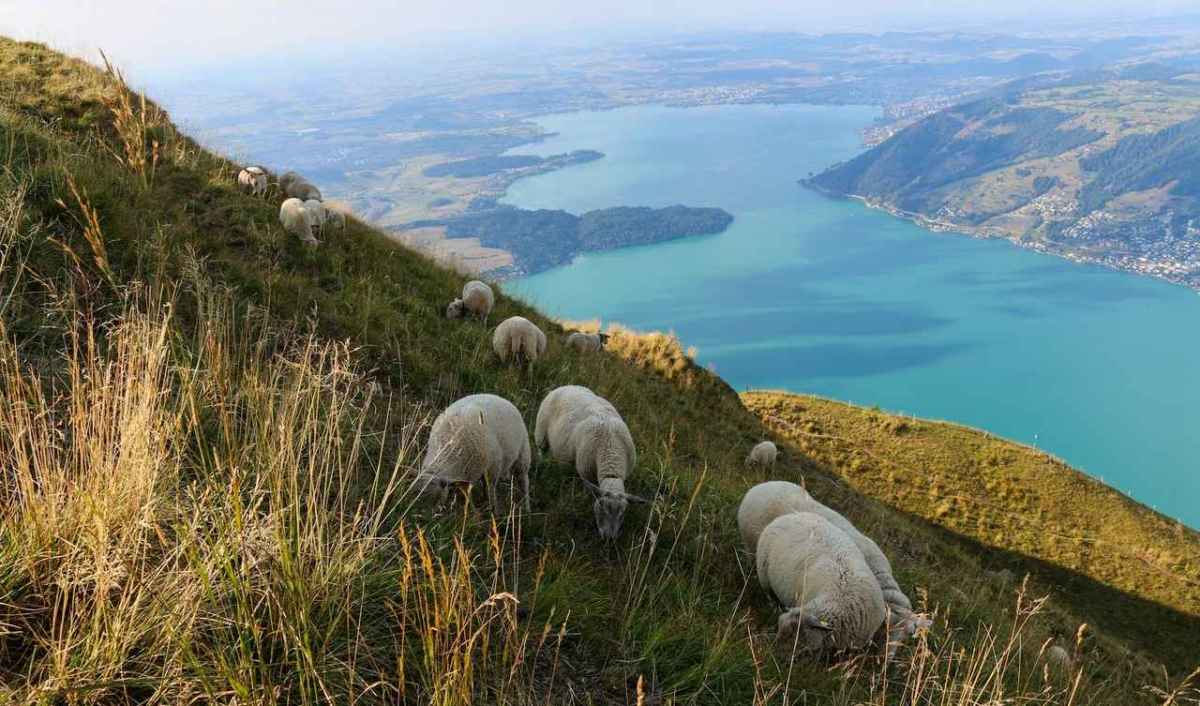
Illustrative image. Photo: Victor Svistunov / Unsplash
«In Reserve»
The debate about the wolf revolves almost entirely around the question of how many predators should be killed. Who grazes up there, why, and who pays for it is rarely asked. The official figures from the Confederation and the animal traffic database paint a different picture of Swiss sheep farming than the one conveyed by the wolf debate.
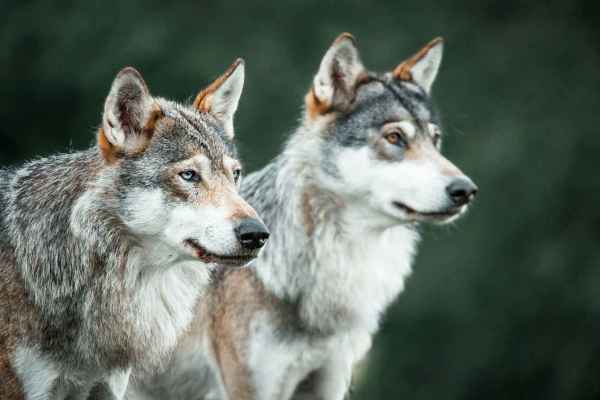
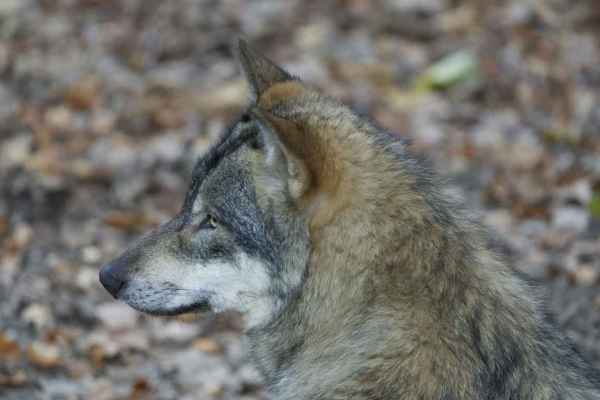
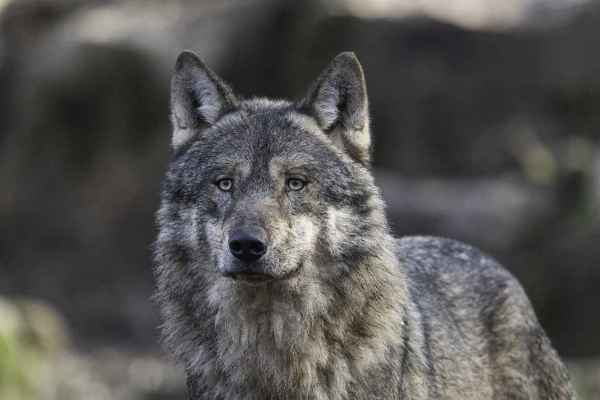
After the third regulation period, the FOEN counts 40 wolf packs and around 350 wolves in Switzerland. 77 wolves were shot between September 2025 and the end of January 2026, over 220 have been shot since 2023, and in the current period the wolf counter of IG Wild beim Wild has recorded at least 32 preventive kills since 1 September 2026 (as of 13 October 2026). Politically, these kills are justified by the protection of livestock, above all sheep. However, preventive regulation does not require damage to have already occurred in every pack concerned. Anyone who looks at sheep farming itself comes across a structure that barely features in the public discussion.
Nobody counts the hobby sheep keepers
No public authority records how many recreational sheep keepers there are in Switzerland. There are, however, two official counts, and they differ markedly. The animal movement database (TVD) run by Identitas AG, in which every sheep has had to be registered individually since 2020, counted 11’916 holdings with sheep in May 2025; by the end of August 2026 the figure was 11’359. The Federal Statistical Office's (FSO) agricultural structure survey, by contrast, reports 7’682 farms with sheep for 2025. The TVD therefore records well over 4’000 more holdings than there are farms with sheep. This gap includes recreational and very small holdings that fall below the minimum area or minimum livestock numbers of an agricultural holding, but also additional sites of existing farms. How large the share of purely recreational holdings is, and how many of their animals are summered on alpine pastures, cannot be determined from these two figures alone. That this information is missing is itself a finding: the Confederation funds summer grazing without knowing whose animals it is funding.
The size distribution shows how small most holdings are. According to the TVD, the median sheep holding in Switzerland comprises eleven animals. The smallest tenth of holdings keeps a median of two sheep, the largest tenth 132. The meat industry organisation Proviande itself states in its brochure «Vom Lamm» that sheep farming is carried out «mainly as a sideline».
At the same time, it is the farms that are disappearing, not the sheep. Since 2000, the number of farms with sheep has fallen from 12’565 to 7’682 according to the FSO, a drop of 39 per cent. Over the same period the sheep population declined by only 15 per cent, from 420’740 to 355’639 animals. The TVD, which also counts lambs and non-agricultural holdings, recorded as many as 477’061 registered sheep in April 2026. The flocks are getting bigger, while the number of people looking after them is getting smaller.
180’000 sheep in the summering area
Summer grazing lies at the heart of the conflict. In July 2026, according to the TVD, around 180’000 sheep were in the summering area, roughly 40 per cent of all registered sheep. This figure covers the entire summering area, not just pastures above the tree line. For the Confederation's summering contribution, the Federal Office for Agriculture (FOAG) counted a total of 743 sheep summering operations with 22’937 normal stocking units in 2024.
According to Pro Natura, around 40 per cent of Switzerland's total summer pasture area lies above the treeline, on alpine grassland that would not become overgrown even without use. In June 2023, Pro Natura stated that grazing there has "no biodiversity-promoting effects"; wild animals are displaced or may become infected with diseases. The organisation called for an overall strategy and declared the abandonment of individual alpine farms a legitimate topic for discussion. As early as 2010, the preliminary study "SchafAlp", commissioned by AGRIDEA, Pro Natura, WWF and the sheep breeders' association, found that chamois avoid sheep pastures, that sheep may act as a reservoir for infectious keratoconjunctivitis in chamois, and that night pens in the winter habitats of chamois and ibex can impair these habitats. The same study concluded that no fencing system is entirely harmless to wild animals.
What sheep summering costs the public purse
Summering sheep in wildlife habitat is not a private matter, but is co-financed with taxpayers' money. The FOAG's Agricultural Report 2025 shows around CHF 8.2 million in summering contributions for sheep (excluding dairy sheep) for 2024. In addition, at a rate of CHF 250 for 15,640 normal grazing units, there are arithmetically around CHF 3.9 million in supplementary contributions for farm-specific herd protection measures on 325 farms. Furthermore, the home farms receive an alpine grazing contribution of CHF 370 per normal grazing unit for every animal sent to summer pasture; the Agricultural Report does not list the amount attributable to sheep separately, but with 22,937 normal grazing units it is in the order of CHF 8 million.
Sheep summering is thus supported with around 20 million francs a year through these three instruments alone. Further funding instruments come on top, without it being possible to arrive at an adjusted total: the federal herd protection funds, which the National Council raised to just under 12 million francs for all species in the 2023 budget; the cantonal herd protection programmes, for example 2.78 million francs in Valais in 2023; and the compensation for livestock killed, for which the cantons applied to the FOEN for a total of 695’774 francs for November 2024 to October 2025. Anyone who sends a sheep to summer pasture above the tree line today does so with public money, and anyone who gives up an alp loses these payments. The incentives all point in one direction: up to the alp, even where the habitat belongs to wild animals.
To put the losses in context: according to the TVD (animal movement database) analysis, 52’408 sheep deaths were registered in Switzerland in 2025, that is, deaths outside of slaughter; the overall figure does not reveal which causes account for what share. In the same period, the cantons reported to the FOEN 808 livestock animals of all species killed by wolves (November 2024 to October 2025). Even if all of them were sheep, that would amount to roughly 1.5 per cent of the registered deaths. The article Acquitted: it wasn't the wolf puts these figures into perspective. The risks that summering on steep terrain entails even without any proven wolf involvement were shown by the case from the Val Russein that came to light in October: there, 82 sheep that had fallen to their deaths were discovered on 11 September 2026. The Grisons Office for Hunting and Fisheries found no indication of wolf involvement.
The Alps as an Obstacle Course
Where herd protection requires additional fences and night pens, it means further interference in an area that belongs to chamois, red deer, roe deer and grouse. In the «Bündner Bauer», the Grisons Office for Food Safety and Animal Health notes that the number of wild animals dying in fences has risen markedly; roe deer and red deer are affected above all, but foxes too. An entangled animal cannot free itself and dies a slow, agonising death. The office therefore requires that sheep nets be removed no later than five days after use and that all fences be dismantled completely in autumn. What of this is actually checked on remote sheep alpine pastures, the regulation does not say. IG Wild beim Wild has documented that sheep nets become death traps for wild animals.
Herd protection makes sense for livestock and is supported by IG Wild beim Wild, as the article What is herd protection? shows. But it does not resolve the question of whether a herd belongs in that place at all. Livestock guardian dogs, night pens and electric fences turn a wild animal habitat into a fenced pasture. That has to be decided first, before the question of the wolf is even asked.
What remains unresolved in herd protection
Where sheep are nevertheless summered on alpine pastures, the protection stands on shaky ground. Since 2013, more than 800 livestock guardian dogs have passed the federal aptitude test; a dog must pass this test before it can be deployed as a recognised livestock guardian dog. In 2023, Valais developed its own testing programme because there were too few dogs recognised by the federal government. As of February 2025, the federal government cut its share of herd protection costs from 80 to a maximum of 50 per cent; in November 2025, the Federal Council decided to raise it back to 80 per cent, after the cantons had in the meantime had to fill the gap themselves. The federal breeding programme was discontinued, and training is now compensated with a flat rate of CHF 4,400 per passed test. Anyone who wants to protect herds has thus been receiving changing signals from the federal government for years.
Staff are also lacking. How few shepherds see their training through to a career, and under what conditions they work, is shown in the article Shortage of herders on the alpine pastures: who protects the herds?. According to the Federal Council, civilian service personnel support herd protection with 10 to 15 people per year. Volunteers from the organisations OPPAL and Pasturs Voluntaris had, by summer 2023, cumulatively carried out 330 day and almost 700 night deployments on more than 40 alpine pastures. That is commitment, but it is not a system. The cantons decide whether herd protection is feasible. Whether three dogs are enough for a flock on a given area, whether a night pen is small enough to be effective, or whether an alpine pasture in a pack territory can be protected at all with a reasonable amount of effort is hardly ever examined and documented in a transparent way. The requirements specify minimum numbers, not effectiveness.
The order of the questions
The IG Wild beim Wild considers sheep summering above the treeline, at its current scale, to be indefensible. The summering area is the habitat of chamois, ibex, red deer, marmots, ptarmigan and black grouse, and for two decades once again of the wolf. That sheep are kept there with public funds, without the Confederation knowing how many of them come from recreational and tiny smallholdings, and that entire wolf families are subsequently killed because those sheep were taken, is a political decision, not a natural necessity.
The public debate must therefore be conducted in a different order:
- Which alpine pastures in a wildlife area should be grazed at all, and which should not? The Confederation and the cantons hold the data that Pro Natura has been demanding since 2023, and yet they pay out across the board.
- Where summering takes place, protection must be demonstrably effective, with dogs, shepherding and night pens that match the area and the risk, not a minimum number on paper. Cantonally organised herd protection teams, civilian service personnel in sufficient numbers and a binding testing system for dogs are part of this.
- Only once both points have been clarified does the question of the wolf arise. Today it is asked first and answered with the rifle.
As long as the public sector funds sheep summering, the general public also pays for the kills, the fences and, in the end, the wolf killings, and it must justify which locations are suitable for this. Anyone who wants to resolve the conflict must not first ask how many wolves should be killed. They must first ask where sheep can responsibly be summered, and where they cannot.
Sources: Identitas AG, animal statistics, datasets “Sheep: development of livestock holdings”, “Median values for herd size”, “Agricultural zones” and “Livestock numbers, Switzerland”, as at 31 August 2026, analysed on 28 September 2026; Federal Statistical Office, Farm Structure Survey, “Agricultural holdings and livestock by canton”, as at 12 May 2026; Federal Office for Agriculture, Agricultural Report 2025, chapter on cultural landscape contributions (summering, alpine grazing and herd protection supplementary contribution 2024); FOEN, press release of 26 November 2025 (Hunting Ordinance, herd protection) and report on wolf regulation 2025/2026 of 18 May 2026 (wolf population, livestock losses, compensation); Pro Natura, press release “Sheep summering: Pro Natura calls for an overall strategy”, 27 June 2023; Office for Food Safety and Animal Health of Grisons, “Pasture fences: a danger to livestock and wildlife”, Bündner Bauer No. 17/2019; Werder, Werder, Waldispühl, “SchafAlp: sustainable sheep summering, preliminary study”, 9 November 2010; WWF Switzerland, press release “Voluntary herd protection is on the rise”, 16 July 2024; Schweizer Bauer, “Livestock guardian dogs after the revision of the Hunting Act: a first assessment”, 8 May 2026.
More articles: Dossier: Wolf in Switzerland · Wolf kills in Switzerland 2026/27: the counter
More on the subject of recreational hunting: In our dossiers on recreational hunting gather fact-checks, analyses and background reports. What the research says about this is shown by Hunting fact-checked: the state of research.
The position of IG Wild beim Wild: IG Wild beim Wild rejects recreational hunting. Our model is the canton of Geneva, which has managed without recreational hunting since 1974: without hunting seasons, without hunting dogs, without driven hunts, without high seats, without the animal cruelty and crime that go hand in hand with hunting season elsewhere. What has worked there for over fifty years disproves every position paper by JagdSchweiz. An association that bases its policy on claims it refutes in its own documents is not a professional organisation, but a factory for misinformation.
Wild animals need a voice
Once a week: research, petitions and background information on recreational hunting. Free of charge and can be unsubscribed from at any time.

All articles are written by IG Wild beim Wild as well as by external co-authors. Research, structuring and editorial processes may be supported by AI-assisted tools.
Support our work
With your donation you help protect animals and give their voice a hearing.
Donate now →