The Schwyz SVP's wolf fund: who pays when the wrong wolf dies?
Over 10,000 francs in pledges for fines that no one has yet had to pay. An appeal that leaves three questions open.

Over 10,000 francs in pledges for fines that no one has yet had to pay. An appeal that leaves three questions open.
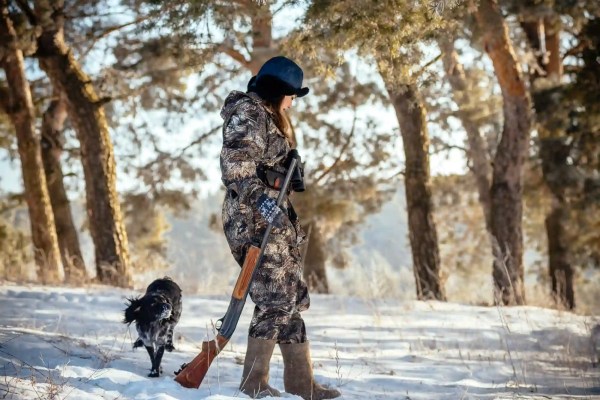
The Canton of Schwyz held three training sessions this year in Pfäffikon, Rothenthurm and Schwyz. Around 200 recreational hunters took part, roughly half of all those licensed to hunt in Schwyz. With the certificate of competence they obtained, they may in future be called upon to help regulate wolves. Anyone who shoots a different wolf instead of the one released for culling must expect consequences: the Hunting and Wildlife Department files a criminal complaint and levies compensation of up to 5,000 francs.
For Samuel Lütolf, secretary of the cantonal SVP and operator of the party's own “wolf ticker”, this provision is incomprehensible. He considers it very difficult to hit the right animal during regulation operations, and points to the daily allowance of 50 francs. Lütolf then launched a survey on the channel. Within a few hours, over 230 participants declared themselves willing to contribute 50 francs each towards a possible fine, and around a hundred others pledged 10 or 20 francs. Lütolf interprets the responses as proof that the authorities are doing too little to protect the public.
The channel was launched in June 2025 by the cantonal SVP president and National Councillor Roman Bürgi and now has over a thousand followers. Zgraggen expressed surprise that such an appeal was being run over a public channel, and stated that under the applicable legal situation the canton is obliged to impose such fines. Legally, Zgraggen said, there is probably nothing that can be done against such a fundraising campaign.
First question: what does a missed shot really cost?
The 10,000 francs collected are based on the figure of 5,000. This calculation falls short, because according to the account of the «Bote der Urschweiz», the 5,000 francs are the replacement value for the killed animal, that is, a compensation claim and not a penalty. The actual sanction follows from the criminal complaint. The Federal Hunting Act lists the killing of protected animals among the offences and provides for a separate penalty depending on culpability, which is added to the cantonal replacement value. How high it turns out in an individual case depends on culpability and personal circumstances and is not set by the canton, but by the criminal authority.
Precisely this combination was shown by the case of the Grisons recreational hunter who shot a wolf in Puschlav: a fine and replacement value, but no withdrawal of the licence. So anyone contributing 50 francs to the «wolf fund» does not know whether it is meant to cover a cantonal minor-offence fine, a federal sanction or a civil-law compensation claim. Crowdfunding without a defined purpose is not solidarity, but a blank cheque.
Second question: if the training suffices, what is the fund for?
Two statements in the same article contradict each other. Zgraggen states that recreational hunters learn in the courses of the hunting administration to be very precise when identifying the target, that is, to correctly identify the animal released for the kill. Lütolf, on the other hand, describes it as very difficult to hit the right animal, and is collecting precisely for the case that it fails.
Both cannot be right. If the training suffices, no fund is needed. If the fund is needed, the training is no good.
What lies behind the word «training» we documented in «Schwyz revises hunting ordinance: recreational hunters are to regulate predators»: a one-off participation, no examination, no proof of special skills. The Bote describes the content as explanations on the involvement of recreational hunters, on the regulation requirements and on communication, plus biology and the identification of wolves. In the canton of Grisons, which has already implemented the model, the corresponding evening course lasted, according to the «Neue Zürcher Zeitung», one hour, and according to CHWOLF's documentation about two. The WWF managing director for Grisons spoke at the time of a crash course.
Zgraggen's reference to identification therefore comes to nothing. The task in the field is not to recognise a wolf as a wolf, but to distinguish, within a pack, a released young animal from a protected parent animal. Christina Steiner of the wolf protection association ChWolf points out that from November to January adult wolves can barely be told apart from young animals. No course, whatever its length, can convey a feature that is simply not visible in the field.
Lütolf's image of the enormous risk taken on by the volunteers does not hold up under scrutiny either. Zgraggen noted that the signature on the form is not an obligation to take part in any possible regulation. Anyone who feels unsure can withdraw at any time. Moreover, it is not a wolf hunt, but rather involvement in ordinary regulation, individual kills, deterrence or general support for the authorities. Wolves that are killed become the property of the canton, the carcasses are destroyed, and outside the official hunting seasons there is a daily flat rate of 50 francs. A risk to which one exposes oneself voluntarily and which one can avoid at any time hardly justifies a solidarity fund.
Third question: to whom should the money actually flow?
The Schwyz concept explicitly states that the name of the marksman will not be made public. The same practice is followed in the canton of Grisons, where the reason was openly stated during the courses held there: it was expected that within a short time the whole valley would know who had killed the wolf.
This practice extends into criminal prosecution. When a Grisons game warden shot three lynx in the Surselva in one night, mistaking them for wolves, the public prosecutor did not even make the level of the sanction public. We placed the case in «Lynx beaten to death in Alsace: France punishes harshly, Switzerland stays almost silent» . The convicted marksman from the Puschlav valley also remained nameless.
A public appeal for donations to an anonymous recipient is self-contradictory. Either the person concerned gives up their anonymity, thereby undermining the cantonal protection practice. Or the money runs through a structure with no named beneficiary, without oversight and without any proof that the funds ever reach the purpose for which they were collected.
The comparison that does not hold
The «Neue Zürcher Zeitung» refers to the Freiheitsfonds Schweiz collective, which pays fines in a targeted manner through crowdfunding. From 1 July, the organisation called for the assumption of outstanding fines of people who were caught on public transport without a ticket and would therefore have to go to prison. More than 91,000 francs were raised, which according to its own figures allowed it to cover more than 250 fines and get around 250 people out of prison.
The comparison is flawed in every respect. There, the point is subsequent help for people in existential distress, whose offence was long since committed and whose consequence is imprisonment. Here, the point is a commitment given in advance, for an offence that has not even taken place yet, pledged by a cantonal councillor to volunteers who act on behalf of the state and are supposed to kill a protected wild animal in the process. The one mitigates a hardship after the fact, the other factors in a breach of the law in advance.
A risk without precedent
What is remarkable is what the fund actually insures against. In the summer of 2025, following approval by the federal government, three of the five pups of the Chöpfenberg pack were killed. According to Zgraggen, everything proceeded correctly, and no fines were imposed. In Schwyz there is therefore not a single case in which such a fine has ever been pronounced.
The picture becomes even clearer when looking at the cantons with the longest experience. Between September 2024 and January 2025, Valais killed a total of 34 wolves. DNA analyses revealed that only half of them belonged to a pack released for killing by the Federal Office for the Environment. The Valais authorities nevertheless described the kills as legal, because they took place within the designated area. The Federal Office for the Environment saw no need for action.
Added to this is a documented series of erroneous kills of adult lead animals: in Grisons the lead male of the Moesola pack was hit instead of a young wolf, in Valais a wolf that had not been released, in Vaud likewise a male lead animal. The Gruppe Wolf Schweiz stated that these kills were unlawful and that criminal consequences were in principle possible. Not a single sanction has become known as a result.
This is no minor detail. The killing of a lead animal is regarded as a serious intervention in the population, because packs can disband afterwards. In the case of the Ringelspitz pack, exactly this occurred. Just how high the threshold actually lies is shown by the Beverin pack: the Federal Office for the Environment initially rejected an application to kill the lead male, and the later authorisation was the first ever for a lead animal. What the federal government thus expressly approved only once happened several times as an aside through erroneous shots, without consequences for those involved.
This results in a paradoxical finding. Schwyz is the only one to even threaten a sanction that, in practical terms, does not exist in the neighbouring cantons. The fundraising appeal is therefore directed against the only approach that attaches costs to erroneous kills.
A canton with a history
The occasion for the whole debate is modest. On 17 July, the Schwyz wildlife wardens announced that a camera trap in the municipality of Alpthal had captured two wolves, presumably a pair. Whether a new pack will emerge from this is open and requires further evidence over the coming months. The Chöpfenberg pack in the border area with the canton of Glarus remains the first and only officially confirmed wolf pack in the canton.
That of all cantons it is Schwyz that transfers far-reaching powers to recreational hunters weighs heavily in view of the cantonal record. Poisoned golden eagles, a shot herd protection llama, illegal snare traps and banned wolf baits laid out by the canton itself: we have compiled the chronicle in «Poisoned golden eagles, shot llamas, illegal wolf traps» and in «Canton of Schwyz: an Eldorado for hunting crimes» . For the wider pattern, see our dossier «Poaching and hunting crime in Switzerland».
Commentary: this has long since stopped being about the wolf
When even the «Neue Zürcher Zeitung», hardly known for hunting-critical or left-green commentary, reports at length on the planned wolf fund of the Schwyz SVP, that shows one thing above all: this is no longer just about the wolf, but about the rule of law.
Whoever shoots a wolf not cleared for killing is not committing a harmless mistake. That is precisely why the law provides for a fine. And what is the political answer? Not: «Then we must improve training and identify even more carefully.» But rather: «We collect money so that the erroneous kill has, as far as possible, no financial consequences.»
Legally, such a fund may be permissible. In terms of the rule of law, it sends a fatal signal. A fine is meant to create personal responsibility and act as a deterrent. Anyone who promises in advance to cover any fines for erroneous kills strips the sanction of precisely its effect. Loosely following the motto: Don't worry, if something goes wrong, we'll pay.
What is particularly contradictory is this: the very same circles demand that official kill orders be implemented consistently. But when precisely this official limit is exceeded, the political community is suddenly supposed to bear the consequences. The rule of law, however, does not function on the principle that laws apply, except for those whose legal violations are politically desirable.
That it is of all newspapers the conservative NZZ taking up this development shows just how explosive the matter is. For at the heart of it lies not the wolf question, but a fundamental one: how seriously do we take personal responsibility and the enforcement of legally binding sanctions? That is what should be debated within the SVP Schwyz, and not how to shoot wolves as risk-free as possible.
The consistent answer lies elsewhere in any case: professional wild animal management on the model of the canton of Geneva, where trained specialists in cantonal service take on the task and killing remains the exception. How this could look for Schwyz is shown in our template text for a cantonal popular initiative.
More on the subject of recreational hunting: In the dossier The Role and Criticism of Recreational Hunters we shed light on the training, power and self-image of recreational hunters. What the research says about this is shown by Hunting fact-checked: the state of research.
The position of IG Wild beim Wild: IG Wild beim Wild rejects recreational hunting. Our model is the canton of Geneva, which has managed without recreational hunting since 1974: without hunting seasons, without hunting dogs, without driven hunts, without high seats, without the animal cruelty and crime that go hand in hand with hunting season elsewhere. What has worked there for over fifty years disproves every position paper by JagdSchweiz. An association that bases its policy on claims it refutes in its own documents is not a professional organisation, but a factory for misinformation.
Support our work
With your donation you help to protect animals and give their voice a hearing.
Donate now →