Despite More Kills: Wild Boar Damage Remains High
Cantonal survey shows what recreational hunting has failed to solve for decades.
«More shots, more animals»
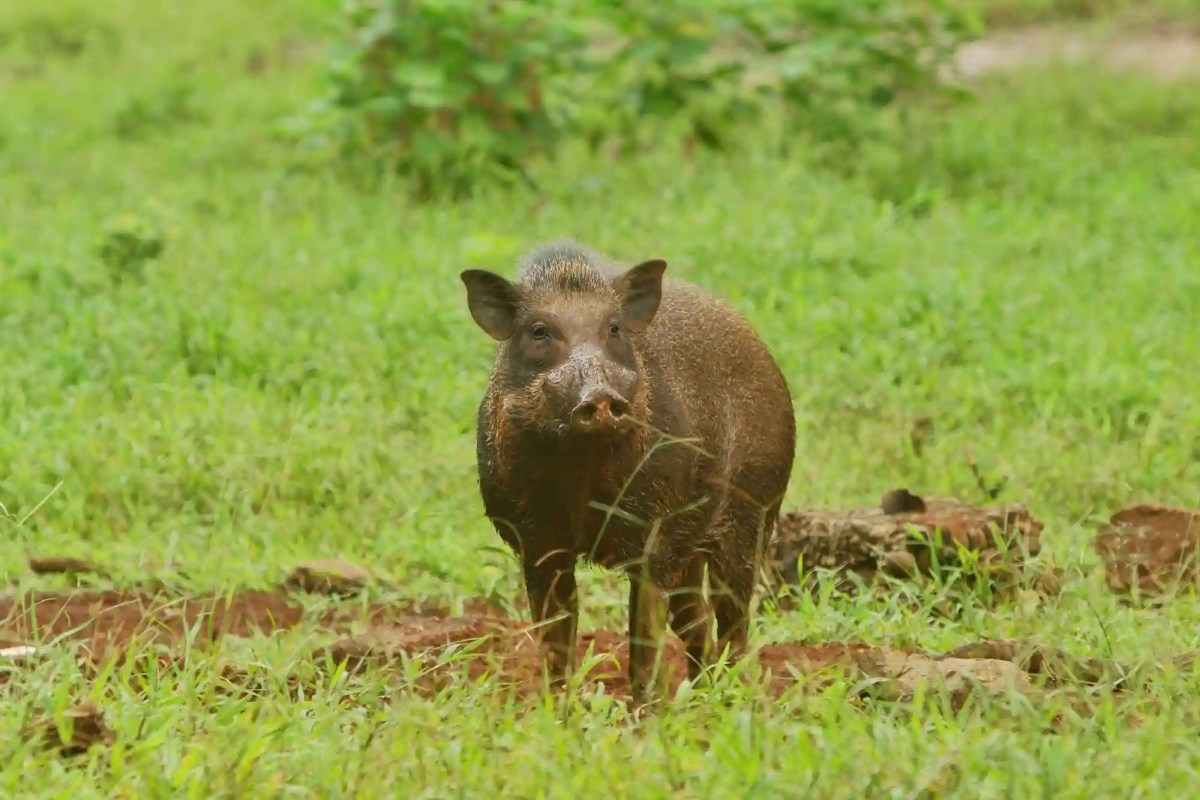
A survey by the Bauern Zeitung from 17 July 2026 shows it once again: in Solothurn, Fribourg, both Basel cantons and Valais, wild boar damage to fields and meadows continues to increase.
Farmers increasingly have to fence off their crops just to remain eligible for compensation at all.
What the cantonal survey reveals
According to the Office for Forests and Nature, the canton of Fribourg receives between 150 and 200 damage claims relating to wild boar every year. The canton regularly pays out between CHF 50,000 and CHF 200,000 a year for this; in 2023 alone, around CHF 70,000 was paid out for wild boar damage. In the canton of Solothurn, according to cantonal wildlife biologist Svenja Crottogini, the population cannot be precisely quantified — it is only roughly estimated based on the level of wildlife damage and hunting statistics.
This lack of precision is telling. Neither Solothurn nor Fribourg has reliable population figures. What is marketed as wildlife management relies on indicators such as hunting quotas, dead animal finds and damage trends, not on scientifically sound monitoring.
More kills, no decline in damage
This is precisely where the real finding lies. The nationwide hunting bag for wild boar has risen massively since the 1990s, from around 2,167 animals killed in 1995 to over 12,000 in 2019. More recent cantonal hunting statistics confirm this trend towards higher kill numbers. If recreational hunting's central justification were correct — that kills regulate populations and limit damage — damage reports should be falling as hunting bags rise. The opposite is true: damage totals in the affected cantons remain consistently high or are increasing.
This discrepancy is not a new phenomenon. The claim that recreational hunting keeps wild boar populations in balance is considered untenable from a wildlife biology perspective. Wild boars respond to hunting pressure with an increased reproduction rate, a mechanism that has long been documented in the scientific literature. Those who decimate populations through killing thereby alter the age and social structure of the sounders and can even intensify reproductive pressure instead of reducing it.
The Geneva counter-example
What an alternative could look like is demonstrated by the canton of Geneva, which has banned recreational hunting since 1974. There, only professional game wardens shoot wild boars, and only as a last resort once other protective measures have been exhausted. A sanitary kill there takes an average of 8 hours and requires a maximum of 2 cartridges, compared to the 60 to 80 hours and up to 15 cartridges a recreational hunter in the canton of Zurich spends on the same task. The Geneva model works with an independent wildlife commission and consistently focuses on prevention rather than symbolic kills.
Geneva’s hunting statistics show no extreme zigzag patterns, but rather stable kill numbers alongside a comparatively low, stable wild boar density of around five animals per square kilometre of forest. The cost of professional management amounts to roughly one million francs per year, equivalent to about 2.20 francs per resident, or just over 3 percent of an agricultural subsidy – a modest sum in relation to the wild boar damage incurred across Switzerland as a whole.
Incorrect hunting practices worsen the problem
A key reason why the problem can hardly be solved through hunting lies in the hunting practice itself. Wild boar sounders are led by a lead sow, who synchronises the reproductive cycle of the other sows, known as oestrus synchronisation. When the lead sow is killed, as regularly happens in recreational hunting, this structure collapses. The result is “oestrus chaos”: the sows become fertile year-round, which can lead to higher rather than lower population growth rates and, consequently, to more rather than fewer instances of wildlife damage. Specialist literature on wild boar management in Switzerland explicitly confirms this connection. Recreational hunting thus undermines its own stated goal.
Night hunting and high-tech escalation as the answer
Instead of rethinking their own practice, several cantons are relying on ever more far-reaching technical aids. In the canton of Aargau, recreational hunters have been permitted to shoot wild boars using night vision devices since 2019, and in the canton of Solothurn around 150 people already hold a corresponding exemption permit. This means that a device which is actually prohibited by law, and whose use is explicitly banned under the federal hunting ordinance, is being allowed at cantonal level through exemptions. As a result, the animals have largely become nocturnal and now effectively have no disturbance-free time at all, neither during the day nor at night. Even from a hunting perspective, this has already been described as concerning, since wild animals are also entitled to rest and undisturbed refuges.
Sterilisation as an alternative
A look abroad shows just how ineffective pure kill numbers are. In the Vallès Occidental region near Barcelona, the University of Barcelona, the bar associations of Catalonia and the city administration have launched a pilot project on contraception for wild boars. Using a contraceptive vaccine, the number of animals in the region fell by more than 400 within a single year, without a single additional kill. In Germany too, animal welfare organisations and several state parliaments have for years been calling for antibody-based, hormone-free contraception as a supplement or alternative to intensive hunting, precisely because it does not destroy the sounder structure.
Growing pressure to kill instead of analysing the causes
Instead of questioning the effectiveness of previous practice, some cantons are responding by expanding hunting. The canton of Schwyz is opening wild boar hunting for the first time from autumn 2026 to recreational hunters, without providing any wildlife-biological justification for doing so. The pattern repeats itself: more huntable species, more hunting days, more powers, but no answer to the actual question of why the damage is not decreasing despite decades of rising hunting bags.
The Bauern Zeitung's cantonal survey thus inadvertently provides further evidence that the central promise of recreational hunting, namely population regulation to prevent damage, is not being fulfilled in practice. On the contrary: incorrect hunting practices and ever more extreme hunting methods are increasing the pressure on the animals without solving the actual problem. More on this topic in our Fact check on wild boar hunting.
More on the subject of recreational hunting: In our dossiers on the criticism of recreational hunting gather fact-checks, analyses and background reports. The scientific evidence is presented in the overview Studies on the Effects of Recreational Hunting.
The position of IG Wild beim Wild: IG Wild beim Wild rejects recreational hunting. Our model is the canton of Geneva, which has managed without recreational hunting since 1974: without hunting seasons, without hunting dogs, without driven hunts, without high seats, without the animal cruelty and crime that go hand in hand with hunting season elsewhere. What has worked there for over fifty years disproves every position paper by JagdSchweiz. An association that bases its policy on claims it refutes in its own documents is not a professional organisation, but a factory for misinformation.

All articles are written by IG Wild beim Wild as well as by external co-authors. Research, structuring and editorial processes may be supported by AI-assisted tools.
Support our work
With your donation you help protect animals and give their voice a hearing.
Donate now →