Mountain bikers in the crosshairs: when perception errors become a danger
A bike magazine shows why safe target identification is more important than experience and hi-vis clothing.
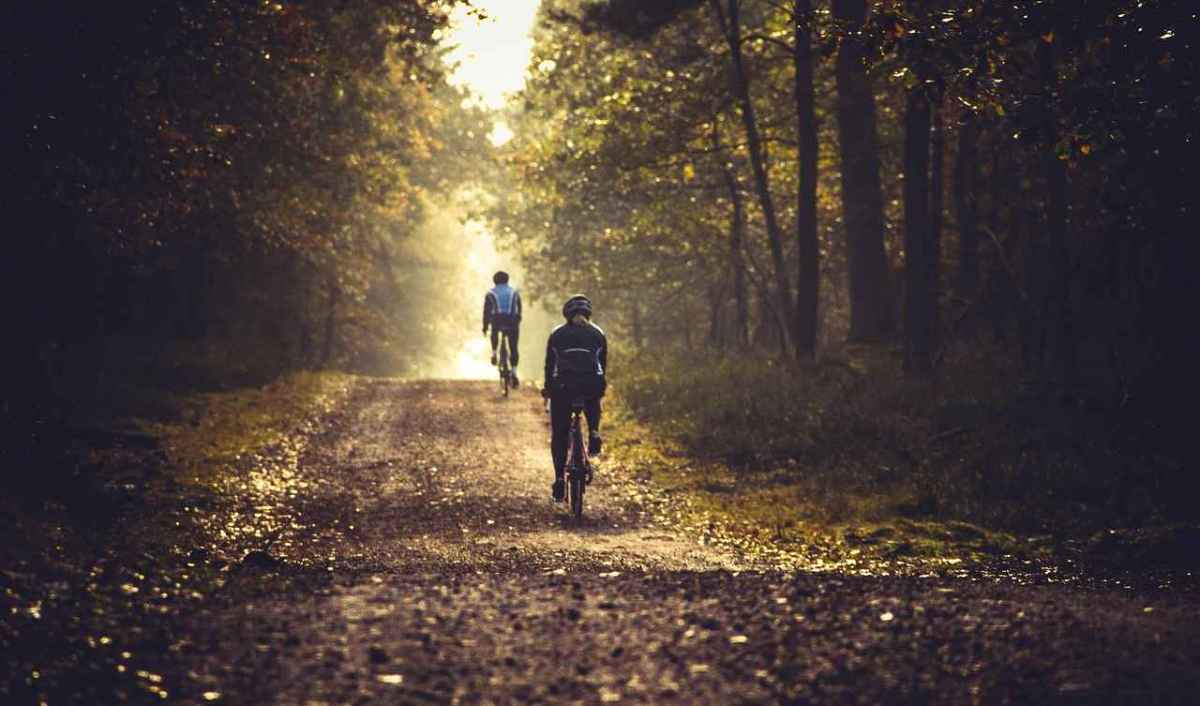
«Driven hunt»
It lasted a few seconds.
Near Chaumont in the canton of Neuchatel, a mountain biker approaches on a wide track, clearly visible. A recreational hunter turns, aims his weapon at him and holds him in his sights for a while. Only when he notices that it is not a wild animal but a human does he lower the weapon again. This time, no shot is fired.
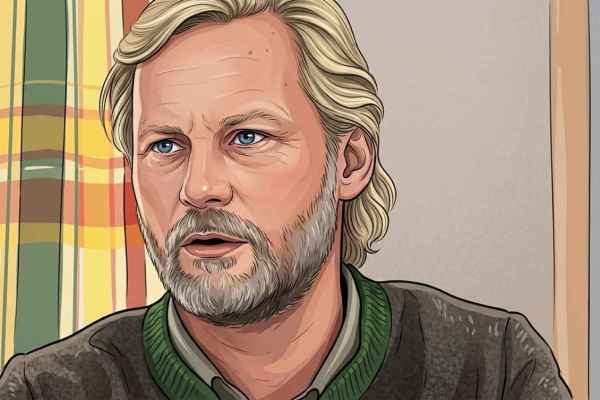
What is remarkable about this case is not just that it ended well. What is remarkable is who examined it. Not an animal welfare organisation, but the Swiss mountain bike magazine «Ride». Author Men Danuser, who grew up in Flims and has been on a bike since childhood, has presented an analysis under the title «Mountain bikers in the crosshairs» that goes far beyond the usual outrage. It asks the crucial question: why does this happen again and again, precisely when everything should speak against a mistake?
Not an isolated case
Chaumont is not alone. Near Girona in Spain, a 54-year-old cyclist narrowly survived after a recreational hunter mistook him for a wild boar and shot him in the stomach. Several emergency operations followed, and the shooter was arrested for negligence. And in Avers in the canton of Grisons, a horse was shot dead because a recreational hunter mistook it for a red deer — one of two incidents that show why the hunting authorities cannot shirk their responsibility.
The list could go on. In eastern Poland, a recreational hunter shot his neighbour outside his own house because he mistook him for a wild boar at night. We documented the case when a Polish recreational hunter mistook his neighbour for a wild boar. Just recently, a recreational hunter died in a fatal hunting accident on a high seat, hit by an experienced colleague. Those affected are no longer only recreational hunters and beaters, but also walkers, cyclists and children. Anyone who reads the long chronicle of hunting accidents and crimes involving hunters' weapons recognises the pattern.
It is exactly this pattern that Danuser dissects. And he first examines the convenient explanations.
What common explanations fail to account for
Alcohol alone? That doesn't explain all the cases. French accident statistics show that in the 2024/25 season, out of 61 presumed responsible persons tested after accidents, two tested positive for alcohol — that is, 3.3 per cent. Over twenty years, this share averages 8.3 per cent. However, these figures say nothing about all hunters, nor about the many untested cases, and alcohol remains an independent, avoidable risk factor when firearms are involved. Inexperience? In New Zealand evaluations, the shooter was an experienced recreational hunter in more than two-thirds of the cases. Poor visibility? The average distance is around 35 metres. Often the shooter observed his supposed target for a considerable time in daylight.
Even hi-vis clothing, the most obvious countermeasure, only helps to a limited extent. Analyses of North American accident statistics do show a clear correlation: of those mistaken for wild animals and shot at, almost none were wearing a conspicuous colour. A bright vest or a luminous helmet would therefore be no fashion accessory for mountain bikers during the hunting season, but a sensible protective measure. Nevertheless, as Danuser's uncomfortable point makes clear, clothing does not explain the core problem. At Chaumont, the cyclist was clearly recognisable, and the recreational hunter still took aim.
The Chaumont case also shows why alcohol must not be downplayed. As we documented in the article «Shooting under the influence», the shooter's breath reportedly smelled strongly of alcohol, according to the report. The incident triggered the debate in Neuchatel that led to the blood alcohol limit. Misperception, pressure of expectation and alcohol are not mutually exclusive — they can reinforce one another. How poorly regulated the combination of alcohol and recreational hunting is, we have shown repeatedly.
The problem begins before the trigger is pulled
This is where the truly interesting part of the analysis lies, and the reason why the topic belongs in the Psychology of recreational hunting and not merely in accident statistics.
Anyone waiting for wild animals automatically directs their attention, expectation and gaze towards signals that might indicate an animal: a movement in the undergrowth, a dark silhouette, a sound, a fleeting outline. Visual information is not processed neutrally in this process, but continuously classified according to expectation, attention and situation. Under time pressure, in poor visibility or in a familiar environment, this can lead to a premature classification: an ambiguous visual impression can be prematurely categorised as the expected target before the person can consciously check what they are actually seeing. Psychology has terms for this, such as goal-directed attention, expectation effect and inattentional blindness.
Familiarity with the hunting ground and group pressure reinforce this. Anyone who sits on the same high seat year after year knows every tree stump; routine lowers alertness to anything new. In driven and drive hunts, time pressure is added: several shooters stand ready simultaneously while beaters and dogs set wild animals in motion. The brief opportunity to shoot can tempt one to prematurely identify movement and outline as a wild animal. At this point, the expectation created by a driven hunt anticipates an animal, not a person on two wheels.
This does not explain such shootings, and it certainly does not excuse them. On the contrary: precisely because perception is fallible, a shot may only be fired once the target, background and bullet stop have been established beyond doubt. Where a person can be mistaken for a wild animal, it is not the hi-vis vest that has failed. What has failed is the safety decision of the armed person.
Why the basic rule is not enough
«Identify your target beyond doubt before you pull the trigger.» This is a central safety rule of hunting training. Accident analyses repeatedly show that it is not reliably followed. In French big-game hunting, for example, disregard of the 30-degree safety angle — that is, shooting in the direction of other people, paths, buildings or roads — has for years remained the single most common cause of serious accidents, accounting for around a third of cases.
Danuser's explanation is compelling: expectation-driven perception operates quickly, automatically and largely unconsciously. The conscious application of a safety rule, by contrast, is slow and must be actively carried out in every situation. Precisely for this reason, no shot may be fired if there is even reasonable doubt about the target, its surroundings or the bullet stop.
From the perspective of IG Wild beim Wild, this case raises an uncomfortable question: if even experience, visibility and safety rules do not reliably prevent misidentification, then such mistaken identity is not merely an operational mishap caused by a few bad apples. It is a risk inherent to hunting with firearms in jointly used forests. No hi-vis vest and no code of conduct for walkers, cyclists or children can fully shift this risk onto those affected.
And when it comes to safety: whataboutism
One might expect this risk to be taken seriously. In the Chaumont case, however, the president of the Neuchatel recreational hunting association directed his public criticism not at the shooter, who had aimed at a human being, but at the mountain biker: he had not called the police immediately.
The French trail-running magazine «u-trail» describes this reaction pattern as «le grand whataboutism des chasseurs». This is the editorial argument of a trail-running magazine, not an empirical study of all hunting organisations. Nevertheless, it names a familiar rhetorical pattern: instead of addressing safety on trails, reference is made to traffic, weather, avalanches or wildlife damage. The problem, it is claimed, is not the rifle, but the person who gets too close to it.
Where redirecting people is not enough, some places resort to restricting access to the forest. In Alsace, several municipalities have restricted nighttime and, in some cases, year-round forest use, officially to protect wild animals. We have shown how individual municipalities and hunting interests are restricting forest access. The asymmetry is remarkable: recreational hunters are allowed to be out at night, while athletes and nature lovers are supposed to stay away at precisely that time. Or, as «u-trail» put it pointedly: what is being protected is not the trees, but the high seats.
This brings the circle full closure. For people moving through the forest, things become doubly constrained. More dangerous, because expectation-driven perception can turn a person into a supposed wild animal. And more constrained, because in some places the same interests are curtailing access to the forest as a shared public resource.
What remains to be done
Danuser points to training methods involving unpredictable locations and times, so that no routines take hold which would merely confirm perception in a real emergency. A small field trial with former police officers showed fewer mistaken shots. For recreational hunting, no comparable approach has been established so far.
From the perspective of the IG Wild beim Wild, however, the discussion about training methods and warning vests falls short. The question is not primarily whether non-hunters can somewhat reduce their risk through clothing. The question is why they are exposed to an avoidable risk of being shot in the first place. The canton of Geneva has shown for years that it can also work without recreational hunting: with professional wildlife wardens instead of private leisure hunting with firearms in publicly used spaces.
Near Chaumont, it took a few seconds before the recreational hunter realised who he had in his sights. On one side of the barrel was a human life. On the other, had the shot been fired, would have been a second one: someone who could never have fully forgiven themselves. That things turned out well this time is no credit to recreational hunting. It is luck.
More on the subject of recreational hunting: In the dossier The Role and Criticism of Recreational Hunters we shed light on the training, power and self-image of recreational hunters. The scientific evidence is presented in the overview Studies on the Effects of Recreational Hunting.
The position of IG Wild beim Wild: IG Wild beim Wild rejects recreational hunting. Our model is the canton of Geneva, which has managed without recreational hunting since 1974: without hunting seasons, without hunting dogs, without driven hunts, without high seats, without the animal cruelty and crime that go hand in hand with hunting season elsewhere. What has worked there for over fifty years disproves every position paper by JagdSchweiz. An association that bases its policy on claims it refutes in its own documents is not a professional organisation, but a factory for misinformation.

All articles are written by IG Wild beim Wild as well as by external co-authors. Research, structuring and editorial processes may be supported by AI-assisted tools.
Support our work
With your donation you help protect animals and give their voice a hearing.
Donate now →