Shooting under the influence
The recreational hunter and alcohol are like two old pals who each consider the other utterly irreplaceable, even though any sober look would immediately show that each is a problem on its own.
It usually begins with the legend of the responsible huntsman: rising early, respecting nature, regulating the wildlife population.
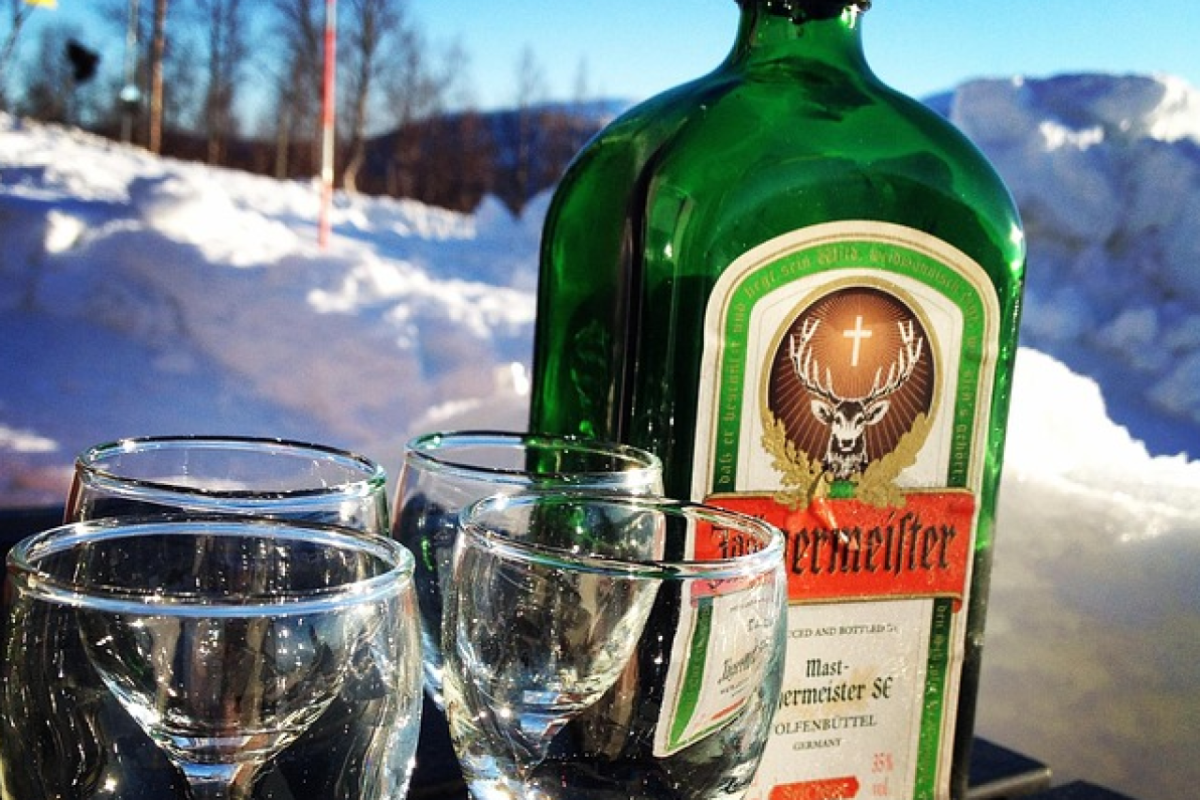
In practice, though, the day often starts with a “warmer” because it is so cold in the forest, then a second because everyone is standing together so nicely, and a third because the shotgun somehow feels “not so steady” in the hand today. By that point, wildlife management has turned into a cross between a shooting festival and a card game.
The recreational hunter's car is a kind of mobile minibar. In the boot: a rifle, wellies and an arsenal of spirits that would do any village pub proud. For cover, it is called a hunting horn choir, a hunting association meeting, a communal feast. If any other group of people were wandering through the woods in this condition, it would simply be called a drinking binge. Except that this group is armed.
The language is also conspicuously sanitised. Nobody boozes, people “clink glasses”. Nobody blasts away half-drunk through the woods, they “nurture camaraderie”. And if someone is swaying at the end of the day, he was not drunk, merely “a little strong in the glass”. Convenient phrasing to obscure the fact that here are people carrying live weapons in a state in which, on the road, they would long since have had to hand in their licence.
The romance of the campfire after recreational hunting does the rest. There sits the green-clad troop, patting each other on the back, telling heroic tales of the magnificent buck that was so difficult to get a shot at, and studiously ignoring that the magnificent buck of the evening is probably the liver. The state of some livers could already be addressed out in the hunting ground, but who wants to be the spoilsport in that company who asks the simple question: “Why do you need a schnapps before every shot and two after?”
The answer is usually an embarrassed laugh, followed by the standard excuse: “Oh, we're not overdoing it. It's part of the tradition.” In this context, tradition is the universal argument for everything one could otherwise hardly defend. If drinking without a weapon were really so great, nobody would need to kill an animal for it.
What is dangerous about this liaison between recreational hunting and alcohol is not only the moral aftertaste but the very real risk it creates. Anyone who drives a car while intoxicated is rightly regarded as a danger. Anyone who goes out with a rifle while intoxicated, by contrast, is supposed to pass as a “dependable hunter”. The bullet, however, does not care about the certificate in the cupboard; it follows only physics and the trembling of the hand.
To put it satirically: it is as if one claimed that surgeons needed three beers for a steadier hand. Nobody with any sense would find that acceptable. In the forest, however, a green felt hat and a reference to “fair chase” are enough, and suddenly everything looks halfway respectable.
In the end, a fairly sober thought remains, despite all the alcohol involved: anyone who truly understands nature, respect and responsibility will hardly think of practising them with a firearm and a bottle of schnapps at the same time. And perhaps it takes precisely this sobriety to recognise that the combination of recreational hunting and alcohol is not a romantic tradition, but a risk that people only keep glossing over out of habit.
How thin the line is was shown by an incident in the canton of Neuchatel. On the Chaumont, a young recreational hunter aimed his hunting rifle at a mountain biker, held him in his sights for a few seconds and lowered the weapon only when he realised that it was not game but a human being. According to the report, his breath smelled strongly of alcohol, so the man was out hunting under the influence. The case sparked a debate in Neuchatel about banning alcohol while hunting.
Imagine the same scene without a rifle. A man who smells of alcohol fixes a biker with a walking stick for a few seconds. Annoying, but harmless. With a loaded rifle, the same scene becomes a near-crime. According to the report, Switzerland has once again narrowly escaped a fatal hunting accident.
IG Wild beim Wild sums up the situation in somewhat less flattering terms. For Switzerland, it concludes that a hunting accident occurs roughly every 29 hours, and a fatality has to be mourned roughly every three and a half months. Even without alcohol in the picture, this is a record that would be treated as a serious safety problem in road traffic.
What is almost entirely missing is systematic data on how many of these accidents happen under the influence of alcohol. Without mandatory alcohol tests after hunting accidents, this remains shrouded in fog. Conveniently, it is precisely the fog in which the hunting lobby cultivates its story of the harmless hunter's beer.
Laws: blood alcohol limits for cars only
In road traffic, Switzerland has clear figures. From 0.5 per mille it gets risky, and from 0.8 per mille the driving licence is as a rule withdrawn immediately.
For armed recreational hunters, the picture is different. At federal level, the hunting act mainly regulates closed seasons, protective provisions and the requirements for hunting authorisations. The weapons law aims to combat the misuse of weapons and works with the concept of reliability under weapons law. An explicit blood alcohol limit for recreational hunting, however, is nowhere to be found in federal law.
The result: in Switzerland there is no uniform blood alcohol limit for recreational hunters. Many cantonal hunting acts do prohibit shooting while “unfit to drive” or forbid the misuse of weapons, but they define no concrete blood alcohol value. How much red wine a recreational hunter may have in his system before he counts as “unfit to drive” remains a matter of interpretation.
Put satirically: whoever starts an engine faces a clear limit. Whoever pulls a trigger gets a “grey area”.
Neuchatel and Zurich: a touch of realism
There are, at least, cantons where reality has already given hunting romanticism a gentle knock. In Zurich and Neuchatel, the hunting acts provide for the withdrawal of the hunting permit if someone repeatedly goes hunting while intoxicated or under the influence of narcotics or medication. They explicitly follow the rules of road traffic law.
Neuchatel has gone a step further. Since the start of 2023, an explicit limit of 0.5 per mille has applied to recreational hunters. Game wardens and police can carry out alcohol tests during the hunt. Anyone over the limit risks losing their hunting permit.
Viewed soberly, this is nothing revolutionary, but simply the application of the same logic as for driving: whoever operates a lethal machine had better not be drunk.
Grisons, Bern, Fribourg: the lobby tops up the glass
Elsewhere in Switzerland, they continue to rely on hunters' tall tales rather than legal clarity.
In the Grisons, parliament overturned a planned blood alcohol limit for recreational hunters in 2016. The majority found that Grisons hunting had “no alcohol problem”. During the debate it was said that alcohol had not been involved in a single hunting accident to date. That, for lack of testing, nobody really knows when alcohol is involved did not trouble the majority.
In the canton of Bern, GLP Grand Council member Casimir von Arx tried in 2023 to curb legal hunting under the influence of alcohol. His motion demanded that recreational hunters who repeatedly hunt while intoxicated or under the influence of substances lose their hunting permit, in line with road traffic rules. The centre-right majority of the Grand Council rejected it. An explicit ban was not needed, it was said, as recreational hunters were responsible. Hunting under the influence of alcohol thus remains expressly permitted in the canton of Bern.
The canton of Fribourg recently showed the same pattern. The cantonal government wanted to introduce a limit of 0.5 per mille for recreational hunters. Parliament, however, rejected the proposal. Army drivers, regular bus drivers and ship captains must stick to clear limits, while Fribourg recreational hunters may continue to shoot without a legally defined alcohol limit.
Criminal law and weapons law: sobriety after the fact
If a serious incident does occur, criminal law and weapons law ultimately come into play after all. Anyone who injures or kills someone through gross negligence, or who misuses a weapon, risks losing their hunting entitlement and their weapons permit.
The problem: these consequences only take effect once something has happened. In most cantons, preventive, clear rules to avoid such situations, in particular on alcohol, are still left to the famous common sense of recreational hunters. In Neuchatel, it took an intoxicated recreational hunter aiming his rifle at a mountain biker before a blood alcohol limit was introduced.
Sober consideration
To put it satirically: Switzerland trusts that a person is sober as long as they are driving a car, and that they are responsible as soon as they carry a hunting weapon. Strictly regulated driver, loosely regulated shooter.
The facts look less romantic. Hundreds of hunting accidents every year, regular fatalities, documented incidents involving intoxicated hunters, and a legal situation that remains vaguest precisely where a bullet makes every mistake instantly irreversible.
Anyone who truly understands nature, respect and responsibility would hardly think of practising all of them at once with a firearm and a bottle of schnapps. Sober consideration shows that the combination of hunting and alcohol is not a rustic tradition but a deliberate political decision in favour of a dangerous grey area. And this very grey area finally needs not hunters' tall tales but clear legal provisions.
In the view of IG Wild beim Wild, recreational hunters require annual medical-psychological fitness assessments modelled on the Netherlands, as well as a binding upper age limit. Today, the largest age group among recreational hunters is 65+. Within this group, age-related limitations such as declining eyesight, slower reaction times, reduced concentration and cognitive deficits increase significantly, statistically speaking. At the same time, accident analyses show that the number of serious hunting accidents involving injuries and fatalities rises significantly from middle age onwards.
The regular reports of hunting accidents, fatal mistakes and the misuse of hunting weapons highlight a structural problem. Private ownership and use of lethal firearms for leisure purposes largely escapes continuous oversight. In the view of IG Wild beim Wild, this is no longer justifiable. A practice based on voluntary killing, which at the same time poses considerable risks to people and animals, loses its societal legitimacy.
Hobby Hunting is also based on speciesism. Speciesism describes the systematic devaluation of non-human animals purely on the basis of their species. It is comparable to racism or sexism and cannot be justified either culturally or ethically. Tradition is no substitute for moral scrutiny.
Critical scrutiny is particularly essential in the field of recreational hunting. Hardly any other area is so shaped by sugar-coated narratives, half-truths and targeted disinformation. Where violence is normalised, narratives often serve to justify it. Transparency, verifiable facts and an open societal debate are therefore indispensable.
More on the subject of recreational hunting: In the dossier The Role and Criticism of Recreational Hunters we shed light on the training, power and self-image of recreational hunters. The scientific evidence is presented in the overview Studies on the Effects of Recreational Hunting.
The position of IG Wild beim Wild: IG Wild beim Wild rejects recreational hunting. Our model is the canton of Geneva, which has managed without recreational hunting since 1974: without hunting seasons, without hunting dogs, without driven hunts, without high seats, without the animal cruelty and crime that go hand in hand with hunting season elsewhere. What has worked there for over fifty years disproves every position paper by JagdSchweiz. An association that bases its policy on claims it refutes in its own documents is not a professional organisation, but a factory for misinformation.
Wild animals need a voice
Once a week: research, petitions and background information on recreational hunting. Free of charge and can be unsubscribed from at any time.

All articles are written by IG Wild beim Wild as well as by external co-authors. Research, structuring and editorial processes may be supported by AI-assisted tools.
Support our work
With your donation you help protect animals and give their voice a hearing.
Donate now →