Vitznau: First wild boar shot, Canton of Lucerne reports hardly any damage so far
The Lucerne authorities assume there is a small population. The hunting association that killed the boar is liable for wildlife damage and provides the local hunting supervision itself.
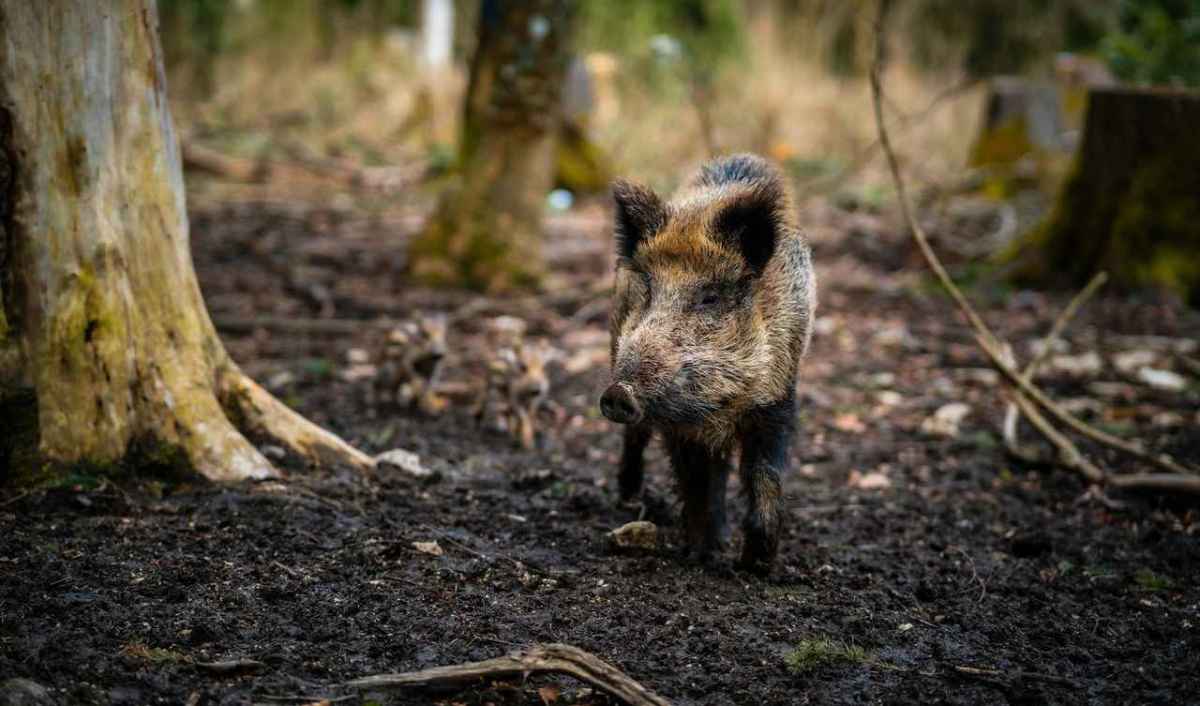
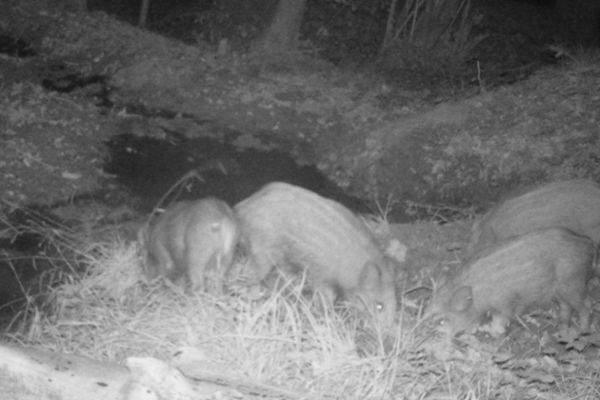
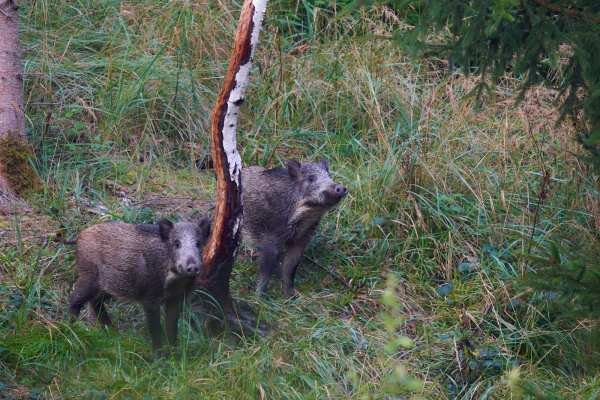
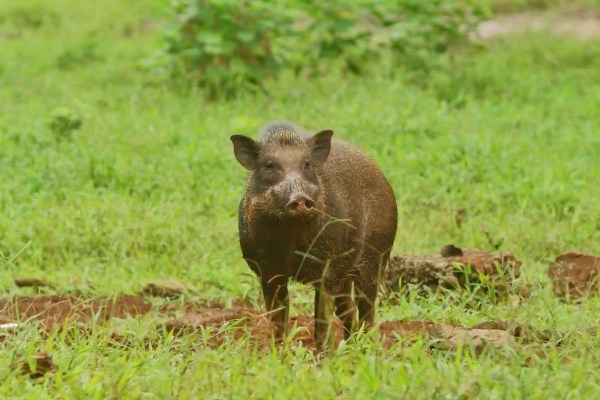
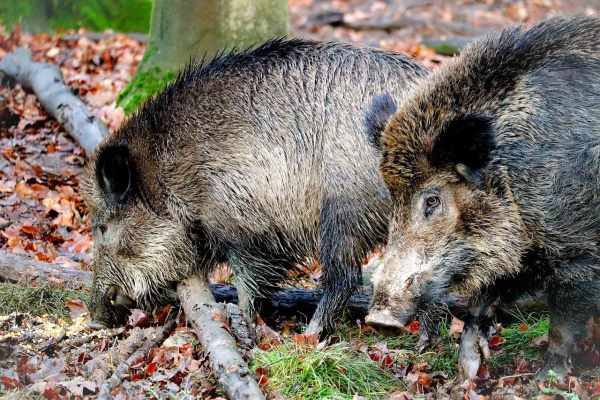
Symbolic image: wild boar with piglets in the forest. Photo: Patrick Pahlke / Unsplash
«Who checks whom»
In Vitznau, at the foot of the Rigi, recreational hunters shot a wild boar for the first time on 1 October 2026. The «Luzerner Zeitung» reported on this on 8 October, and the report also appeared in the «Boten der Urschweiz». It is based on the account given by the Vitznau hunting association, which regards the kill as a «special success».
What happened in Vitznau
According to the chairman of the hunting association, a roughly 100-kilogram boar, two-and-a-half years old, had been staying in the Gebetschwil and Brand areas and rooting up feed meadows there. In September, the leaseholders reportedly spent «countless hours» lying in wait, without success. Two camera traps confirmed the presence of a wild boar. On the first day of the driven and drive hunts, the boar was driven out of the forest in a «targeted drive-hunt operation» and shot by one of the leaseholders, whom the chairman described as the association's hunting supervisor.
According to this account, the operation targeted a single boar. The hunting association assumes that both camera traps showed the same wild boar.
What the authorities say
According to the report, the responsible game warden from the Agriculture and Forestry Office assumes there is a small population in the Canton of Lucerne. How large it is, is difficult to estimate, not least because hardly any damage has been recorded so far. This statement applies to the entire canton. Regarding the meadows in Vitznau, only the hunting association is quoted in the report. The boar is the only wild boar kill reported to the canton in the current hunting year. In the previous year, there were two.
For the canton of Schwyz, the head of the Department of Hunting and Wildlife reports five to six wild boars around the Rigi. The canton has so far compensated damages amounting to several hundred francs. Since this autumn, wild boars there have been huntable during the high and low hunting seasons. What to make of this is explained in the article Canton of Schwyz opens wild boar hunting for the first time.
Wild beim Wild documented the fact that a sounder formed on the Rigi for the first time in 2025 in the article Wild boars settle in the canton of Lucerne. Even then, the canton noted that the wild boars' rooting in the forest loosens and aerates the soil.
Who is liable, who benefits and who supervises
The case shows how roles are distributed within Lucerne's territorial hunting system. The cantonal hunting act regulates three matters that converge within the hunting association:
- Liability: The hunting association must compensate for wildlife damage caused by huntable wild animals. If it has demonstrably fulfilled its hunting obligations regarding population regulation, the canton covers compensation payments exceeding 35 percent of the hunting lease fee within that hunting year. Otherwise, it bears the full amount (§ 40). Damages under 200 francs per year are not compensated.
- Use: The hunting association is entitled to the huntable wild animals killed within its hunting ground (§ 21).
- Supervision: In leased hunting grounds, the hunting association provides its own hunting supervision at its own expense. The supervisors monitor compliance with hunting regulations and may be members of the association (§§ 45 and 46).
The obligation to pay compensation can create a financial incentive to try to prevent damage through kills. Whether this played a role in Vitznau is not documented. What is documented is the overlap of roles: the same association pays for damages, is entitled to the killed wild boar, and provides local supervision. In addition, there are cantonal game wardens. Under § 47, they are appointed to oversee protected areas and non-leased hunting grounds and may prosecute hunting-related offences throughout the canton. Hunting supervisors must report offences to the Lucerne police.
The reporting is inconsistent on one point: the chairman refers to the shooter as a "hunting supervisor", while the caption calls him a "game warden". According to the law, these are two different functions. Hunting supervisors are appointed by the hunting association, while game wardens are appointed by the canton.
According to the picture captions, the damage to the forage meadows was caused by wild boar «according to the hunting association». Whether the damage was formally documented, protective measures examined, or the reasons for the kill independently assessed, is not evident from the report. More on the oversight model can be found in the dossier Hunting Laws and Control.
What the kill changes about the problem
The agency states in its fact sheet on wildlife damage that priority must "always lie on prevention". The same paper states that for huntable species, the most effective prevention is "always hunting". In the fact sheet on wild boar hunting from 2016, it also calls the "wild sow" a hunting-wise "fascinating game species".
This cannot be derived scientifically in such a blanket manner. A perspective article in the «European Journal of Wildlife Research» concludes in 2026 that long-term control of wild boar populations requires more than recreational hunting. This work does not answer whether the individual kill in Vitznau prevents further meadow damage.
There are measured values regarding the method. A study of 407 killed wild boars found an average of 431 nmol/l of the stress hormone cortisol in blood serum after drive hunts, compared to 119 nmol/l after individual hunting from a high seat. It says nothing about the development of damage. Further studies can be found in the overview Hunting Fact Check. Why increasing kill numbers have so far not reduced the damage is shown in the article Despite More Kills: Wild Boar Damage Remains High and the dossier The wild boar in Switzerland.
Context
The canton of Lucerne assumes a small population and has so far found hardly any damage. Nevertheless, the death of a single boar is considered a success. The newspaper shows a provided photo for this (image credit "zvg"), whose caption speaks of the "wild boar dealt with" and names the farmer and the shooter. A trophy photo documents the death of a non-human animal as a hunting success. It proves neither the extent of the damage nor the necessity of the kill.
For IG Wild beim Wild, the following applies: anyone who, as a police officer or soldier, posed like this with their victims would be dishonourably discharged. Among recreational hunters, it is considered a custom, as shown by the article on the RTR trophy photo competition shows.
The canton of Lucerne is currently examining a bonus-malus system for hunting associations. As long as the same association pays for damage, has a claim to the killed wild animals, and provides local oversight, the question of how independent this control can be remains open.
More on the subject of recreational hunting: In our dossiers on the criticism of recreational hunting gather fact-checks, analyses and background reports. The scientific evidence is presented in the overview Studies on the Effects of Recreational Hunting.
The position of IG Wild beim Wild: IG Wild beim Wild rejects recreational hunting. Our model is the canton of Geneva, which has managed without recreational hunting since 1974: without hunting seasons, without hunting dogs, without driven hunts, without high seats, without the animal cruelty and crime that go hand in hand with hunting season elsewhere. What has worked there for over fifty years disproves every position paper by JagdSchweiz. An association that bases its policy on claims it refutes in its own documents is not a professional organisation, but a factory for misinformation.

All articles are written by IG Wild beim Wild as well as by external co-authors. Research, structuring and editorial processes may be supported by AI-assisted tools.
Support our work
With your donation you help protect animals and give their voice a hearing.
Donate now →