Wild boars settle in the canton of Lucerne
150 years ago, there were no wild boars left in Switzerland. Due to large-scale deforestation and overexploitation of forests in the 19th century, as well as unrestricted public hunting, the animals were considered extinct throughout Europe. In the 20th century, wild boars reclaimed large parts of their original range and migrated into Switzerland from France, Germany and Italy around 40 years ago.

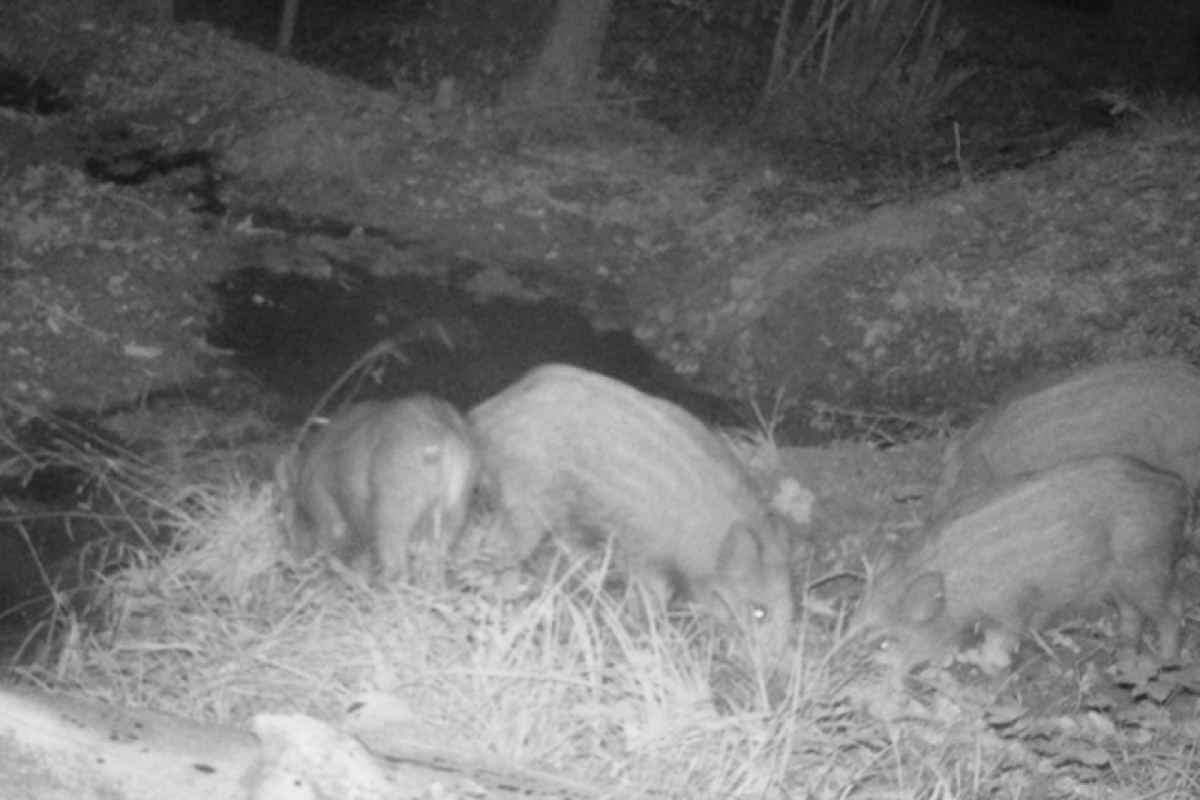
“The Sounder”
It is practically impossible to observe that wild boars are colonising Central Switzerland.
Central Switzerland, or Inner Switzerland, is one of the seven major regions of Switzerland. It comprises the cantons of Lucerne, Uri, Schwyz, Obwalden, Nidwalden and Zug, and is situated north of the main Alpine ridge. Lucerne, for example, borders the cantons of Zurich, Aargau and Bern — which are heavily populated by wild boars — as well as Solothurn nearby, and yet genuine colonisation of the canton of Lucerne has not really taken place over the past 20 years. This is despite the fact that during the same period, hunting bags in the aforementioned cantons have increased almost everywhere. For a long time, wild boars in the canton of Lucerne were considered rare transients.
Individual animals were spotted repeatedly but never settled permanently. This year, the situation changed: on the Rigi, several wild boars have successfully reproduced and have formed a sounder for the first time — a group consisting of at least one sow and her young of the year.
Wild boars are omnivores that can adapt to a variety of habitats. During the day they mostly remain hidden; at night they forage for food. Their rooting activity in the forest can loosen the soil and improve aeration. On agricultural land, however, the animals can cause considerable damage within a short period of time.
Early preventive measures are crucial to avoiding conflicts. The specialist department for hunting of the Agriculture and Forestry Office is in close contact with local hunting associations. Those affected by damage or with questions about protective measures should contact the hunting supervision authority without delay, as the Agriculture and Forestry Office announced on Friday, 26 September 2025.
The settlement of wild boar on the Rigi marks an important turning point for the wildlife population in the canton of Lucerne. Observers and farmers will be following developments closely in the coming months.
RECREATIONAL HUNTER RADAR
On the trail of hidden animal welfare offences, poaching and/or criminal activity? Report suspected cases to us! Help with the great Recreational Hunter Radar.

More on the subject of recreational hunting: In our dossiers on recreational hunting gather fact-checks, analyses and background reports. The scientific evidence is presented in the overview Studies on the Effects of Recreational Hunting.
The position of IG Wild beim Wild: IG Wild beim Wild rejects recreational hunting. Our model is the canton of Geneva, which has managed without recreational hunting since 1974: without hunting seasons, without hunting dogs, without driven hunts, without high seats, without the animal cruelty and crime that go hand in hand with hunting season elsewhere. What has worked there for over fifty years disproves every position paper by JagdSchweiz. An association that bases its policy on claims it refutes in its own documents is not a professional organisation, but a factory for misinformation.