Raccoons in Zurich: More sightings, but no special plan
The canton of Zurich is forgoing a special plan because the raccoon is already being hunted anyway. There is no evidence as to how effective this hunting is against the species' spread.
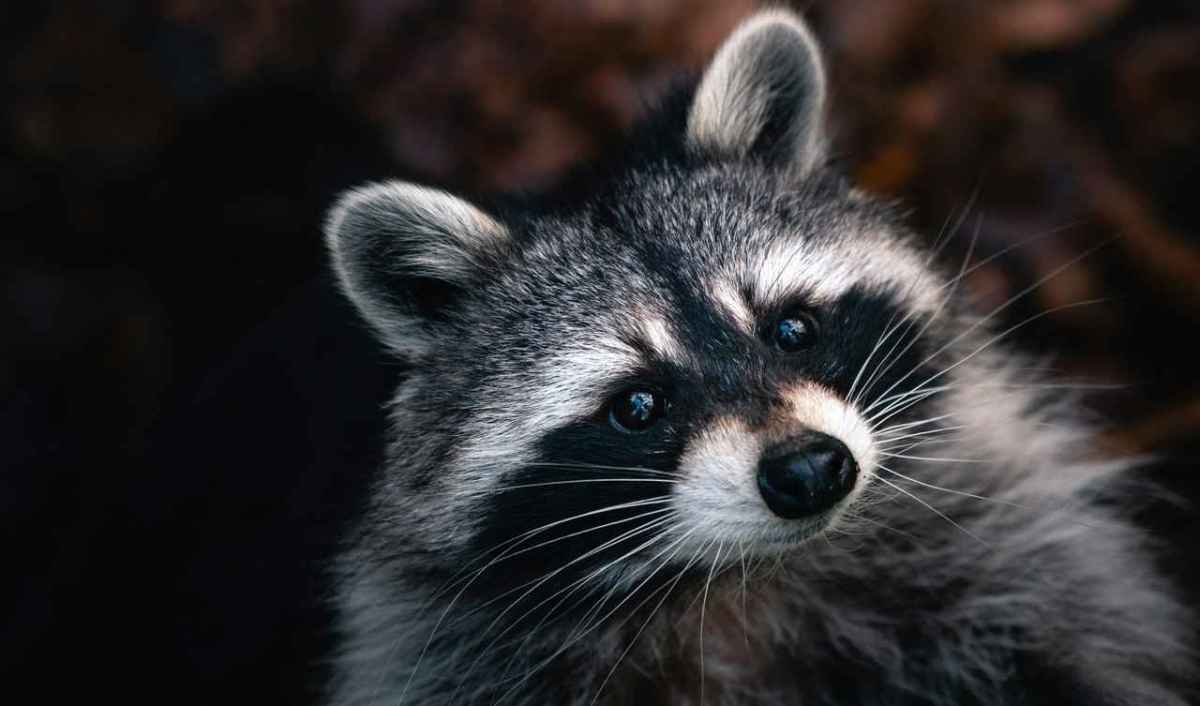
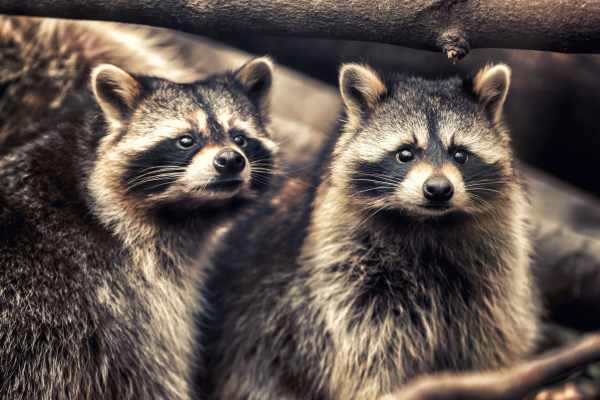
Symbolic image: raccoon. Photo: Chris Ensminger / Unsplash
«More shots, more animals»
Sightings of young raccoons are increasing in the canton of Zurich. This is reported by the news agency SDA on 9 October 2026. The report appeared, among other places, in the «Tages-Anzeiger» and on Watson. Reto Muggler, co-head of the cantonal fisheries and hunting administration, describes the growth of the population as “not exponential, but creeping”. The canton of Zurich has no special plan against the spread.
Muggler justifies forgoing a special plan with reference to the existing hunting: “Since the raccoon, as a neozoon, is hunted anyway, it is not needed at the moment.” The report does not cite any evidence of how effective this hunting is against the spread.
At the same time, Muggler puts the observations into perspective: “Sightings of young animals are increasing,” but this could also be due to the fact that there are far more cameras today than in the past. According to the report, the number of raccoons shot in the canton has remained constant at one to five per year for decades.
84 kills and no population figure
No one knows how many raccoons live in Switzerland. The species has appeared in hunting statistics for around ten years. According to SDA, 84 raccoons were killed nationwide in 2025, of which 54 were in Aargau and 23 in Basel-Landschaft. By comparison: the federal hunting statistics recorded just 2 kills in 2020, 17 in 2022, and already 44 in 2023, of which 35 were in Basel-Landschaft, as Wild beim Wild has documented in the dossier The Raccoon in Switzerland.
Kill statistics document animals that have been killed; they are not a population count. Rising figures may reflect either a wider spread or more intensive hunting. They alone cannot show how effective the interventions are. This is precisely why monitoring would be needed that records distribution and population independently of the hunting bag.
Aargau relies on box traps
According to SDA, the canton of Aargau works together with the hunting associations. Recreational hunters have eleven specially developed box traps with capture baskets at their disposal. If a raccoon enters the trap, it is killed with a shot.
Live traps, too, can cause stress, injuries from escape attempts and bycatch. How great these risks are depends, among other things, on the design, duration of capture and frequency of checks. The SDA report provides no details on this for the Aargau traps. General information on the risks of different trap types can be found in the dossier Trap hunting.
Under the federal hunting act, the raccoon may be hunted all year round. This raises the question of how dependent young animals are protected during trapping and kills.
What Germany shows
Germany is often cited in reporting as a cautionary example; according to SDA, an estimated two million raccoons live there. Less frequently mentioned is how intensively the species is hunted there. According to the German Hunting Association, 284,220 raccoons were killed in the 2024/25 hunting year – a new record and roughly twice as many as ten years earlier. According to the DJV, about four in ten animals in the statistics were caught using live traps, the very method Aargau is now relying on.
Despite decades of hunting, the raccoon has continued to spread in Germany. This calls into question the idea that its establishment can be prevented by hunting alone. Whether individual interventions have a local effect must be examined separately.
Clues as to why this is difficult are provided by the long-term study conducted by TU Dresden in Müritz National Park. There, the population stabilised near the habitat's carrying capacity after a growth phase. One-year-old females were pregnant in only 50 percent of cases, compared with 91 percent of older females, and yearling females had significantly smaller litters, as the summary of Frank-Uwe Michler's dissertation states. Such density-dependent differences are regarded in wildlife biology as a margin within which populations can partially compensate for losses. This study does not directly demonstrate how strongly this occurs in hunted raccoon populations.
Kassel and EU law: there are alternatives to killing
The city of Kassel wanted to show that it could work without killing. In August 2025, a pilot project by the Federal Association of Wildlife Aid Organisations (Bundesverband der Wildtierhilfen) began there: raccoons were to be caught using camera-monitored live traps, sterilised or castrated by veterinarians, and released again at the same location, planned over three years and scientifically monitored (Kassel raccoon project). Five days after the start, it was suspended: the state of Hesse had transferred responsibility to the Regierungspräsidium Kassel, and the Hesse State Hunting Association had demanded a legal review (Pilot project in Kassel stopped). According to the project leaders, the Federal Ministry for the Environment confirmed that sterilisation or castration of invasive species is compatible with EU law. According to the most recent reporting, the project nevertheless remained on hold (Raccoons in Bielefeld: the more that are killed, the more that arrive).
EU law, too, does not prescribe killing. The Regulation (EU) No. 1143/2014 on invasive alien species explicitly mentions, in Article 19, lethal or non-lethal measures for eradication, population control or containment. When choosing the method, the authorities must ensure that the animals are spared avoidable pain, distress or suffering, and the effectiveness of the measures must be monitored using a surveillance system. Switzerland is not bound by this regulation. However, it shows that non-lethal methods and success monitoring are also part of managing invasive species. How hunting associations nevertheless portray the regulation as a killing obligation is shown by the Solingen case: Raccoon babies killed: hunting association spreads false claim. Further background: Invasive species: No licence to kill.
What the dietary analyses show
The dietary studies in Müritz National Park show that raccoons there predominantly used easily available food. In 982 faecal samples from the years 2006 to 2011, invertebrates made up 51.9 percent of the biomass consumed, plant matter 31.8 percent, and vertebrates 16.3 percent. Birds, including eggs, accounted for 2.9 percent, and amphibians for 5.7 percent of the biomass, according to the summary of Berit Michler's dissertation.
These findings argue against a blanket portrayal of the raccoon as a specialised bird predator. However, they stem from a single study area and do not rule out local risks to endangered species. Where endangered species are affected, concrete protective measures at breeding sites and spawning waters should be examined and their effectiveness monitored.
The raccoon roundworm mentioned in the report is a real health risk. Infection occurs through the ingestion of infectious eggs from an environment contaminated with faeces. Raccoon droppings should therefore never be handled without protection, and larger accumulations of faeces should be removed by professionals (MSD Manual).
What helps in residential areas
The raccoon has already been confirmed in the canton of Zurich. Where it appears in residential areas, accessible food sources and building access points should be addressed first. Such measures target typical sources of conflict directly. They are no substitute for population monitoring.
- Secure waste bins and compost against raccoons
- Do not leave pet food outdoors and do not feed wild animals
- Secure gutters, downpipes and chimneys with metal collars or grilles
- Specifically protect breeding sites and spawning waters of endangered species and monitor the effectiveness of these measures
- Establish population monitoring before deciding on further interventions
Practical tips for homeowners and gardeners can be found in the article Keeping Raccoons Away in an Animal-Friendly Way.
The fact that the canton of Zurich currently has no specific strategy is therefore not only an omission, but also an opportunity. It could develop one that clearly defines objectives, combining conflict prevention, public information and scientific evaluation of success, rather than simply adopting the Aargau trapping model, whose effectiveness is not substantiated by any evidence in the reporting at hand.
What objectives is the canton pursuing?
Conflict prevention, population control and preventing the spread of the species are three distinct objectives. They require different measures and different criteria for success. Anyone who cites “hunting” as the answer to all three should be able to say which objective they are pursuing and how they measure success.
For the canton of Zurich, concrete questions therefore arise: Does it want to prevent the spread, limit the population, or avoid conflicts in residential areas? How does it survey distribution and population when sightings also depend on the number of cameras? And where is the publicly verifiable evidence that the existing hunting makes a special concept unnecessary?
The dossier Neozoa and recreational hunting in Switzerland shows how often the label «invasive» legitimises killing without disclosing goals and effects. Further reading: the article on the Raccoon report by BBC Future.
A shotgun that has taken one to five raccoons a year for decades is not a concept.
Get involved
Wild beim Wild calls, in a petition , for an end to the year-round, closed-season-free hunting of the raccoon in Switzerland.
Sources
- SDA via «Tages-Anzeiger»: «Raccoons: spread in Zurich hardly stoppable», 9 October 2026
- SDA via Watson: «The raccoon is also spreading in Zurich», 9 October 2026
- Federal hunting statistics, raccoon kill figures 2020 to 2023, compiled in the WBW raccoon dossier
- Federal Act on Hunting and the Protection of Wild Mammals and Birds: SR 922.0
- German Hunting Association: «New record in raccoon hunting», 12 March 2026 (hunting year 2024/25)
- Michler, Frank-Uwe: Summary of the dissertation on the raccoon population in Müritz National Park, TU Dresden, sections on reproductive biology and population dynamics
- Michler, Berit A.: Summary of the dissertation on feeding ecology, TU Dresden, section II (faecal sample analysis)
- MSD Manual: Baylisascariasis
More on the subject of recreational hunting: In the dossier The Role and Criticism of Recreational Hunters we shed light on the training, power and self-image of recreational hunters. What the research says about this is shown by Hunting fact-checked: the state of research.
The position of IG Wild beim Wild: IG Wild beim Wild rejects recreational hunting. Our model is the canton of Geneva, which has managed without recreational hunting since 1974: without hunting seasons, without hunting dogs, without driven hunts, without high seats, without the animal cruelty and crime that go hand in hand with hunting season elsewhere. What has worked there for over fifty years disproves every position paper by JagdSchweiz. An association that bases its policy on claims it refutes in its own documents is not a professional organisation, but a factory for misinformation.
Wild animals need a voice
Once a week: research, petitions and background information on recreational hunting. Free of charge and can be unsubscribed from at any time.

All articles are written by IG Wild beim Wild as well as by external co-authors. Research, structuring and editorial processes may be supported by AI-assisted tools.
Support our work
With your donation you help protect animals and give their voice a hearing.
Donate now →