
Neozoa and hunting in Switzerland: When humans create the problem and sell the shotgun as the solution
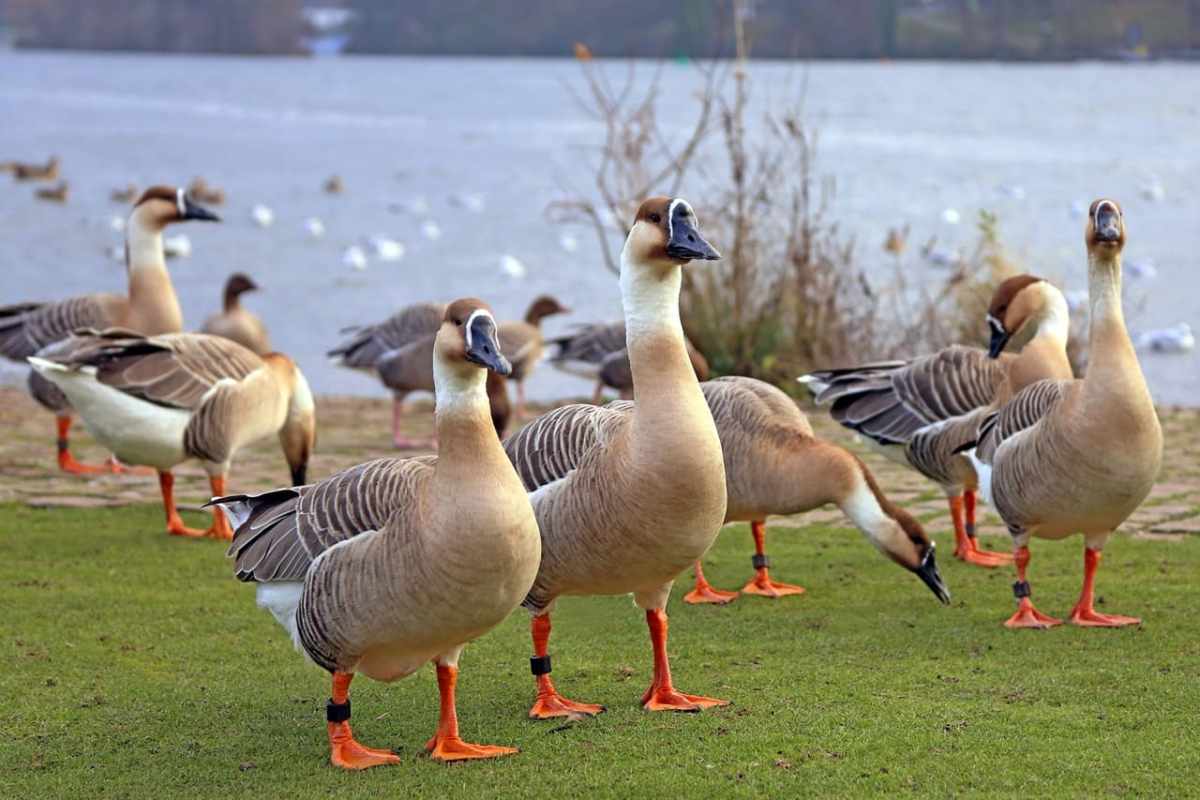
Raccoon, raccoon dog, Egyptian goose, coypu: humans brought them to Europe, bred them as fur animals, kept them as ornamental birds or simply released them. Now that they are spreading, they are stigmatised as “invasive species” and left to recreational hunters as a convenient target. The EU Union list, introduced in 2016 and most recently expanded in 2025, now names 114 animal and plant species whose spread is to be contained. Yet the record is disastrous: in Germany, in the 2024/25 hunting year, 282,499 raccoons were killed, over 1,100 per cent more than 20 years ago. The population keeps growing regardless. A Springer study shows that hunting raccoons since 1954 has not even slowed their spread. Recreational hunting as a tool against neozoa has failed. This dossier shows why that is, what it means for Switzerland and what alternatives exist.
What are neozoa?
Definition and distinction
Neozoa (Greek: “new animals”) are animal species that, after 1492, reached areas where they did not occur naturally through direct or indirect human influence. In Germany, around 264 neozoan species have become permanently established. Most are ecologically inconspicuous. Only a small proportion are considered “invasive”, meaning they spread aggressively and can displace or harm native species. In 2016 the European Commission drew up a Union list which, after several expansions (most recently by 26 species in 2025), now comprises 114 animal and plant species, including raccoon, raccoon dog, Egyptian goose, coypu, muskrat, grey squirrel and ruddy duck.
Not neozoa: natural returnees
The distinction is crucial: species that return of their own accord to their former range are not neozoa. Wolf, lynx, brown bear, otter and golden jackal are natural returnees or natural range expanders and enjoy legal protection. The Golden jackal, which has been recorded in Switzerland since the winter of 2011/12, is spreading naturally northwards and westwards from south-eastern Europe. It is a protected species in Switzerland. The fact that hunting associations would like to put it on the kill list too shows how arbitrarily the label “alien” is applied.
The situation in Switzerland
Legal situation and huntable neozoa
The Swiss Hunting Act (JSG) regulates how non-native species are dealt with: they must not be released and are to be removed from the wild. Raccoons and raccoon dogs may be hunted year-round in Switzerland as neozoa. The keeping and importing of certain species, such as grey squirrels and ruddy ducks, is prohibited. The canton of Aargau lists raccoon dogs, muskrats, raccoons, Egyptian geese, Canada geese, ruddy shelducks and pond sliders, among others, as invasive neozoa. In practice, the populations of most neozoa in Switzerland are still small. In the case of the raccoon, however, numbers are rising: according to Federal Hunting Statistics 2025 84 raccoons were shot (2020: 2), 54 of them in Aargau and 23 in Basel-Landschaft. Raccoon dogs are rare in northern Switzerland. The big exception is the Egyptian goose, which has bred on Swiss waters every year since 2003.
Who brought the animals here?
The answer is the same in every case: humans. Raccoons come from North America and were bred in Europe as fur animals from the 1930s onwards. They escaped from fur farms or were deliberately released. Raccoon dogs were imported from East Asia and released in the Soviet Union for fur production, from where they spread westwards. Egyptian geese were ornamental birds in parks that escaped from captivity. Coypus were likewise imported for the fur industry. That these animals are now regarded as “pests” and are to be “regulated” with shotguns is cynical: humans caused the problem, and the animals pay the price.
More on this: Dossier: The raccoon in Switzerland
Why recreational hunting fails as neozoa management
The figures speak for themselves
Germany is the best example of the failure of hunting-based “regulation” of neozoa. In the 2003/04 hunting year, 21,149 raccoons were killed. In the 2024/25 hunting year, the figure was 282’499. That is an increase of over 1,100 per cent. Yet the population keeps growing: an estimated 1.6 to 2 million raccoons now live in Germany. A Springer study documents that hunting since 1954 has had "no lasting reductive effect" and that "the population increase has probably not even been slowed". Territories freed up by killing are quickly recolonised.
Compensatory reproduction
Raccoons respond to hunting pressure with increased reproduction. In hunted populations, the proportion of breeding females is higher than in unhunted populations. The more animals are killed, the more young are born. The losses are not merely replaced but overcompensated. The wildlife biologist Ulf Hohmann puts it plainly: he knows of not a single scientist or hunting expert who seriously believes the raccoon can be regulated by hunting. This phenomenon has also been scientifically described in wild boars and foxes.
The failure is systemic
Recreational hunting fails with neozoa for the same reasons it fails with native species: it cannot reduce populations across the board, killing animals without territories creates a suction effect, and above all it offers recreational hunters one thing: an alibi to shoot all year round. The German Hunting Association demands year-round hunting without closed seasons, without hunting bans in protected areas and without restrictions on trap hunting. The NABU position paper counters that non-hunting methods should take priority. Here, hunting serves not species protection but the legitimation of a hobby.
More on this: Why recreational hunting fails as population control
Alternatives: what actually works
Neutering instead of killing
The city of Kassel launched a pilot project in 2025 on the initiative of the Federal Association of Wildlife Rescue Centres: raccoons are caught, neutered and released again. Neutered males continue to defend their territory, prevent new animals from moving in and do not reproduce. Experience from Brandenburg confirms that in unhunted populations with stable social structures, the reproduction rate is lower than in intensively hunted populations. In northern Italy, the method was applied successfully to coypus.
Prevention: tackling the causes
The most effective measure against neozoa is prevention: banning fur farms, regulating the keeping of exotic animals, and installing fences and technical protective devices. Switzerland has already banned the keeping and import of certain invasive species. What is still missing is a consistent ban on all fur farms across Europe and stricter control of the trade in exotic animals.
Habitat protection instead of persecuting species
NABU and Wildtierschutz Deutschland stress that the most effective way to protect native species from neozoa is to strengthen their habitats. Fences around spawning and breeding waters, protective measures on nesting trees and nest boxes reduce losses from predation more precisely than any shotgun. Blanket hunting in agricultural landscapes alone is not suited to increasing the breeding success of ground-nesting birds in the long term.
The instrumentalisation: neozoa as a hunting alibi
Year-round hunting as the goal
For recreational hunters, neozoa are a gift: they legitimise year-round hunting, trap hunting, night hunting and the weakening of closed seasons and protected areas. The German Hunting Association explicitly demands that raccoon, raccoon dog, Egyptian goose and coypu be made huntable without restriction in all federal states. In 2025, a CDU politician even called for a "bounty" for every raccoon killed. The fact that the hunting associations at the same time continue to allow hunting of endangered native species such as the brown hare, woodcock and rock ptarmigan exposes the species-protection argument as a facade.
Double standards in species protection
The same recreational hunters who want to kill raccoons to protect native species kill thousands of foxes, badgers, martens and corvids in Switzerland every year, all of which are native and ecologically indispensable. In Germany, grey partridges and brown hares continue to be hunted even though grey partridge populations have collapsed by more than 90 per cent and the brown hare is classed as endangered on the Red List. The neozoa management of recreational hunters is not species protection but a pretext for maximising killing.
What needs to change
- Prevention instead of persecution: ban fur farms EU-wide, regulate the trade in exotic animals more strictly, make releases a punishable offence. Tackle the problem at its root instead of fighting the symptoms.
- Castration programmes instead of mass culling: The Kassel model and experience from northern Italy show that castration is more effective than culling. Castrated territory holders stabilise the population and prevent immigration.
- Habitat protection for threatened native species: Fences around spawning and breeding waters, protective devices on nest boxes and nesting trees, revitalisation of wetlands. Strengthen habitats instead of hunting scapegoats.
- Science-based management instead of recreational hunting lobby politics: The decision on whether and how a neozoan species is managed must be based on scientific data, not on recreational hunters' desire for year-round hunting opportunities.
- Consistently protect natural returnees: The golden jackal, otter, wolf and other naturally range-expanding species must not be reclassified as neozoans in order to undermine their protection.
Talking points
“Neozoans must be hunted in order to protect native species.” The figures prove the opposite: in Germany, hunting of the raccoon since 1954 has not stopped its spread. Over 280,000 kills in the 2024/25 hunting year, and the population is growing regardless. A Springer study confirms that hunting had “no lasting reductive effect”. Non-hunting methods such as castration, habitat protection and technical prevention are demonstrably more effective.
“The raccoon threatens native biodiversity.” The raccoon can locally harm bird clutches and amphibians. But the main causes of species loss are habitat destruction, pesticides and intensive agriculture, not neozoans. The fixation on the raccoon as the main problem obscures the structural causes and hands recreational hunters a convenient scapegoat.
“Hunting is the most effective tool against invasive species.” So claims the German Hunting Association, yet its own kill statistics prove the opposite. NABU expressly recommends non-hunting methods and criticises that removal is also carried out using traps that violate animal welfare. Castration programmes, habitat protection and tackling root causes are more effective, more sustainable and ethically defensible.
“Switzerland must act now, before it is too late.” In Switzerland, most neozoan populations are still very small. That is an argument for prevention, not for panic and gunfire. Anyone who bans fur farms, regulates the trade in exotic animals and strengthens habitats has no need for year-round hunting of raccoons.
«Without hunting, invasive alien species spread uncontrollably.» Since 1974, Geneva has shown that professional wildlife management works without recreational hunters. The management of invasive species can also be carried out by trained game wardens, in a targeted way, under scientific supervision and without the collateral damage of recreational hunting.
Quick links
Articles on Wild beim Wild
- The Raccoon in Switzerland
- Why recreational hunting fails as population control
- Hunting Fact Check
- Hunting myths: 12 claims you should scrutinise critically
Related dossiers
- Hunting and Biodiversity
- The fox in Switzerland
- Geneva and the hunting ban
- The game warden model
- Trap hunting
sources
- Springer Nature: Hohmann, F. et al. (2023): The North American raccoon in Germany: background, conflict areas & management measures
- German Hunting Association (Deutscher Jagdverband): Raccoon hunting bag 2024/25 (282,499 animals)
- PETA Germany (2025): Raccoon kills at record levels. Mass killing as a regulation concept has failed
- BVB / Freie Wähler Brandenburg (2022): Neutering raccoons a better solution than just shooting them
- NABU: Position paper on invasive species, preferring non-hunting methods
- Wildtierschutz Deutschland: Fact check on invasive species (Robel et al.)
- European Commission: Union list of invasive alien species (Regulation 1143/2014; Implementing Regulation (EU) 2025/1422)
- Canton of St. Gallen, Office for Nature, Hunting and Fisheries: Information on alien animal species
- Canton of Aargau: Invasive animals (alien species), species list
- Swiss Ornithological Institute Sempach: Classification of alien species
- Federal Act on Hunting and the Protection of Wild Mammals and Birds (JSG, SR 922.0)
- Kassel 2025: Raccoon neutering pilot project, Federal Association of Wildlife Rescue Centres
- Federal Hunting Statistics 2025 (FOEN), raccoon kills in Switzerland
Our Standard
Humans brought raccoons, raccoon dogs and Egyptian geese to Europe. The fur industry bred them, and the recreational hunting lobby now uses them as a justification for year-round hunting. The animals themselves have done nothing wrong. They survive where humans have put them. The answer must not be the shotgun, but responsibility: removing the causes, strengthening habitats, acting on the basis of science. Geneva shows that wildlife management works without recreational hunters, even where alien species are concerned. This dossier is updated continuously.
More on the topic of recreational hunting: in our Dossier "Hunting in Switzerland: Figures, Systems and Myths" we bring together fact checks, analyses and background reports.