Raccoons in Bielefeld: the more are killed, the more arrive
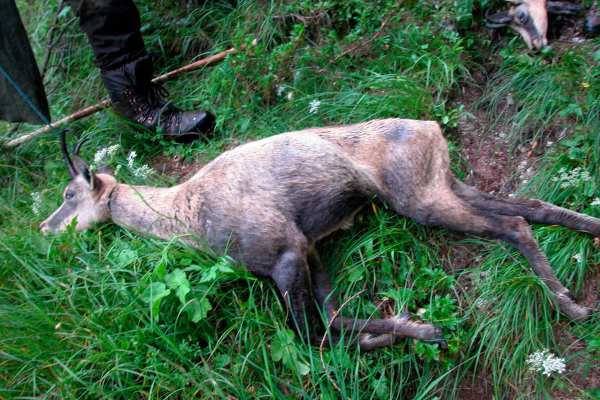
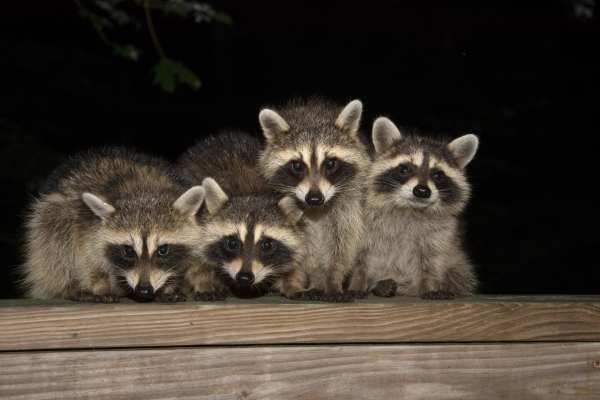
For the 2025/26 hunting year, the city of Bielefeld reported a new record bag: 1,374 raccoons were killed by recreational hunters. By way of comparison: in 2022/23 the figure was 440, in 2023/24 around 700, and in 2024/25 around 918 animals. More every year. More recreational hunters mobilised every year. And more raccoons every year.
“Scapegoat machine”
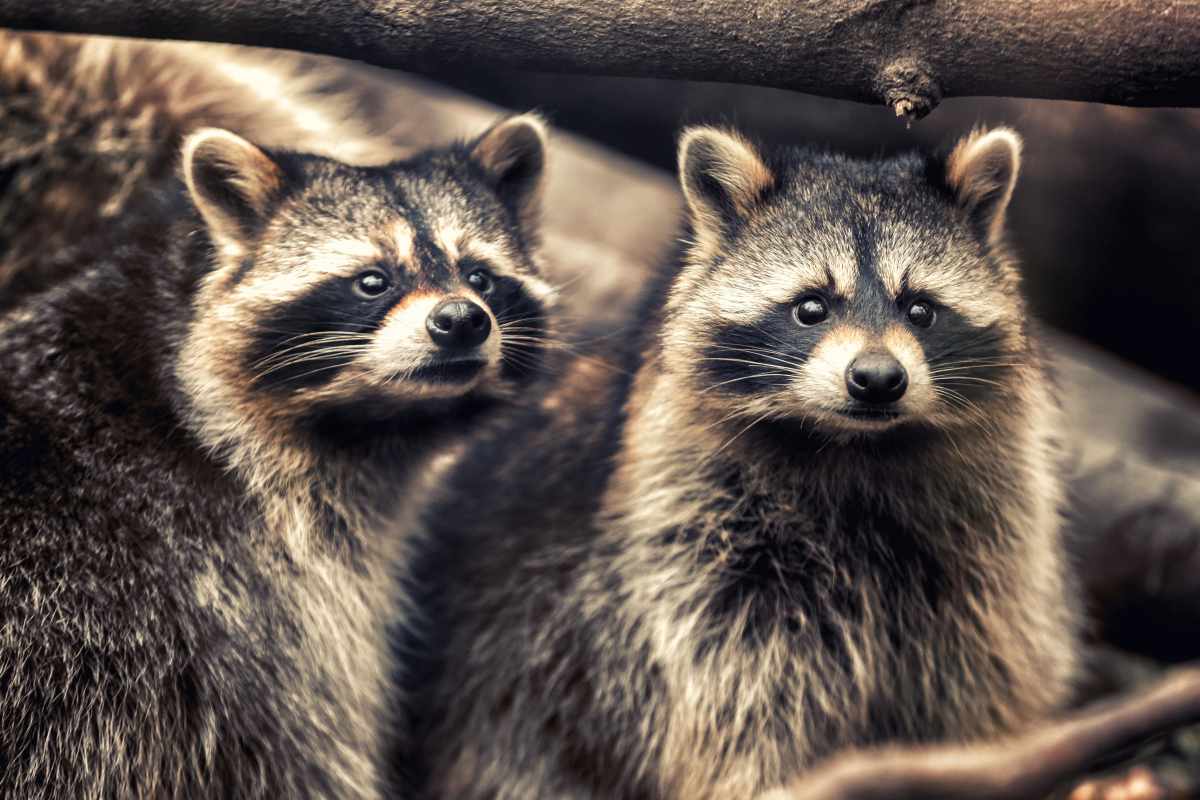
What is communicated as a success in Bielefeld is a well-known phenomenon in wildlife biology: when a population is decimated by killing, it responds with an increased reproduction rate.
Raccoons, like many other mammals, compensate for losses through larger litters and earlier onset of sexual maturity. Whoever kills more, boosts production. The city of Bielefeld itself concedes that a forecast of population development is not possible, since no population figures are available.
This is not conservation. It is a system that keeps itself alive: more raccoons justify more recreational hunting, and more recreational hunting produces more raccoons. For recreational hunters, who by their own account describe the killing as a voluntary service to the community, this is a comfortable arrangement.
Kassel wanted to do it differently. The state hunting association put a stop to it.
In early August 2025, the city of Kassel launched a pilot project of the Federal Association of Wildlife Aid Organisations (BVW) that drew nationwide attention: raccoons were to be caught using camera-monitored live traps, sterilised or neutered by veterinarians, and then released again at the same site. A three-year duration was planned, accompanied by the University of Bonn. No state funding, supported by volunteers, biologists and veterinarians.
Five days after the project started, it was stopped. The stop was instigated by the Hesse State Hunting Association (LJV). It had requested a legal review from the Kassel Regional Council and described the sterilisation as a «significant intervention on a vertebrate» requiring authorisation under animal experimentation law. The Regional Council, whose jurisdiction the state of Hesse had newly regulated just five days after the project started, suspended the project.
The argument of the LJV: sterilised animals must not be released again, since they would continue to engage in feeding predation. The Federal Ministry for the Environment expressly contradicted this account and confirmed that the sterilisation or castration of invasive species is compatible with EU law. Nevertheless, the project remained on ice.
«The spread of raccoons shows that hunting has not been successful in recent decades,» the Federal Association of Wildlife Rescue Centres noted. The City of Kassel asked for «a timely decision by the responsible authorities». The head of public order department stated: «We greatly regret this situation.»
Who has an interest in hunting remaining the only method?
The question arises inevitably: why does a hunting association use legal pressure to fight a more animal-friendly, scientifically monitored alternative project that was meant to complement, not replace, hunting? The answer lies in the structure of recreational hunting: as long as the kill remains the only permitted method, the necessity of recreational hunters also remains untouched. A successful sterilisation project would prove that there are alternatives. For an interest group that draws its social legitimacy from population control, that is an existential threat.
In Bielefeld, almost 1’400 raccoons were killed in 2025/26. The population is growing. In Kassel, a project was stopped that relied on science instead of firearms. wildbeimwild.com has reported on this. The pattern is the same as with the wolf, the fox and predators: wild animals are managed, not protected. And whoever questions the management is held back by legal means.
More on the subject of recreational hunting: In our dossiers on the criticism of recreational hunting gather fact-checks, analyses and background reports. What the research says about this is shown by Hunting fact-checked: the state of research.
The position of IG Wild beim Wild: IG Wild beim Wild rejects recreational hunting. Our model is the canton of Geneva, which has managed without recreational hunting since 1974: without hunting seasons, without hunting dogs, without driven hunts, without high seats, without the animal cruelty and crime that go hand in hand with hunting season elsewhere. What has worked there for over fifty years disproves every position paper by JagdSchweiz. An association that bases its policy on claims it refutes in its own documents is not a professional organisation, but a factory for misinformation.
Support our work
With your donation you help to protect animals and give their voice a hearing.
Donate now →