Raccoon project Kassel: An innovative approach to dealing with wild animals
BiPoMa is the first biological population management for raccoons in Europe. Its aim is to reduce the raccoon population in Kassel in a way that respects animal welfare – similar to the approach for stray cats through trapping, sterilisation and release.
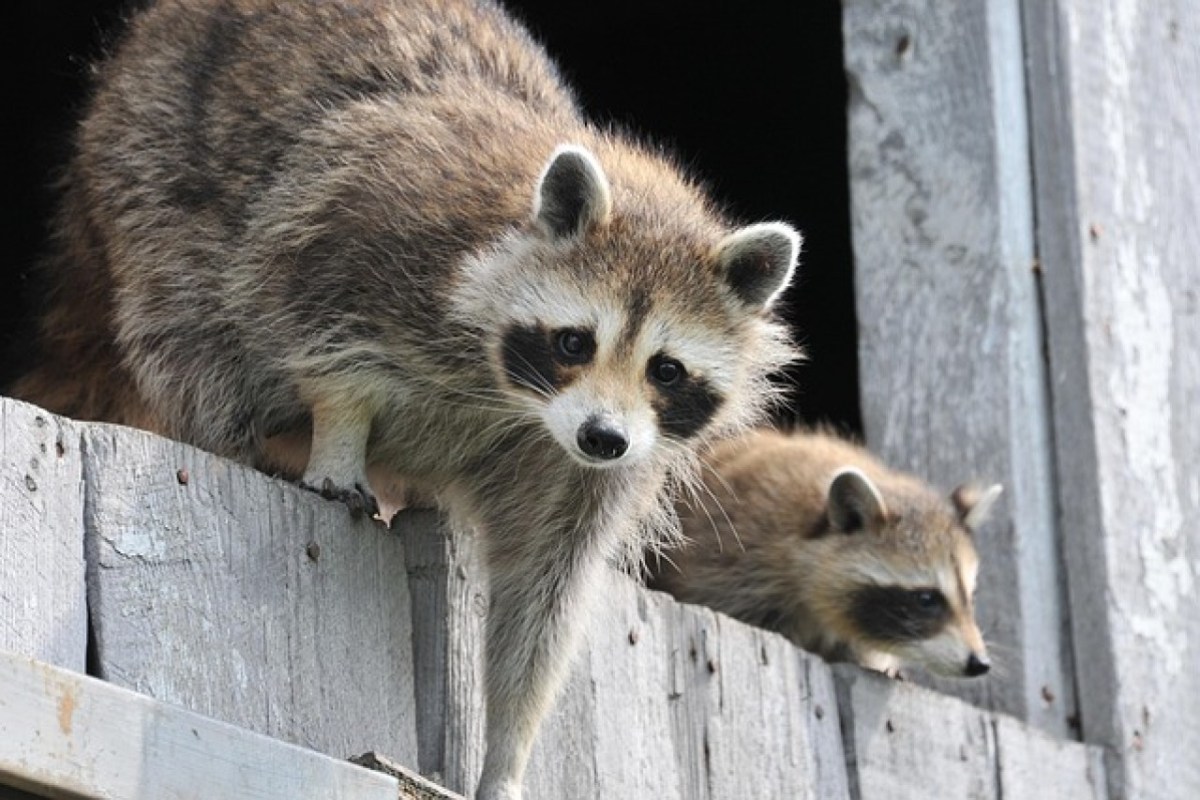
Over the next three years, the number of raccoons in Kassel is to be reduced and significantly lowered by trapping and sterilising as many animals as possible.
The city and the Federal Association of Wildlife Aid Organisations have presented the first biological raccoon management scheme in Europe.
The hunting carried out by recreational hunters against these so-called «invasive species» has quite clearly failed at every level, as can be seen from the development of hunting bags in Germany.
I do not know a single scientist or hunting expert who seriously believes that these animals can be kept in check by hunting means. – Dr Ulf Hohmann, wildlife biologist and raccoon expert
How the project works
- Live traps are set up where raccoons have been sighted.
- The animals are caught in alarm-secured traps, taken to the vet, examined there, sterilised and marked (yellow ear tag).
- After recovery, they are released again at the place where they were found.
- All animals are documented in a database.
- The project is designed to run for three years – all those involved work on a voluntary basis, and the city incurs no costs.
Legal basis
- According to EU Regulation 1143/2014, population controls are permitted if eradication is not possible.
- The release of sterilised trapped animals is permissible under certain conditions, as they defend their territory and thereby prevent immigration.
Why release them?
- Females are site-faithful; sterilised animals remain in place and, through territorial behaviour, prevent new animals from immigrating.
- Without reproduction and with fewer young, the population declines in the long term.
- This reduces damage to buildings, as birthing sites disappear.
Why is the Bundesverband Wildtierhilfen doing this – and not the recreational hunters?
- The project is carried out in cooperation with hobby hunters, as they know their hunting ground well.
- In early summer, recreational hunters and animal shelters receive numerous young animals that can hardly be accommodated any longer.
- Sterilisation helps to reduce the influx to animal shelters and prevents the illegal release of tame animals into the wild.
Criticism and benefit
- Some doubt its effectiveness, since not all racoons in Germany can be sterilised.
- However, the aim is local control in heavily affected areas such as Kassel, not eradication nationwide.
- Comparison: The principle also works with stray cats, even though there are millions of them.
Citizen participationg
- Anyone can report racoon sightings.
- Please report sightings of animals with a yellow tag (including dead ones) with the ear-tag number and, if possible, a photo.
- Form and contact: City of Kassel website or email to: kontakt@bundesverband-wildtierhilfen.de
Prevention and Education
- Children can become AWA racoon rangers – through free training in schools and clubs (also online).
- Aim: to strengthen understanding and prevention so that the racoon population declines in the long term.
BiPoMa is an innovative, animal-welfare-compliant project to reduce the racoon population. It relies on the power of sterilisation instead of killing – scientifically monitored, run on a voluntary basis, and supported by citizen participation.
Addendum August 2026: Stopped just a few days after the start
No sooner had the project got under way than it was halted. As early as 12 August 2025, the State of Hesse changed the responsibility: instead of the Lower Nature Conservation Authority of the City of Kassel, the Upper Nature Conservation Authority at the Kassel Regional Council was now responsible. As a result, the original authorisation lost its validity, and the capture and sterilisation of the racoons had to be suspended. This turnaround had been prompted by the Hesse State Hunting Association, which demanded an animal-experimentation permit and fundamentally called the procedure into question.
Thus, in practice, exactly the pattern that gave rise to this project was confirmed: not the sterilisation, but the resistance from the recreational hunters became the real obstacle, even though decades of recreational hunting could never curb the spread of racoons.
At the beginning of January 2026, an important signal came from Berlin: the Federal Ministry for the Environment confirmed that a biological intervention with subsequent release at the site of discovery is, in principle, legally compliant under Article 19 of the EU Regulation on invasive species. The final decision on the concrete implementation, however, lies with the federal states. The Kassel Regional Council announced that it would decide on the continuation of the project in early summer 2026, once a uniform interpretation had been found between the federal government and the states.
You can read about how the halted pilot project developed and which arguments recreational hunters and wildlife aid exchanged in our follow-up article «Pilot project in Kassel halted: dispute over the sterilisation of racoons». Why the population cannot be reduced by killing alone is also shown in the article «Racoons in Bielefeld: the more that are killed, the more come after».
- Keeping racoons away in an animal-friendly way
- Racoons, too, have a right to life
- Dealing with “invasive” species – a critical analysis from a biological and legal perspective
- Neozoa
- Basel wants to kill racoons
- Racoons are not a danger
- Open letter to Katrin Schneeberger of the BAFU
- Removal of the racoon from the lists of so-called invasive species
- Facts instead of hunters' tall tales about racoons
- Office for Hunting and Nonsense in the canton of Aargau wants to shoot racoons
LET'S STAY IN TOUCH!
We would like to send you the latest news and offers in our newsletter.
Support our work
With your donation you help to protect animals and to give their voice a hearing.
Donate now →