Facts instead of hunters' tales: raccoons are not a threat
The raccoon belongs to the American procyonid family of small bears. It has a highly developed sense of touch and extensively feels its food with its front paws. This is how it got its name. The raccoon is a good swimmer and climber. In Europe, it was bred for its fur. «Individual animals escaped or were deliberately released, and local free-living populations were able to develop this way, particularly in Germany or northern France,» notes the Kora reporting office. Raccoons were already sighted in Switzerland as early as the mid-1970s.

“Scapegoat machine”
Increasing numbers of raccoons are advancing into Switzerland from Germany. In 2018, a long-term study of the small bears was concluded in Müritz National Park.
For a full six years, Dr. Berit Michler and Dr. Frank-Uwe Michler led a research project in part of the Müritz National Park . The protagonists of their work: raccoons. Last year, they concluded the most extensive and longest field study on the small bears to date. Berit Michler recently presented some of their findings at Hohenzieritz Castle, as Martina Schwenk reported in the Nordkurier.
One major question at hand: Is the raccoon dangerous for native and especially protected animal species?
No, is the conclusion of the research work.
Over the years, 145 animals were captured and examined for the project, with 69 later monitored via collar transmitter. And a great many faecal samples were collected. „We analysed the samples in Berlin to find out how the raccoons' diet is composed“, said Michler. On annual average, the small bears in the national park derive more than 50 percent of their diet from soft-bodied invertebrates such as earthworms and snails. Plants account for 32 percent. Only then come vertebrates. „The raccoon is an opportunist that takes whatever it can get. There is no specialisation on a particular food source. This means that, going forward, no negative impact of raccoons on the Müritz National Park is to be expected.“
Do raccoons raid nests?
Some participants in the discussion suspected that declining numbers of birds, particularly ducks, were down to the hunting success of the small bears. More specifically, that the cute masked creatures were raiding nests. And whether it was even possible to detect eggs in their diet. It is possible, Michler confirmed. “At Neustrelitz Zoo, we fed eggs to raccoons specifically to test this. Every time, we subsequently found eggshells in their droppings.”
In general, the small bears in the national park are doing very well. The researchers had chosen an area where the animals enjoy almost ideal living conditions. This is also reflected in their territorial behaviour, according to Michler. As the data from the collar transmitters showed, the territories within the national park were relatively small. “This means the raccoons already find enough food within a relatively small area.”
In the samples from the wild, on the other hand, the researchers found no eggshells. As a control sample from a cultivated landscape, droppings were also collected in the Feldberg lake district. There, the animals fed predominantly on plants.
Hunters' tall tales in Switzerland
If a raccoon gets caught in a trap in Switzerland, its fate is sealed. «Then we shoot it. We have to do that», explains game warden Amadé Franzen from Kaiseraugst. This is because raccoons are classed as neozoa in Switzerland — non-native species. They may be shot all year round. «Raccoons are omnivores and predators. They go after bird nests and eat the eggs. We also have to make sure they don't get into houses and nest there. Once they do, it's almost impossible to get rid of them. That's a problem in Germany», explains Franzen.
According to Erwin Osterwalder, hunting and fisheries specialist at the canton of Aargau, there are a few sightings of raccoons every year. «It's here, but not yet widespread.» There have also already been kills in Aargau. «The raccoon is a strong competitor for native fauna, which is why it is also unwanted here under federal hunting legislation. It is a North American species that reached Switzerland via Germany.»
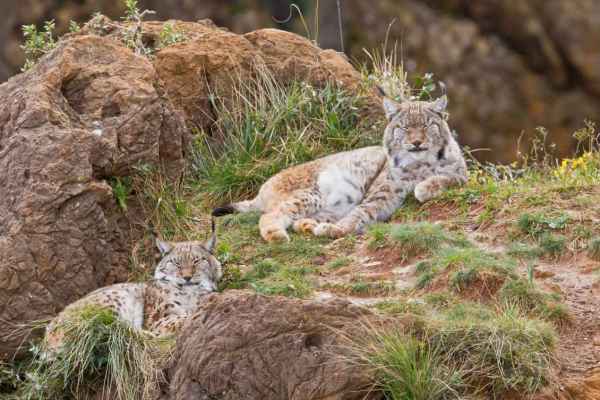
The natural enemies of young raccoons are lynx, eagles, eagle owls and foxes. Hunting and traffic accidents are the two most common causes of death.
Males roam, females stay within their territory
In autumn, however, many of the animals fitted with transmitters in Müritz National Park travelled a considerable distance. This journey has a culinary reason: the ripe fruits of the late-flowering bird cherry. “Raccoons deposit their droppings in elevated spots, mainly on fallen tree trunks. However, these latrines also serve as a means of exchanging information”, explained Michler. In this way, the small bears learn from the droppings of their fellow raccoons about the ripe delicacies and set off to find them.
This can be prevented using special collars fitted around the tree trunk.
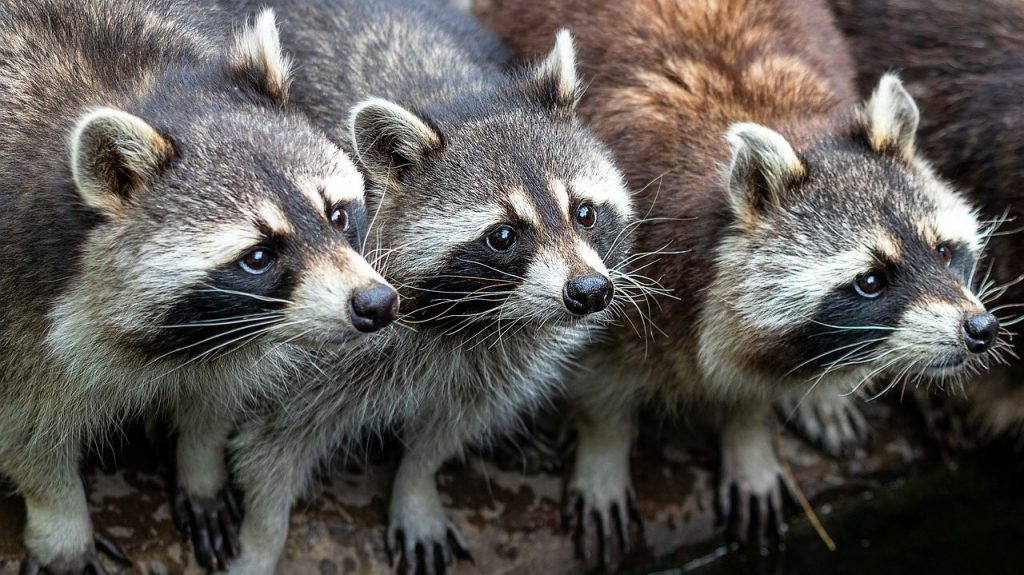
It is mainly the males that roam. Females, on the other hand, have fixed territorial boundaries. “Blood-related females form groups, so-called maternal families. These lineages have fixed boundaries with other groups”, explained Michler. Males, on the other hand, shift their territories and roam through the females' ranges to mate. Crucially: “Males never mate with their own daughters.” This allows them to deliberately avoid inbreeding.
It was also important to establish who actually cares for the offspring among raccoons. It turns out that mainly older, experienced females raise the young. Yearling females that have just reached sexual maturity either produce no young or often fail to bring them through, partly because they lack experience. However, according to Michler, there are exceptional situations. “When several animals from a territory die, yearling females participate more actively in the next mating season. Observations also show that the animals then give birth to more young than usual.“
Distemper outbreak recorded in the national park
The researchers were also able to observe this in the national park. In one year, Michler reported, canine distemper broke out. Numerous raccoons died from the disease. The following year, an unusually large number of young were born, so that the losses were quickly compensated. Moreover, the distemper outbreak was confined to a single territory. “Because the territories of the maternal lines have fixed boundaries, distemper was unable to spread”, Michler explained. Whether raccoons were carriers of disease, one hunter asked. Or whether there were cases of mange, another asked. No, said the researcher. Alongside examinations of living raccoons, the researchers had performed post-mortems on numerous dead specimens. “Apart from distemper, no transmissible diseases could be identified in the local population.”
The otherwise factual discussion briefly became heated. One listener asked how the number of animals could now be reduced and the raccoons got rid of. “That's exactly why we're here”, the man said. “I think you've misunderstood the topic of the talk”, Michler replied calmly, cautioning against sweeping generalisations. “Wherever one species of predator lives, others live too. Blaming the raccoon alone for the decline in bird populations, for instance, would be premature.” Especially since it has been shown that vertebrates, and birds in particular, are only very rarely eaten by raccoons. Ultimately, the raccoon has already reached its maximum population in the national park. It also continues to spread in Germany. “The raccoon is here to stay, but we can learn to live with it”, said Michler.
Facts instead of hunters' tales
It has long been scientifically proven that hunting raccoons boosts reproduction, while also destroying age classes and social structures.
Attempts to push back raccoon numbers through hunting are now considered hopeless and have failed. Numerous scientific studies have shown that hunting predators has little or no effect on the breeding success of ground-nesting birds or on the population densities of small game. Hunting predators leads to no reduction in population density, or at best only a short-term one, as losses are immediately offset by immigration and increased litter rates.
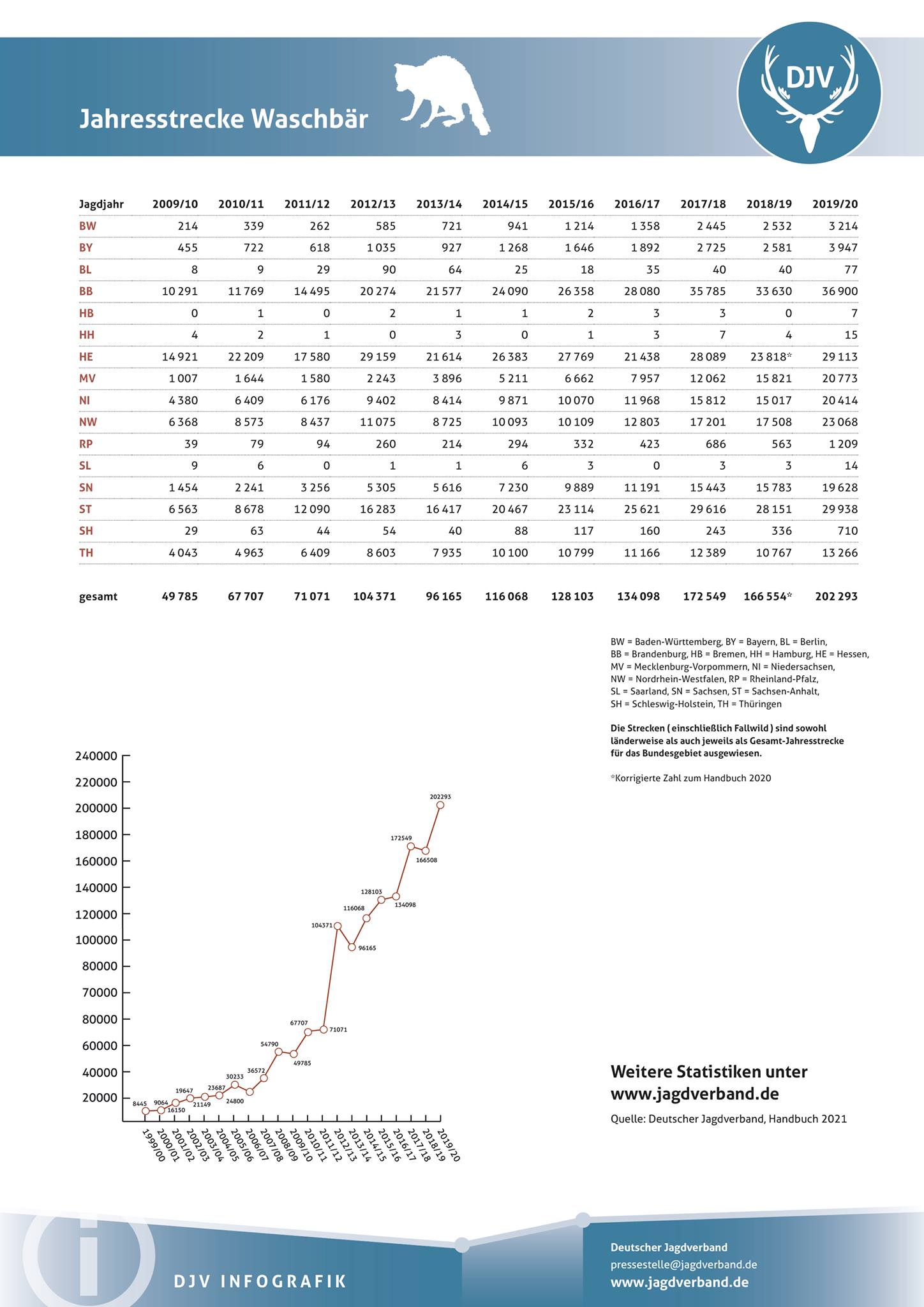
In many US states, hunting is the most common cause of death among raccoons. It costs almost half the population their lives each year. Nevertheless, the population does not decline. Instead, hunting interventions cause a drastic shift in age classes. The entire social structure is dramatically manipulated by recreational hunting and thrown into complete disarray.
As early as 1986, biologist R.J. Robel and his colleagues examined the effects of additional human-caused mortality by comparing two areas in Kansas (USA). In one area, 52.5 per cent of all raccoons died within a year, most of them due to hunting or traffic. In the other area, which had hardly any roads or houses and where no hunting took place, only 26.5 per cent of all animals died during the same period. The researchers found that in the undisturbed population, young animals were in the minority, making up 28 per cent. In the disturbed population, the opposite was true: young animals were clearly in the majority, at 62 per cent. Every older female was pregnant there, as were 38 per cent of all yearling females.In the undisturbed population, none of the yearling females became pregnant, and only 50 per cent of all older females did.
Interestingly, no reduction in population size was observed in the hunted population — only the shift in age structure described above. The raccoons were thus able to compensate for a high death rate with a high birth rate.
Despite high juvenile and adult mortality, yearlings growing into adulthood represent the largest fraction. In some years, they even make up half of all animals of reproductive age. They therefore play an extremely important key role in compensating for major losses. In stable populations with a low death rate, young females take their time with motherhood, and it is not uncommon to find no pregnant animal among the yearlings. If, on the other hand, many animals die over the course of a year, young animals usually also take part in reproduction. In such cases, up to three-quarters of all yearling females and almost all multi-year females become pregnant. In such situations, first-time mothers alone, due to their sheer numbers, account for the lion's share of offspring production.
These and many other diverse scientific studies make it clear that hunting is nothing more than the ultimate falsification of fauna, with drastically negative consequences. Hunting exacerbates the very problems it claims to solve. Incidentally, this is not only the case with the hunting of raccoons, but also, for example, with foxes. Negative effects and excesses of hunting can be observed worldwide. Recreational hunting is a violent, destructive intervention in sensitive structural and ecological systems, with negative chain reactions that are not limited to the hunted species itself.
On an EU-published list of the «100 worst invasive animal species on the continent», the raccoon does not even appear, unlike the cat or the trout.
Raccoons do eat birds, but these make up only about 3.1 percent of their total diet. Amphibians account for 5.7 percent, and reptiles only 0.11 percent – which shows that the claim that raccoons threaten protected amphibians and reptiles is only partially true. Using their highly sensitive front paws, they occupy an ecological niche when foraging that was previously unoccupied. They therefore do not compete for food with other native species, as stated, for example, in an information brochure of the Berlin Senate.
Added value:
- Removal of the raccoon from the lists of so-called invasive species
- Raccoons, too, have a right to life
- Dealing with “invasive” species – a critical analysis from a biological and legal perspective
- Neozoa
- Basel wants to kill raccoons
- Raccoons are not a danger
- Open letter to Katrin Schneeberger of the BAFU
More on the subject of recreational hunting: In our dossiers on recreational hunting gather fact-checks, analyses and background reports. What the research says about this is shown by Hunting fact-checked: the state of research.
The position of IG Wild beim Wild: IG Wild beim Wild rejects recreational hunting. Our model is the canton of Geneva, which has managed without recreational hunting since 1974: without hunting seasons, without hunting dogs, without driven hunts, without high seats, without the animal cruelty and crime that go hand in hand with hunting season elsewhere. What has worked there for over fifty years disproves every position paper by JagdSchweiz. An association that bases its policy on claims it refutes in its own documents is not a professional organisation, but a factory for misinformation.

All articles are written by IG Wild beim Wild as well as by external co-authors. Research, structuring and editorial processes may be supported by AI-assisted tools.
Support our work
With your donation you help protect animals and give their voice a hearing.
Donate now →