After Aarau: the blind spot of the weapons debate is called recreational hunting
Following the Aarau rampage, Switzerland is debating risk groups and proof of eligibility. The ongoing private access to hunting weapons remains unmentioned, even though similar cases are accumulating across Europe.
“Ceasefire”
At the edge of a rave party in Aarau, 22-year-old Maria S. was shot dead in late August.
On urgent suspicion, police arrested a 43-year-old Swiss man who, according to police, is said to have fired around 40 shots. According to SRF, the alleged murder weapon was a semi-automatic Kalashnikov AK-74, which the man is said to have legally acquired along with other weapons around twenty years ago in the canton of Jura, at a time when this was still permitted. Semi-automatic weapons legally acquired back then are today generally subject to a registration requirement. The case has triggered a debate about Swiss weapons law.
One argument stands out in this debate that points beyond the individual case. The non-affiliated Council of States member Daniel Jositsch put it succinctly to SRF: the harder it is for people at heightened risk to obtain a weapon, the lower the probability of such acts. Jositsch said he could imagine requiring owners of weapons acquired under the old law to subsequently prove they are sport shooters or collectors. SP Council of States member Franziska Roth goes further, considering banning semi-automatic weapons entirely in future and confiscating those already purchased.
The direction is clear: those at heightened risk should in future have to justify their continued possession of weapons. Yet in this debate, an entire area of private weapon access remains unmentioned.
Access to Hunting Weapons Is Missing from the Debate
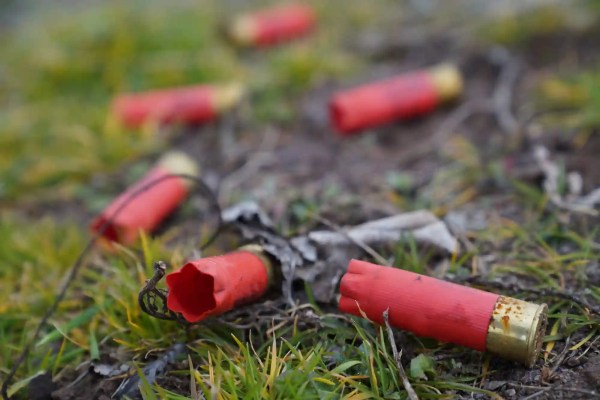
In the 2025 hunting year, 29,328 people took part in hunting in Switzerland. The Federal Hunting Statistics record 74,914 hoofed wild animals killed and 23,152 predators killed, such as foxes and martens, for that year. However, these two frequently cited figures capture only a partial picture: they do not include game birds, hares and other small game. If these species are added, more than 120,000 wild animals annually are killed by recreational hunting, mostly without reason. Hunting thus means regular access to firearms for a large, institutionally organised group. Hunting weapons are designed to kill wild animals. Precisely for this reason, their private possession and use demand particular care and control from the perspective of animal welfare and public safety.
Unlike the semi-automatic weapons under old law now being discussed, the continued weapons access of hunting licence holders is barely examined publicly in terms of suitability, changes in health, or risk. At the same time, there is no systematic nationwide statistic on whether and how often people with a hunting licence use weapons in violent crimes. As we have already documented, nobody in Switzerland knows how many such acts are committed by people with a hunting licence, because the data simply isn't collected. This data gap prevents a serious risk assessment.
Not a national problem: a series that crosses borders
Anyone who thinks this is a uniquely Swiss problem is mistaken about the facts. In our crime and hunting section, we have documented similar cases for years in which recreational hunters turned their legal access to hunting weapons and their familiarity with lethal violence against people, both in Switzerland and abroad.
In Switzerland, in July 2026, a 59-year-old recreational hunter from Ticino shot, in the Blenio Valley, his ex-wife and then blew up a house, injuring several police officers. During the fatal shot, nobody heard a bang, which is why, according to RSI, the Ticino police assume a silencer was used. As early as 2019, a 47-year-old recreational hunter killed in Courfaivre in the canton of Jura, firmly established in the cantonal hunting association as a hunting instructor and chairman of the trophy assessment committee, his wife. A few days earlier she had filed a report stating that she had been held at gunpoint and raped; a restraining order was in place, and several firearms had been seized. A lawyer for the family later accused the justice system of having confiscated the man's handguns, while the check remained incomplete.
Abroad, the cases line up: in Germany, in February 2026 in Strullendorf near Bamberg, a 52-year-old recreational hunter allegedly shot his wife and his two children and then took his own life; a few months earlier, in November 2025, a 63-year-old recreational hunter killed five relatives in the Reutlingen area. In Sweden, in February 2025, a 35-year-old man with a permit for four hunting weapons in Örebro committed the worst rampage shooting in the country's history with ten deaths. These cases do not appear in any hunting accident statistics, because they are recorded as crimes, not as hunting accidents.
What the research shows
The connection is not merely anecdotal. Forensic pathologist Alexia Delbreil and criminologist Jean-Louis Senon analysed 42 intimate partner killings from the Cour d’Appel de Poitiers: among the femicides committed with firearms, around 71 percent were committed with hunting rifles. The reason lies in availability: hunting weapons are “opportunity weapons” that are kept ready to hand in the household. Psychiatrist Jean-Louis Terra noted that the risk of a woman being killed is five times higher in a household with a firearm, a finding he described in 2021 as still valid.
Personality research adds further weight. The dissertation by Ursula Grohs, to date the only systematic study in the German-speaking world, found that recreational hunters rate themselves as significantly more aggressive than non-hunters and more often resolve conflicts through dominance and control. International studies on “Dark Triad” personality traits (Kavanagh et al. 2013, applied to trophy hunting by Beattie 2019) point in a similar direction Those with higher scores on these traits show less positive attitudes towards animals and more often report having abused animals themselves. Recreational hunters themselves have not yet been studied on this. It is telling that, in the German-speaking region, where more than half a million people legally carry hunting weapons, there has to date been almost no independent follow-up research into these findings.
This is precisely where the point of security policy lies: anyone with long-term access to lethal weapons should be able to be effectively and continuously checked in the event of concrete risks, regardless of whether the weapon is an old-law assault rifle or a hunting rifle. The fact that there is no Switzerland-wide data on the frequency of such acts is not an argument against reviewing this, but an argument for it.
Age and fitness
With increasing age, visual acuity, reaction time and cognitive performance can be impaired. For an activity that involves handling firearms out in the field, this argues for regular, risk-based fitness assessments. Whether a fixed upper age limit would additionally be sensible and proportionate must be examined on the basis of accident and health data. This, too, requires a robust survey first, which is currently lacking.
What follows from this
If, after Aarau, politicians are seriously discussing risk, fitness and ongoing checks regarding private weapon ownership, they must not overlook access to hunting weapons. IG Wild beim Wild calls for regular medical-psychological fitness assessments for holders of hunting licences, modelled on the Dutch example, as well as a scientifically grounded regulation for advanced age. A debate on weapons law that reviews old-law assault rifles but leaves out regular private access to hunting weapons remains incomplete.

All articles are written by IG Wild beim Wild as well as by external co-authors. Research, structuring and editorial processes may be supported by AI-assisted tools.
Support our work
With your donation you help protect animals and give their voice a hearing.
Donate now →