Open letter to Landammann Stephan Attiger on fox hunting
Seven questions to the Aargau Landammann, reply deadline 20 November 2026.
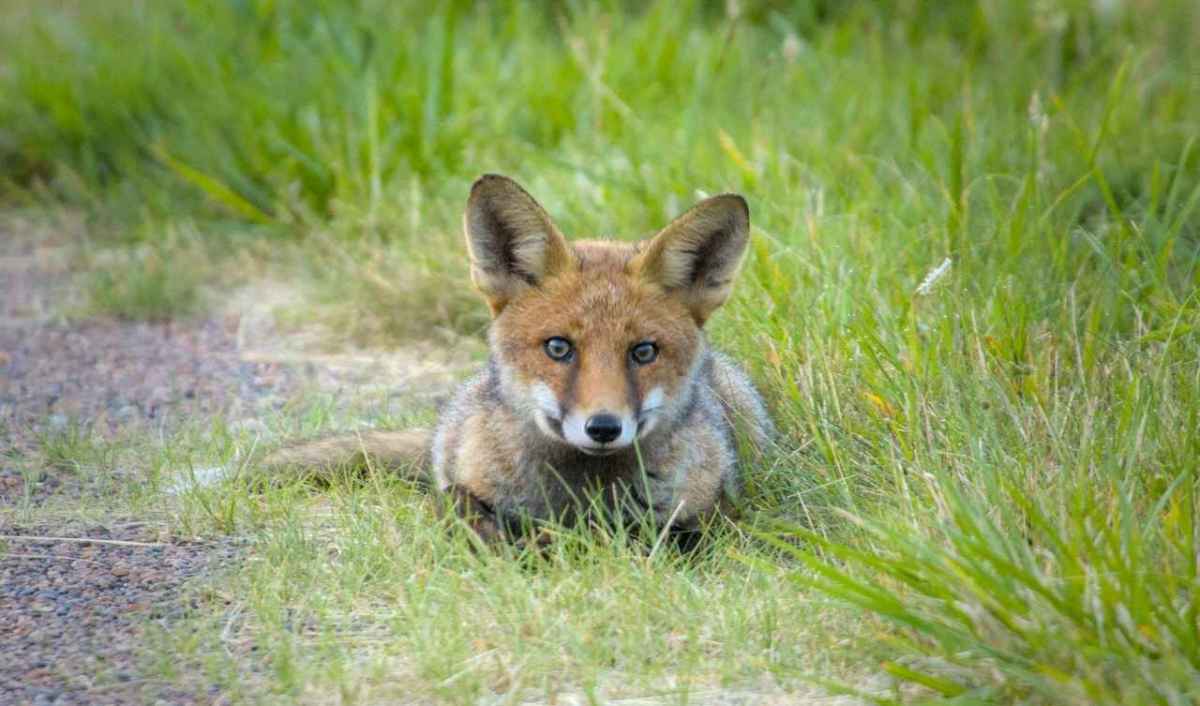
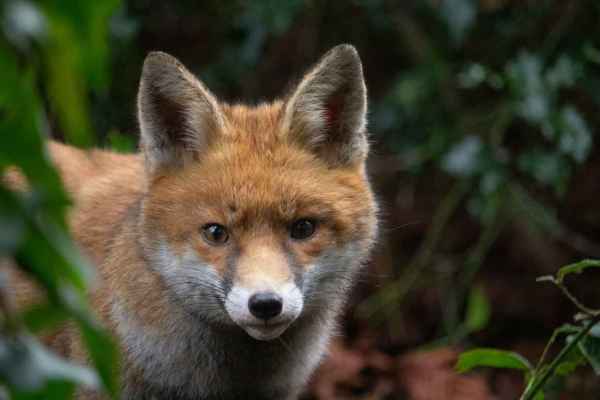
Photo: Florian Steffen / Unsplash
Across the Border
Following the rejection of the petition “Ban on general fox hunting”, IG Wild beim Wild is sending an open letter to Aargau Landammann Stephan Attiger. Seven questions, a reply deadline of 20 November 2026 and the announcement that the response will be publicly documented.
On 5 November 2026, Attiger replied, on the letterhead of his Department of Construction, Transport and Environment, to the petition submitted by the Lucerne lawyer Pascal Wolf on 15 October 2026 (reply letter as PDF). The petition calls for a year-round closed season for the red fox, with kills only in justified individual cases. The reply states that the situation has “not changed” since Attiger's email to Wolf of 17 September 2025. In the view of the cantonal government, there is no need to change the “nationwide regulations” for Aargau. The letter cites no study, population estimate or damage figure.
Yet the figures are available. According to the cantonal hunting statistics, recreational hunters in Aargau shot 1,837 foxes in 2025, and a further 1,220 were registered as found dead, 767 of them on the roads. We placed the facts in context in the article “Stop fox hunting – write to the Aargau Grand Council”, together with a template letter to the members of the Grand Council. How the Aargau Hunting Protection Association responded to the petition is shown in the article “Fox hunting ban: Hunting protection president calls vaccination ‘extreme’”. Section 19 of the cantonal constitution requires that submissions be answered. A reply has now been given. A justification for the necessity of fox hunting backed by cantonal data is missing.
The open letter follows the same approach as our letters to the Glarus Landammann Markus Heer, to the Uri Department of Security, to the Appenzell Outer Rhodes Councillor of State Dölf Biasotto and to the Solothurn cantonal councillor Sibylle Jeker: factual, with concrete questions and the expectation of a verifiable response.
The following open letter was sent to Landammann Stephan Attiger on 6 November 2026. It is documented here verbatim; the subheadings correspond to the version sent.
Open letter to Landammann Stephan Attiger
Dear Mr Landammann
We have taken note of your reply of 5 November 2026 to Pascal Wolf regarding his petition «Ban on general fox hunting». In it you state that the situation has not changed since September 2025, that the regulation of the fox is not an arbitrary measure, and that there is no need to amend the current rules for Aargau. Your letter cites neither a study nor cantonal data in support of these statements. We ask you to comment on the following points.
1. «The situation has not changed»
You refer to your email of 17 September 2025, in which you replied to an email from Pascal Wolf dated 27 August 2025, that is, before the petition was submitted. Since then, the canton of Zug has presented a scientific expert report by SWILD (May 2026). It concludes that the fox hunting currently practised, which is not spatially coordinated, does not regulate the population sustainably, does not improve disease control, and is inferior to preventive, non-lethal measures when it comes to protecting livestock. Zug has no longer been promoting fox hunting since then. The government of Basel-Stadt has shown itself open to examining in depth a renunciation of regular fox hunting. In the Bern Grand Council, a cross-party motion calls for fox management instead of fox hunting. And a study in «Biological Conservation» (Jiguet et al. 2026) found no evidence for France that more kills reduce the reported damage. Has your department examined these findings before giving its reply? If so, with what result? If not, what is the basis for the claim that the situation is unchanged?
2. The room for manoeuvre that federal law leaves to the canton
You write that the canton of Aargau adopts the federal requirements in its cantonal hunting law, and that there is no need to change 'the regulations that apply throughout Switzerland' for the canton of Aargau. However, the closed seasons under Art. 5 para. 1 of the Federal Hunting Act (JSG) are minimum requirements. Under Art. 5 para. 4 JSG, the cantons may extend the closed seasons or restrict the list of huntable species. That Aargau adopts the federal requirements unchanged is therefore a decision of the canton, not an obligation. Federal law does not oblige the canton to hold a regular fox hunt; the canton of Geneva has managed without recreational hunting since 1974. Does the cantonal government acknowledge that federal law allows the canton to extend the closed season for foxes up to a year-round closed season? What legal steps would be required for this, and what specific reasons does it see against it?
3. What 'sustainable use'?
Your letter names the sustainable use of wildlife populations as a goal of the hunting act. As a food, the fox is practically not used today, and its pelt fetches little: at the Grisons fur market it was 8 francs per pelt. In the cantonal government's view, does this goal apply to the fox? If so, what use is meant, and how many of the 1,837 foxes killed in Aargau in 2025 were actually utilised?
4. What conflicts, what damage?
You describe the regulation of the fox as necessary to resolve conflicts between people, agriculture, forestry and nature. The fox feeds to a large extent on mice and other small rodents, which themselves cause damage in agriculture and forestry. What damage do foxes cause in Aargau in agriculture and forestry, to what amount, and where is it documented? What proportion of the 1,837 kills in 2025 involved a specific, documented case of conflict?
5. No arbitrary action: objectives and monitoring of effectiveness
You write that regulating the fox is "not an arbitrary procedure". Anyone who justifies fox hunting as necessary regulation must be able to set out what goal it pursues, what data it is based on and how its effect is checked. In addition to the 1,837 kills, in 2025 the canton registered 1,220 foxes as found dead or killed by accident, 767 of them on the roads. What measurable goal does the canton pursue with fox hunting, what population estimate is it based on, and how is it verified whether it is being achieved? How does the canton take into account the additional mortality from traffic and other causes of accidental death when it assesses whether, and to what extent, hunting is necessary?
6. Animal welfare in the last weeks of the hunting season
You state that the cantons take animal welfare concerns into account, and point to the closed season from 1 March to 15 June to protect mothers and young. The fox's mating season falls in the winter months, and the cubs are mostly born in March and April. In February, while hunting is still open, many vixens are therefore already pregnant. How does the canton take into account that pregnant vixens may be shot in the last weeks of the hunting season? And what data does it collect on wounded foxes and on follow-up searches?
7. Who decided?
Your letter is written on the letterhead of the Department of Construction, Transport and Environment and signed by you. However, it expressly sets out the "view of the Government Council" without citing a Government Council resolution. Did the full Government Council deal with the petition? If so, when and with what resolution? If not, on what basis does the letter set out the view of the Government Council?
One question remains that your letter does not answer: what purpose, measurable for the canton of Aargau, justifies shooting almost 2,000 foxes every year when neither the goal, nor the data basis, nor any monitoring of success is demonstrated? Federal law sets the framework. It does not oblige the canton to exhaust it. The canton of Zug has shown that this room for manoeuvre can be used.
We ask you for a statement by 20 November 2026. This letter and any statement from you will be published on wildbeimwild.com.
Yours sincerely
Carl Sonnthal
IG Wild beim Wild, Acquarossa
What happens next
If the Landammann replies within the deadline, we will publish the response and comment on it. If no reply comes, we will record that too. The record so far is sobering: four cantonal governments have still not answered our questions on fox hunting (Four cantonal governments leave 30 questions unanswered).
Aargau points to federal law but does not mention the canton's room for manoeuvre. Our seven questions address precisely this gap: the verifiable justification for fox hunting in the canton of Aargau and the reasons why the cantonal government is refusing to introduce a year-round closed season.
What you can do: In the end, it is politicians who will decide. Write directly to the members of the Grand Council, ideally in person and in your own words. You will find a template letter, the canton's figures and the link to the list of members at Stop fox hunting – write to the Aargau Grand Council. An overview of all cantons is provided by the campaign End fox hunting.
More on the subject of recreational hunting: In the dossier Alternatives to recreational hunting we show political and practical alternatives to recreational hunting. The scientific evidence is presented in the overview Studies on the Effects of Recreational Hunting.
The position of IG Wild beim Wild: IG Wild beim Wild rejects recreational hunting. Our model is the canton of Geneva, which has managed without recreational hunting since 1974: without hunting seasons, without hunting dogs, without driven hunts, without high seats, without the animal cruelty and crime that go hand in hand with hunting season elsewhere. What has worked there for over fifty years disproves every position paper by JagdSchweiz. An association that bases its policy on claims it refutes in its own documents is not a professional organisation, but a factory for misinformation.
Wild animals need a voice
Once a week: research, petitions and background information on recreational hunting. Free of charge and can be unsubscribed from at any time.

All articles are written by IG Wild beim Wild as well as by external co-authors. Research, structuring and editorial processes may be supported by AI-assisted tools.
Support our work
With your donation you help protect animals and give their voice a hearing.
Donate now →