Colorado: Voters reject constitutional right to recreational hunting
The proposal, financed by national hunting associations, would have made future protective provisions for wild animals more difficult.

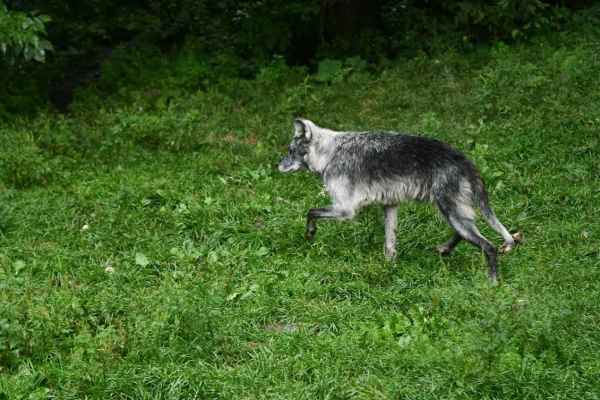
Photo: Elias Null / Unsplash
The Green Network
Voters in the US state of Colorado rejected Amendment 83 on 3 November 2026. The constitutional amendment would have written a right to hunt and fish into the state constitution and declared recreational hunting the preferred method of regulating wildlife populations. According to preliminary results, around 55 per cent voted against the measure. In the count as of 4 November, 9News reported 55.15 per cent No (1,176,669 votes) and 44.85 per cent Yes (956,899 votes). A threshold of 55 per cent Yes would have been required for it to pass.
What Amendment 83 demanded
According to the legislature's official ballot booklet (Blue Book), the right was to apply to «traditional methods» and cover all species managed by the state, excluding non-huntable species, endangered species and species whose hunting is prohibited by federal law. The state would only have been allowed to restrict recreational hunting where this is «necessary» for science-based wildlife protection and wildlife management, public safety, or the preservation of future opportunities for recreational hunting and fishing.
Supporters stressed that the measure would not repeal any existing law. Opponents saw the danger precisely in the word «necessary»: future restrictions, such as a ban on a hunting method or lower kill quotas, could have been challenged on the basis of this constitutional provision. What consequences this would have had for individual protective measures would have depended on how the courts interpreted it. The animal welfare organisation Humane World for Animals warned that trophy hunters would thereby gain a constitutional basis for challenging protective provisions. Recreational hunting and fishing were already legally permitted in Colorado. The measure would have additionally enshrined them at constitutional level and thereby could have raised the hurdles for future restrictions.
Who was behind the measure
The initiative was submitted by a conservative law firm. The largest donor was the Theodore Roosevelt Conservation Alliance. Further contributions came from Safari Club International, the Congressional Sportsmen’s Foundation, the Rocky Mountain Elk Foundation and a building contractor and trophy hunter from Weld County, as the broadcaster HPPR reported. By the end of October, according to Colorado Politics, around 2.5 million dollars had been raised for the Yes campaign. Wayne Pacelle of Animal Wellness Action said, according to Colorado Politics after the vote, that the trophy hunters had outspent the opposition by more than three to one.
Safari Club International is no stranger to controversy. It has put one million pounds into the fight against the British ban on importing hunting trophies and, together with the Rocky Mountain Elk Foundation, appealed against the court-ordered protection of grey wolves. At its annual conventions, hundreds of trophy hunts are auctioned off.
The background: wolf and mountain lion at the ballot box
Colorado has been deciding wildlife questions at the ballot box for years. In 2020 voters narrowly approved the reintroduction of the wolf, and in 2024 they rejected a ban on recreational hunting of mountain lions and bobcats; the Canada lynx, which the measure also named, is already protected in Colorado in any case. As early as the 1990s, the state had banned leg-hold traps and the baiting of bears. The backers of Amendment 83 openly described such popular initiatives, legislative proposals and decisions by the wildlife commission as a threat to recreational hunting. The measure was thus an attempt to make future votes in favour of wildlife harder before they even take place.
Remarkably, some recreational hunters and anglers themselves also opposed the measure. The group Colorado Hunters and Anglers for Sensible Wildlife Conservation interpreted the No vote as a sign of how much people in Colorado value their wild animals.
Part of a nationwide campaign
Since 1996, 24 US states have written a right to hunt and fish into their constitutions. Most recently, Florida approved one in 2024 with around 67 per cent of the vote. Such measures are promoted by national organisations such as the Congressional Sportsmen’s Foundation, which also invested money in Colorado. That a state with an active wildlife policy has said No at the ballot box is a clear setback for this campaign.
Attempts are also being made in Europe to give recreational hunting a stronger legal footing. Italy's “Sparatutto” law wants to justify recreational hunting in future with «traditions» as well, even though animal welfare has been enshrined in the Italian constitution since 2022. How courts can push back is shown by the ruling in which an administrative court halted recreational hunting across the whole of Sicily.
And in Switzerland?
In Switzerland, recreational hunting is not a fundamental right. The Federal Constitution, by contrast, requires that the dignity of creation be taken into account. On 27 September 2020, voters rejected the revised hunting act, and the canton of Geneva abolished recreational hunting by popular vote in 1974 (Geneva and the hunting ban). What remains open, however, is whether landowners may prohibit recreational hunting on their land on grounds of conscience. The canton of Bern has so far said no, as our analysis of freedom of conscience and recreational hunting shows.
Comment: A hobby does not belong in the constitution
Amendment 83 sought to give constitutional privilege to a pastime that is already permitted. Anyone who enshrines recreational hunting as the 'preferred' method of wildlife management makes future changes of course harder, even when new scientific findings point to other solutions. A constitution is harder to amend than a law, and that is precisely what the associations were banking on. That millions of dollars from national hunting associations were not enough to achieve this is a good sign. Colorado's voters understood that wild animals belong to everyone, not to those who want to shoot them.
More on the subject of recreational hunting: The scientific evidence is presented in the overview Studies on the Effects of Recreational Hunting.
The position of IG Wild beim Wild: IG Wild beim Wild rejects recreational hunting. Our model is the canton of Geneva, which has managed without recreational hunting since 1974: without hunting seasons, without hunting dogs, without driven hunts, without high seats, without the animal cruelty and crime that go hand in hand with hunting season elsewhere. What has worked there for over fifty years disproves every position paper by JagdSchweiz. An association that bases its policy on claims it refutes in its own documents is not a professional organisation, but a factory for misinformation.
Wild animals need a voice
Once a week: research, petitions and background information on recreational hunting. Free of charge and can be unsubscribed from at any time.

All articles are written by IG Wild beim Wild as well as by external co-authors. Research, structuring and editorial processes may be supported by AI-assisted tools.
Support our work
With your donation you help protect animals and give their voice a hearing.
Donate now →