Ticino wolf motion: even the first attack should permit shooting
A new motion would treat even the first kill incident on 'unprotectable' alpine pastures as significant damage. This category accounts for almost half of the livestock killed.

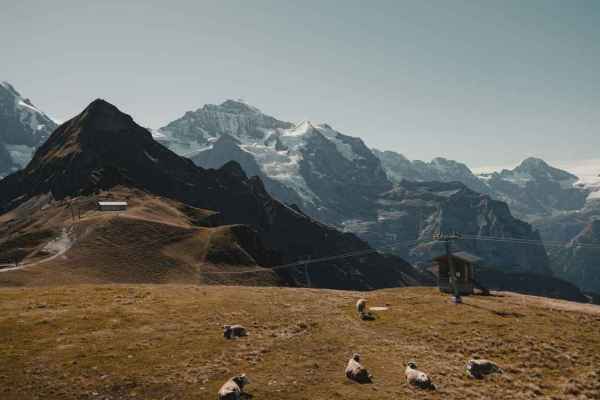
Symbolic image. Photo: Anjith Paul / Unsplash
«In Reserve»
A new motion in the Ticino Grand Council demands that on alpine pastures classed as 'unprotectable', even the first kill incident can count as significant damage. This category accounts for around 47 per cent of the livestock killed or fatally injured recorded by the canton. The motion, 'Alpeggi non proteggibili, che non suoni la campana a morto!', was submitted on 6 November 2026 by Sem Genini and Roberta Soldati together with 16 other council members, as tio.ch reports. Loosely translated: the death knell should not toll for the unprotectable alpine pastures.
What the motion demands
The motion's signatories make four demands of the Council of State:
- All additional costs incurred by livestock keepers through mandatory protection measures are to be compensated in full, from fences and staff to health consequences for the herds.
- Before an alpine pasture has to be emptied early, the canton should shoot or deter wolves.
- The cantonal agricultural advisory service should provide alternative grazing options for the livestock from the start of the season.
- The Council of State should press in Bern for a 'danno rilevante' (significant damage) to be recognised on unprotectable alpine pastures after the very first attack ('prima predazione'), and for all attacks to be taken into account for the proactive regulation of packs.
Two well-known names stand behind the motion. Roberta Soldati chairs the 'Associazione per la protezione del territorio dai grandi predatori', while Sem Genini comes from the Ticino farmers' association. In an “Corriere del Ticino” in early October, Soldati named 'zero' as the target number of wolves in Ticino, and Genini likewise considered zero to be right. We recorded this in a Ticino Ticker earlier report.
The motion's criticism of the emergency plan
According to the motion's authors, on alpine pastures that cannot be protected, night pens and shorter grazing periods can be ordered after a first predation incident. After a second attack during the day, permanent shepherding is mandatory, and after the third the alp must be emptied of livestock. The authors counter: «Se le misure di emergenza fossero ragionevolmente applicabili in un alpeggio non proteggibile, allora non sarebbe un alpeggio non proteggibile, bensì proteggibile!» In other words, if the emergency measures were reasonable on an alp that cannot be protected, it could be protected after all.
They also object that kills are subject to a damage threshold, which the motion puts at six livestock animals killed within four months, while the requirements for livestock keepers are triggered by the number of attacks. They further point out that killed animals are neither compensated nor counted towards the kill threshold if prescribed measures were not implemented. The motion also warns that some attacks may not be reported at all in order to avoid further requirements. This would distort the statistics on which the canton relies when authorising kills.
What the canton's figures show
The predation statistics of the Ufficio della caccia e della pesca as of 30 October 2026 attribute 46 predation incidents to the wolf between January and October, with 131 livestock animals killed or fatally injured. Only six of them were adequately protected. 61 died in situations in which the canton classes protection as unreasonable, 48 where protection was insufficient and 13 where protection was insufficient due to "force majeure". For three animals, no information on protection status is available. We set out the breakdown in the article «Wolf kills in Ticino: Only 6 of 131 animals were protected».
The motion thus targets a category that accounts for a considerable share of the documented losses. How these losses are distributed across the 46 predation incidents cannot be seen from the animal numbers.
That «not reasonably protectable» does not necessarily mean that no protection at all is possible is shown by the Alpe Bri/Ninagn: according to our previous reporting, the shepherd there protects his roughly 360 sheep with livestock guardian dogs, fences and a night pen, despite the canton's classification. Why it is often personnel rather than topography that is lacking on many alps is described in our article «Shepherd shortage on the alps: Who protects the flocks?».
The second parliamentary initiative within two weeks
The motion follows hard on the heels of another decision. On 26 October the Grand Council, according to tio.ch, approved by 59 votes to 14 with two abstentions the majority report on an earlier motion by Roberta Soldati and 21 other members of the council. The cantonal government is to tighten the cantonal emergency plan for the Alps with more effective measures. Since October the responsible minister has been Piero Marchesi (UDC), to whom the cantonal government, according to RSI, has assigned the Dipartimento del territorio. The motion's authors also point to almost 12,000 signatures for the Ticino Alps, which were handed to the cantonal government in 2025 and in Bern in May 2026.
Selected and trained recreational hunters are already part of the cantonal wolf programme in Ticino. As “Corriere del Ticino” reported in June, besides a starting payment of 300 francs and compensation of 30 francs per hour, the programme provides a bonus of 500 francs for every kill that complies with the operational requirements. We put this into context in the article «500 francs per wolf». What herd protection can achieve and where it fails is shown by the dossier «Herd protection in Switzerland: what works and what fails».
Editorial assessment
The motion addresses a serious problem: additional protection requirements whose practical feasibility and financing the signatories call into question. The demand that the prescribed additional costs be covered in full is understandable.
At the same time, the motion seeks to lower further the threshold for action against wolves: on alpine pastures classed as not protectable, even the first kill incident could count as significant damage. In addition, all attacks there would be taken into account for the proactive regulation of packs. As a result, losses in situations where protection is deemed unreasonable could more easily be used as grounds for kills. In the editorial team's view, this risks creating a perverse incentive: classification as «not protectable» could become politically more attractive than investing in protective measures.
When the motion's authors themselves warn that kills of livestock might be concealed for fear of requirements, that argues not for faster kills but for better advice, reliable funding and a comprehensible justification of the classifications. Dead wolves do not close a gap in a fence and do not replace a missing shepherd. In the end, the price is paid by non-human animals on both sides.
Sources
- tio.ch, 6 November 2026: «Alpeggi non proteggibili, così si rischia l’abbandono»: chieste nuove misure contro i lupi
- tio.ch, 26 October 2026: Lupo e alpeggi: il piano cantonale di emergenza va rafforzato
- RSI: Consiglio di Stato, a Marchesi il Dipartimento del territorio
- «Corriere del Ticino»: Il Ticino vuole la svolta: quanti lupi tolleriamo? Zero
- «Corriere del Ticino», 8 June 2026: Una nuova alleanza per regolare i lupi
- Ufficio della caccia e della pesca: livestock kill statistics «Lupo, Predazioni 2026», as at 30 October 2026
More on the subject of recreational hunting: The scientific evidence is presented in the overview Studies on the Effects of Recreational Hunting.
The position of IG Wild beim Wild: IG Wild beim Wild rejects recreational hunting. Our model is the canton of Geneva, which has managed without recreational hunting since 1974: without hunting seasons, without hunting dogs, without driven hunts, without high seats, without the animal cruelty and crime that go hand in hand with hunting season elsewhere. What has worked there for over fifty years disproves every position paper by JagdSchweiz. An association that bases its policy on claims it refutes in its own documents is not a professional organisation, but a factory for misinformation.
Wild animals need a voice
Once a week: research, petitions and background information on recreational hunting. Free of charge and can be unsubscribed from at any time.

All articles are written by IG Wild beim Wild as well as by external co-authors. Research, structuring and editorial processes may be supported by AI-assisted tools.
Support our work
With your donation you help protect animals and give their voice a hearing.
Donate now →