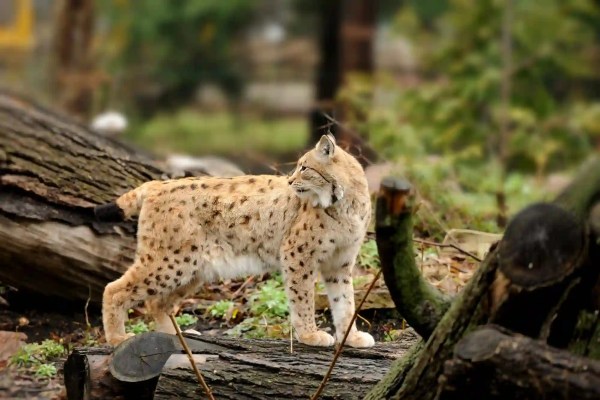
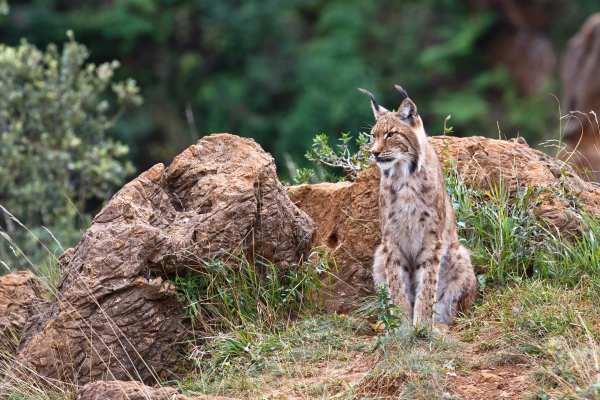
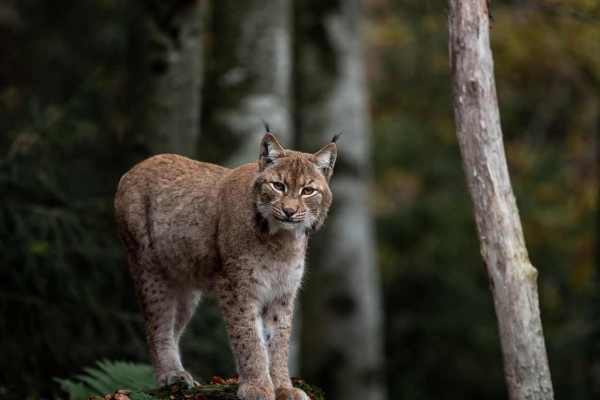
Lynx with cub in the southern Black Forest: probably from Switzerland
In the southern Black Forest, offspring of a self-migrated lynx have been documented for the first time, while Valais wants to regulate its lynx population.
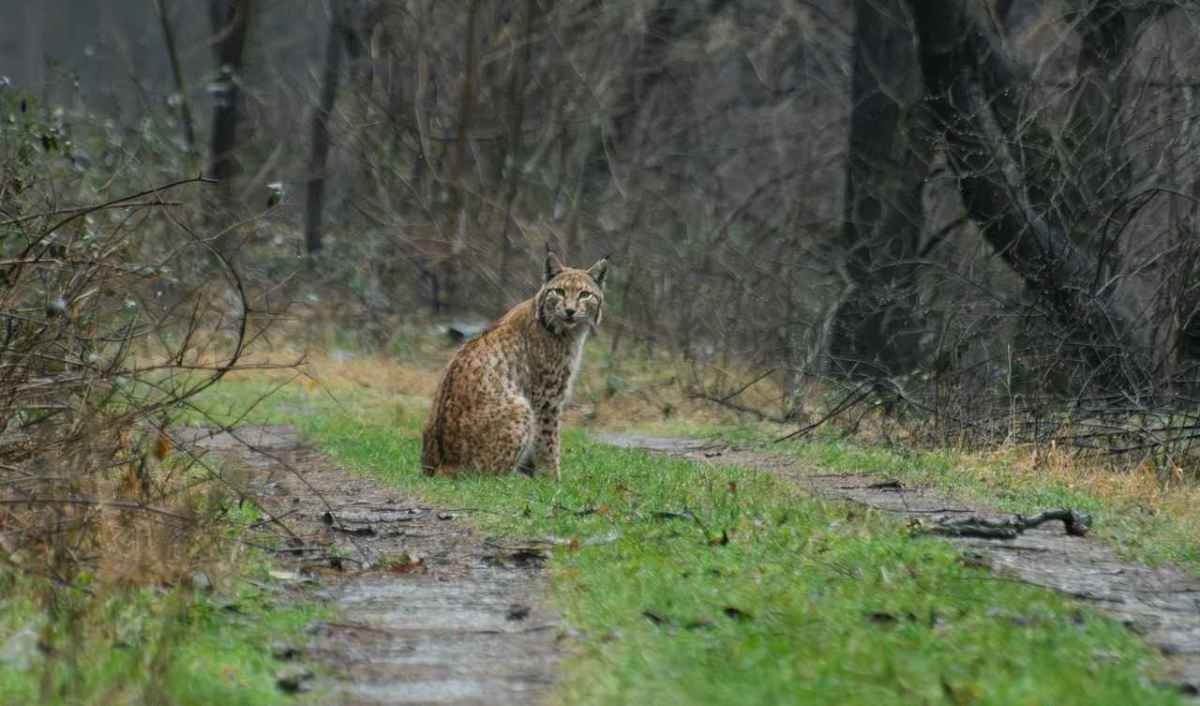
Symbolic image. Photo: Adi Albulescu / Unsplash
«Thirty-Seven»
In the southern Black Forest, offspring of a self-migrated lynx have been documented for the first time. An observer reported the previously unknown lynx with her cub on 19 October 2026, and the Forest Research Institute of Baden-Württemberg (FVA) announced the confirmation on 4 November. According to the Badische Zeitung, she was sighted near Ühlingen-Birkendorf in the district of Waldshut, not far from the Swiss border. Her origin is still unclear; experts suspect Switzerland. At the same time, Valais is pursuing plans to regulate its lynx population.
What is known about the lynx
Her origin has not been conclusively established, as BreisgauLIVE reports, citing the FVA. Given the geographical proximity, however, the experts consider immigration from Switzerland very likely. The news agency dpa is more cautious, saying she “could have migrated from Switzerland”. What is certain is that she is not one of the lynx that Baden-Württemberg released as part of its population-support project.
In total, four young lynx have now been confirmed in Baden-Württemberg, which, according to current knowledge, stem from three females. Three of them live in the northern Black Forest and are descended from the released lynx Verena and Elisabeth, who came from a European conservation breeding programme for Carpathian lynx. The fourth cub, in the southern Black Forest, is the only one born to a mother that migrated into the area on her own. “An exchange between the Swiss and Baden-Württemberg lynx populations is important”, the report states.
Why Switzerland is the obvious origin
Switzerland is the nearest lynx range. The KORA Foundation estimates the population for the 2024/25 biological year at 364 ± 10 independent lynx over one year old, of which 246 are in the Alps, 86 in the Jura and 32 in north-eastern Switzerland. The estimate combines the most recent monitoring data from each area and is not a simultaneous nationwide count. These populations derive from a small number of reintroduced lynx and are in part spatially and genetically isolated from one another. It is not known which Swiss population the female lynx might come from. Genetic samples could clarify this.
Exchange between lynx populations can strengthen genetic diversity and reduce the risk of inbreeding. Why permeable landscapes are crucial for this is shown in our article “The Mittelland as a bottleneck: why the lynx needs more than presence”. Background on the species can be found in the dossier “The lynx in Switzerland”.
Meanwhile, Valais wants to regulate lynx
While Baden-Württemberg is supporting recolonisation through releases, Valais wants to become the first canton in Switzerland to regulate a lynx population. State Councillor Christophe Darbellay announced in June that he would submit an application to the Federal Office for the Environment for this purpose. A direct connection between the female lynx in the southern Black Forest and the Valais lynx population has not been demonstrated. Even a confirmed Swiss origin would not yet prove a Valais origin. The comparison does, however, show how differently two regions deal with the same species.
In the political debate, up to 80 lynx in Valais were mentioned. A study by the University of Bern, available as a preprint and presented on 25 September 2026, by contrast estimates the Valais population for winter 2025/26 at 37 independent lynx, with a confidence interval of 26 to 52 lynx. For the period from 2010 to 2018, the study puts the population across the whole canton at only five to eight lynx. Independent peer review is still pending. The details can be found in the article “Valais: University of Bern study counts 37 lynx instead of the claimed 80”. Together with the petition “No lynx kills in Valais”, IG Wild beim Wild is collecting signatures against the plans.
Editorial assessment
The sighting in the southern Black Forest shows how important natural immigration can be for the return of the lynx. If the suspected Swiss origin is confirmed, the female lynx would be a concrete example of the cross-border exchange that the FVA describes as important for the long-term establishment of a stable population.
The political contrast remains: Baden-Württemberg supports recolonisation through releases, while Valais is aiming for kills. The University of Bern study casts considerable doubt on the population figure of up to 80 lynx cited in the political debate.
Kill quotas require a reliable data basis. Maximum figures cited for political reasons must not replace scientific population estimates. Nor must the interest in roe deer and chamois populations for recreational hunting push the long-term recovery and connectivity of the lynx into the background.
Sources
- Badische Zeitung, 4 November 2026: First lynx kitten of an immigrant female in 180 years spotted near Ühlingen-Birkendorf
- BreisgauLIVE, 4 November 2026: Lynx offspring in the Black Forest: four young lynx confirmed
- KORA Foundation: Lynx, population
- dpa/lsw via WNOZ, 4 November 2026: What the new lynx offspring means for Baden-Württemberg
More on the subject of recreational hunting: In our dossiers on recreational hunting gather fact-checks, analyses and background reports. What the research says about this is shown by Hunting fact-checked: the state of research.
The position of IG Wild beim Wild: IG Wild beim Wild rejects recreational hunting. Our model is the canton of Geneva, which has managed without recreational hunting since 1974: without hunting seasons, without hunting dogs, without driven hunts, without high seats, without the animal cruelty and crime that go hand in hand with hunting season elsewhere. What has worked there for over fifty years disproves every position paper by JagdSchweiz. An association that bases its policy on claims it refutes in its own documents is not a professional organisation, but a factory for misinformation.
Wild animals need a voice
Once a week: research, petitions and background information on recreational hunting. Free of charge and can be unsubscribed from at any time.

All articles are written by IG Wild beim Wild as well as by external co-authors. Research, structuring and editorial processes may be supported by AI-assisted tools.
Support our work
With your donation you help protect animals and give their voice a hearing.
Donate now →