Lynx Juro Swims from the Black Forest into Switzerland
Documented for the first time: a GPS radio-collared lynx crosses the Rhine near Laufenburg and roams through the cantons of Basel-Land, Aargau and Solothurn. The journey shows how urgently intact wildlife corridors are needed.
“The Trail in the Snow”
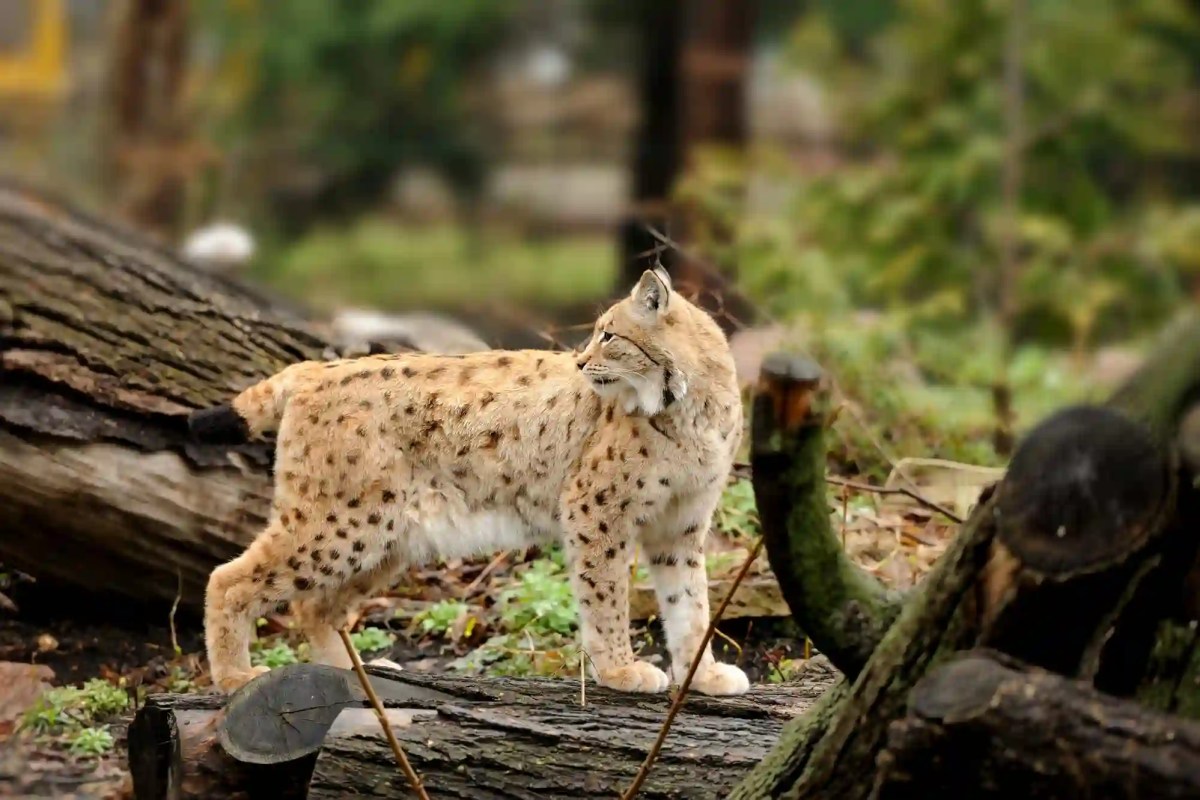
In the early morning hours of a March day, the lynx Juro swam across the Rhine near Laufenburg and set foot on Swiss soil.
What was probably routine for the two-year-old male lynx is a significant moment for wildlife research: for the first time, the lynx monitoring programme of the Forestry Research Institute of Baden-Württemberg was able to track via GPS data how a lynx migrates from the southern Black Forest into Switzerland.
After crossing the Rhine, Juro wandered all the way to the foothills of the Jura mountains. Since then he has been roaming the cantons of Basel-Land, Aargau and Solothurn, but also repeatedly returns to the vicinity of the Rhine.
The likely reason for the journey is biological in nature: in search of a mate, the lynx Juro left the southern Black Forest during the mating season. In March he crossed the Rhine near Laufenburg, very probably to try his luck in the country from which the two-year-old animal may once have migrated.
A corridor under pressure
The migration sheds light on a structural problem. The High Rhine valley between the Black Forest and the Swiss Jura is a barrier that restricts migrating wild animals. There are only a few undeveloped stretches of the Rhine left that allow crossings into and out of Switzerland. And even these are increasingly narrowing due to construction projects.
On his way into Switzerland, Juro crossed the A98 twice near Binzen and the B34 in Bad Säckingen. The data show which wildlife corridors are being used and in which further areas corridors or green bridges are needed.
For KORA expert Kristina Vogt, the genetic exchange between the populations is crucial: the lynx populations in the Black Forest are part of the Upper Rhine lynx metapopulation. An exchange between the Swiss and the Baden-Württemberg lynx populations is essential in order to establish a stable lynx population in the tri-border region.
Will Juro come back?
Whether the male lynx will find a territory and a female in Switzerland or return to the southern Black Forest is, according to the FVA, an open question. As this is probably a mating-season migration, a return is conceivable. Only once he can no longer be detected for six months will he no longer be considered resident.
In Baden-Württemberg, female lynx are meanwhile being actively reintroduced to strengthen the population. Up to ten lynx, ideally female, are to be released into the Black Forest. The project has been carried out since 2023 by the FVA in close cooperation with the Baden-Württemberg state hunting association, the WWF and the Karlsruhe Zoological Garden.
Juro is meanwhile providing valuable data, even if he himself does not know it. What the predators in Switzerland need for their survival is not pity, but space: permeable landscapes, undeveloped Rhine banks, functioning corridors. Juro shows that these routes still exist. And just how narrow they have become.
More on the subject of recreational hunting: In our dossiers on recreational hunting gather fact-checks, analyses and background reports. The scientific evidence is presented in the overview Studies on the Effects of Recreational Hunting.
The position of IG Wild beim Wild: IG Wild beim Wild rejects recreational hunting. Our model is the canton of Geneva, which has managed without recreational hunting since 1974: without hunting seasons, without hunting dogs, without driven hunts, without high seats, without the animal cruelty and crime that go hand in hand with hunting season elsewhere. What has worked there for over fifty years disproves every position paper by JagdSchweiz. An association that bases its policy on claims it refutes in its own documents is not a professional organisation, but a factory for misinformation.
Support our work
With your donation you help to protect animals and to give their voice a hearing.
Donate now →