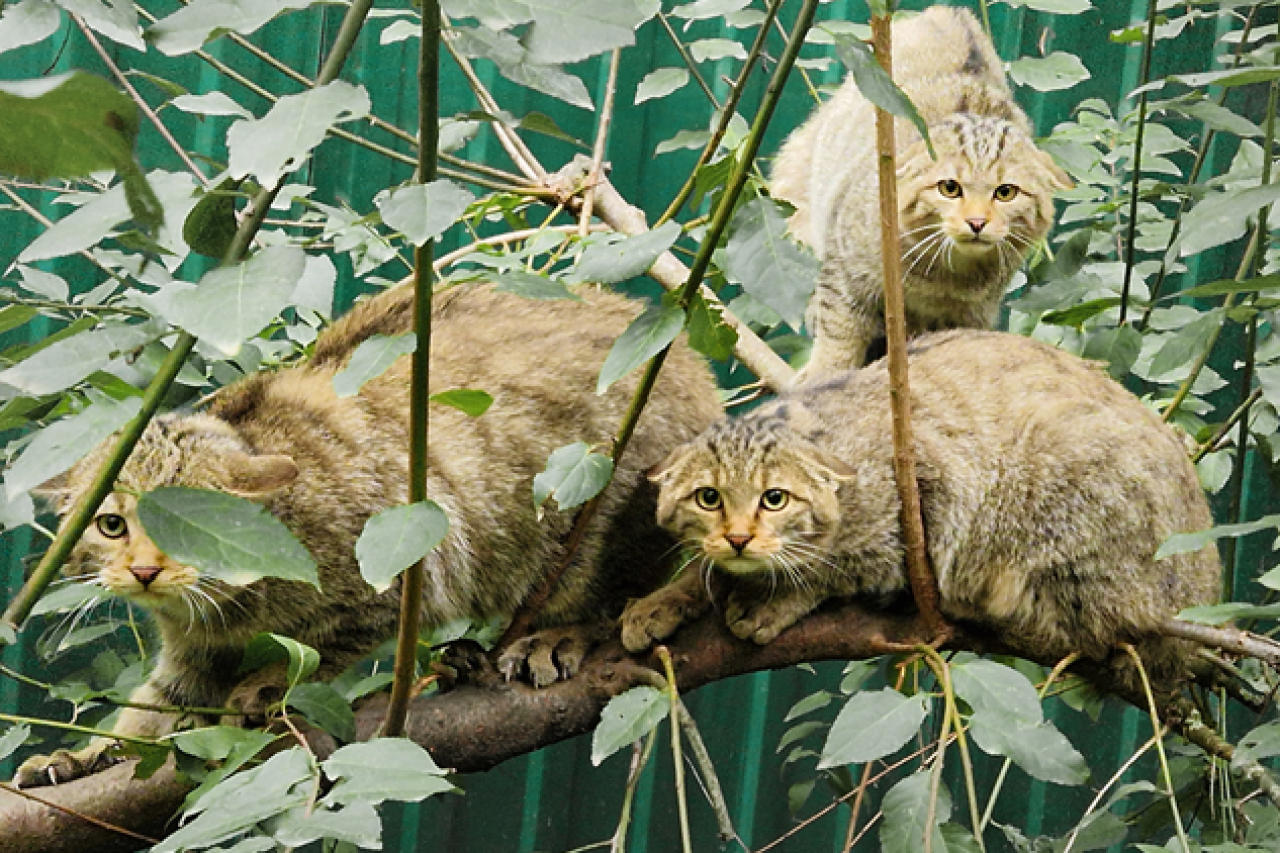
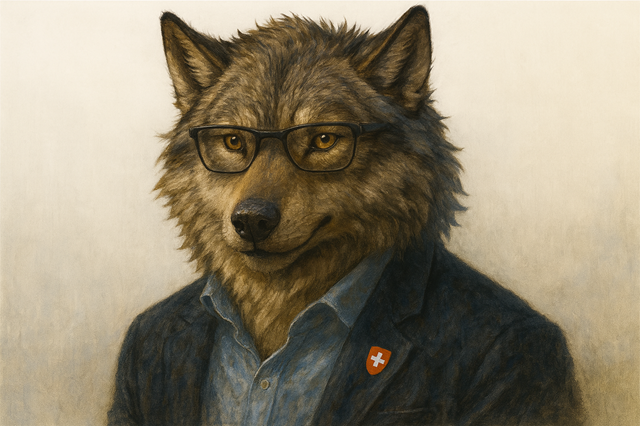
Predators in Switzerland: Wolf, Lynx, Fox & Co.
In official communications, the term “large carnivores” is often used when referring to wolves, lynxes, or bears. This term evokes fear, obscures the ecological role of these animals, and serves as a political tool for the hunting lobby. We deliberately use the term predators because it is more precise and focuses on the natural relationship between prey animals and their predators.
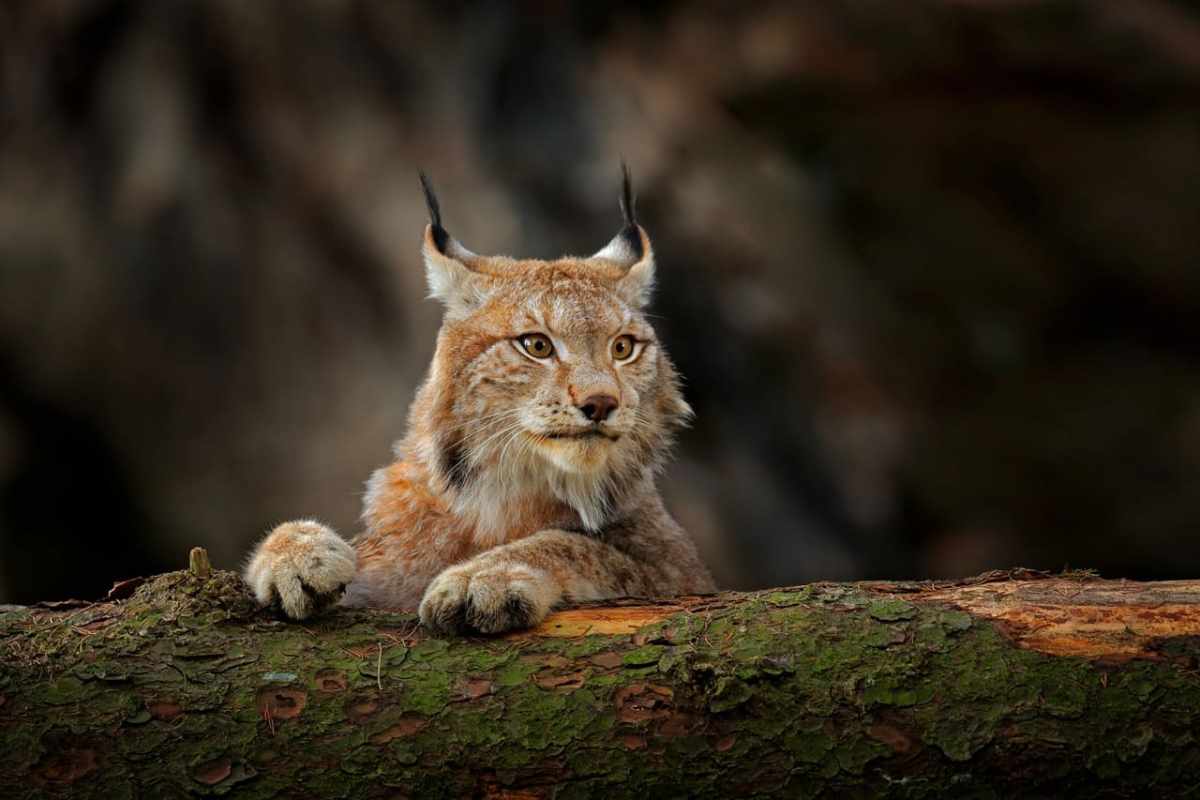
This article provides an overview of the most important predators in Switzerland: wolf, lynx, fox, badger, and other species that are targeted by recreational hunting.
It shows what role they play in the ecosystem, why they are systematically persecuted, and what alternatives exist to culling and lobby narratives.
Further background information on hunting and recreational hunters can be found in the Dossier on Hunting in Switzerland as well as in the articles “Recreational Hunters — What Are They?” and “The Recreational Hunter in the 21st Century”.
1. Why We Use the Term Predators and Not “Large Carnivores”
The term “large carnivores” is not a neutral technical expression but a political buzzword. It evokes the image of large, dangerous animals that allegedly kill “too many” deer, elk, or livestock and therefore need to be “controlled.” The same animal behavior, however, is described among recreational hunters as leisure, tradition, or “wildlife management.”
The term predator, by contrast, describes an ecological role: animals that hunt and eat other animals. This includes not only wolves, lynxes, and bears, but also foxes, badgers, martens, birds of prey, and owls. They are all part of complex food webs, contribute to population regulation, and prevent landscapes from becoming further impoverished.
Anyone who describes predators as a “problem” ignores the fact that they have been part of ecosystems for thousands of years and that the real disturbances stem primarily from agriculture, the leisure industry, and recreational hunting. More on this perspective can be found in the article “What Are Predators and What Role Do They Play?”.
2. Wolf in Switzerland: Politically Persecuted, Ecologically Needed
Since its return to Switzerland, the wolf has become the symbol of a polarized debate between the hunting lobby, mountain agriculture, and animal welfare. While cantons such as Valais advocate for “proactive regulation” and authorize the culling of entire packs, researchers and animal welfare organizations emphasize the wolf’s important role in our ecosystems.
As a predator, the wolf hunts primarily deer, roe deer, and chamois. It reduces overpopulated herds, ensures natural selection, and changes the behavior of prey animals — for instance, by causing them to spend less time in sensitive areas. In the long term, this can help relieve pressure on forests that today suffer massively from browsing damage and fragmentation.
At the same time, the wolf is being politically instrumentalized: as a threat to livestock, as an alleged driver of “overpopulation,” or as a danger to the public. The facts paint a different picture: very few confirmed incidents involving humans, many preventable livestock kills, and a policy that prefers shooting to consistently investing in herd protection.
You can find more on population numbers, culls, herd protection, and lobbying around the wolf in the article “The Wolf in Switzerland: Facts, Politics, and the Limits of Hunting”.
3. Lynx: Keystone Species, Scapegoat, and Victim of Poaching
The lynx is one of the keystone species in Switzerland’s forests. It hunts primarily roe deer, thereby directly influencing roe deer populations and their spatial behavior. The claim that lynxes eat “too many chamois” is a favorite narrative of hunting associations, but one that is clearly put into perspective by data and studies.
As a native predator, the lynx was extinct in Switzerland for a long time and was only reintroduced in the 20th century. Even today, its distribution remains patchy, genetically impoverished in places, and it faces fierce opposition from parts of the hunting community and agricultural sector. Illegal killings and the traceless disappearance of lynxes often go unsolved or without consequences.
This makes the lynx doubly vulnerable: legally protected on paper, but in practice threatened both by legal culls under the lynx management plan and by poaching. In the article “The Lynx in Switzerland: Predator, Keystone Species, and Political Flashpoint” we explain how closely ecological, hunting-policy, and legal questions are intertwined here.
4. Fox and Badger: Indispensable “Workers” of the Ecosystem
4.1 Fox: Mouse Hunter, Carrion Processor, and Hygiene Helper
While wolves and lynx are publicly debated, foxes are among the most frequently killed predators in Switzerland, often with little media attention. Year after year, tens of thousands of foxes are shot in the name of “population regulation,” “disease prevention,” or “protection of small game.”
Foxes, however, feed primarily on mice, carrion, and waste. They regulate rodent populations, clear away carcasses, and thereby contribute to hygiene within the ecosystem. Where foxes are heavily persecuted, rodents and the problems associated with them can increase. Fear of the fox tapeworm is also greatly exaggerated — the risk of infection for humans in everyday life is very low and can be minimized through simple hygiene measures.
In the article “What are predators and what role do they play?” and in further articles on wildbeimwild.com, it is shown how much fox hunting serves primarily as a traditional hunting ground and how little it has to do with modern wildlife medicine or ecology.
4.2 Badger: Ecosystem Engineer Rather Than “Pest”
The European badger suffers greatly from its poor image as a “pest” and “tunnel builder” that supposedly endangers roads or agricultural land. In reality, it is an important soil cultivator whose burrows create habitat for numerous other species and introduce organic material into the soil.
As an omnivore, the badger eats worms, insects, fruits, small mammals, and carrion. It thereby contributes to soil mixing, pest control, and the food base for other species. Nevertheless, it is hunted in many cantons year-round or over long periods.
A more in-depth look at the role of the badger as an “ecosystem engineer” can be found in your articles on biodiversity in the cultural landscape and in the French material on the badger.
5. Birds of Prey, Owls, and Other Predators
Alongside the well-known mammalian predators, birds of prey and owls play a central role in Swiss ecosystems. Common buzzards, kites, sparrowhawks, eagle owls, tawny owls, and other species regulate small mammals, consume carrion, and help keep food webs stable.
Although many of these species are legally protected today, they continue to suffer from illegal persecution, shooting, poisoning, destruction of nests, and habitat loss. Where the hunting lobby tries to blame raptors for the decline of small game, it conveniently ignores how heavily habitat destruction, intensive agriculture, and recreational hunting itself have reduced small game populations.
The debate over the “regulation” of raptors through legislative initiatives and proposals reveals how deeply rooted the aversion to predators is in certain circles. Rather than recognizing their ecological contributions, these animals are once again being made into targets.
6. Predator Management: The Geneva Model as an Alternative
The Geneva model shows what a different relationship with predators can look like: professional wildlife management carried out by game wardens rather than recreational hunters, clear rules, and a priority on protection and coexistence. In this approach, predators are not viewed as adversaries but as an integral part of the ecosystem.
In the article “Predator Management: Wolf, Fox, and the Geneva Model” it is shown how conflicts with wildlife can be resolved differently than through recreational hunting: through monitoring, prevention, habitat enhancement, and professional intervention in exceptional cases — rather than through recreational violence and lobbying pressure.
Such approaches are viable for the future because they integrate ecology, animal welfare, and public safety, and understand predators as allies of a healthy landscape.
7. Why Recreational Hunters Fight Against Predators
Many conflicts with predators have less to do with objective damage than with a sense of injured ownership. When wolves, lynxes, or foxes hunt deer, stags, or small game, recreational hunters see them as competition for “their” wildlife. The reaction is correspondingly fierce — ranging from political campaigns to illegal persecution.
On top of this, predators undermine the hunting lobby’s narrative. When wolves, lynxes, and other predators demonstrably regulate populations and relieve pressure on forests, the narrative of “indispensable regulation” by recreational hunters loses its foundation. The existence of predators exposes hunting for what it largely is in Switzerland: recreational violence against animals.
You can find more on the psychological dimension of this violence, the motivations of recreational hunters, and the social consequences in the category Psychology & Hunting and in the article «Put an End to Leisure Violence Against Animals».
8. Promote Predators Instead of Fighting Them
A modern wildlife policy in Switzerland should no longer treat predators as a problem, but as allies for biodiversity, forest health, and climate protection. In concrete terms, this means: connecting habitats, securing wildlife corridors, minimizing disturbances, sharply restricting culls, and consistently prosecuting illegal persecution.
At the same time, a rethink is needed in how we deal with livestock: herd protection instead of culls, consultation instead of polemics, and an agricultural policy that does not pit predators and livestock against each other. Where predators can build long-term stable populations, the supposed necessity of recreational hunting as a “regulatory tool” will continue to diminish.
Concrete alternatives to recreational hunting — from the wildlife warden model to predator promotion and legal reforms — are compiled in the article «Alternatives to Recreational Hunting» There you will also find «The Wildlife Warden Model — Wildlife Management with a Code of Honor», which shows how professional management can work without recreational hunting.
9. Further Articles and Ways to Get Involved
Anyone wishing to explore the topic of predators in Switzerland in greater depth will find a growing collection of articles, analyses, and templates at wildbeimwild.com:
- What are predators and what role do they play?
- The wolf in Switzerland: facts, politics, and the limits of hunting
- The lynx in Switzerland: predator, keystone species, and political flashpoint
- The beaver in Switzerland: exterminated, reintroduced, and newly approved for culling
- Poaching in Switzerland: hunting crime and impunity
- Alternatives to recreational hunting
- The wildlife warden model — wildlife management with a code of honor
- Taking action against recreational hunting
- Template texts for hunting-critical motions in cantonal parliaments
The better predators are understood, the harder it becomes for lobby organizations to exploit them as bogeymen. Knowledge is the first step here, and political action is the next.
Unterstütze unsere Arbeit
Mit deiner Spende hilfst du, Tiere zu schützen und ihrer Stimme Gehör zu verschaffen.
Jetzt spenden →