Predator Management: Wolf, Fox and the Geneva Model
When politics and authorities regulate predators, it is rarely just about animals. It is about trust, interpretive authority, damage figures and which evidence counts as 'sufficient'.


In Switzerland, predator management is often presented as a technical issue: monitoring, threshold values, livestock protection, regulation.
In practice, something else often determines acceptance: conflict communication. Who defines the problem? Who controls the narrative? And who explains uncertainties before they are read as 'cover-up'?
We see the consequences every year: A killed livestock animal becomes a symbol, a single problem case becomes the narrative about the wolf, and the debate tips into factional logic. At the same time, the quiet, statistically often more relevant conflicts remain under the radar. One of these blind spots is the fox: omnipresent, adaptable, close to humans and intensively hunted in many regions. Precisely for this reason, it is an ideal test case for whether management in Switzerland is evidence-based or primarily communicative.
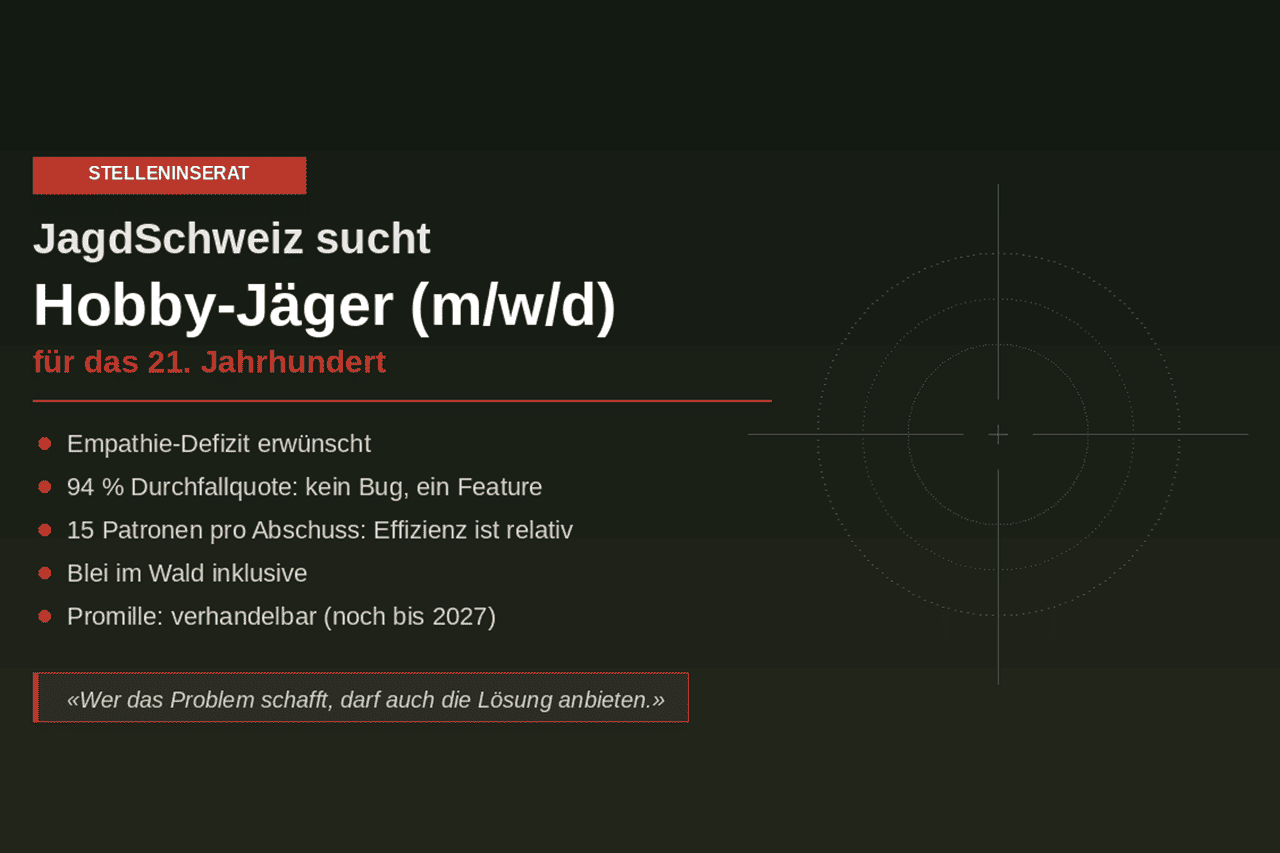
Anyone who takes wildlife protection seriously must tolerate an uncomfortable sentence: Killing is no substitute for strategy. It is a measure that can only be legitimized when the goal, effect, alternatives and side effects are transparent. This is precisely where the Swiss debate about recreational hunting repeatedly fails.
1) Conflict communication trumps data as long as goals are missing
Evidence-based management does not begin with the question 'may we shoot?', but with the question 'what is the goal?'. In Switzerland, several goals compete simultaneously:
- Biodiversity and ecosystem function
- Protection of livestock and livelihood security
- Acceptance in the population
- Safety and risk perception
- Legal compliance in enforcement
These objectives pull against each other. In communication, goal displacement frequently occurs: Today regulation is justified with livestock protection, tomorrow with 'behavioral control', the day after with 'acceptance'. When goals shift, effectiveness becomes untestable. One can always be right because the benchmark is constantly moved.
This is precisely where conflict communication becomes hidden power: It decides which evidence counts at all. And it rewards measures that are visible, even when their effect is not properly documented.
2) Wolf: new fact sheets, old communication patterns
With the wolf, the debate often condenses into two messages: 'Herd protection is sufficient' and 'Regulation is inevitable'. At the same time, current fact sheets show how important contextualization is, for example regarding wolves near settlements and regarding food sources in Switzerland.
These details are crucial because they curb the typical dramatization: Proximity to settlements is definable, observable and explicable. Food is measurable and often contradicts gut feeling.
But in public debate, contextualization often comes too late. First emotion is set, then 'capacity to act' is demanded, then a measure is sold as a symbol. The result is a trust problem: After every removal, every further sighting is read as proof that it 'achieves nothing'. Biology does not move to the rhythm of headlines.
This is precisely why defined criteria for 'proximity to settlements' and reliable data on food sources are central, because they curb panic narratives and enable comparisons over years.
3) Fox: the test case where hunting arguments visibly crumble
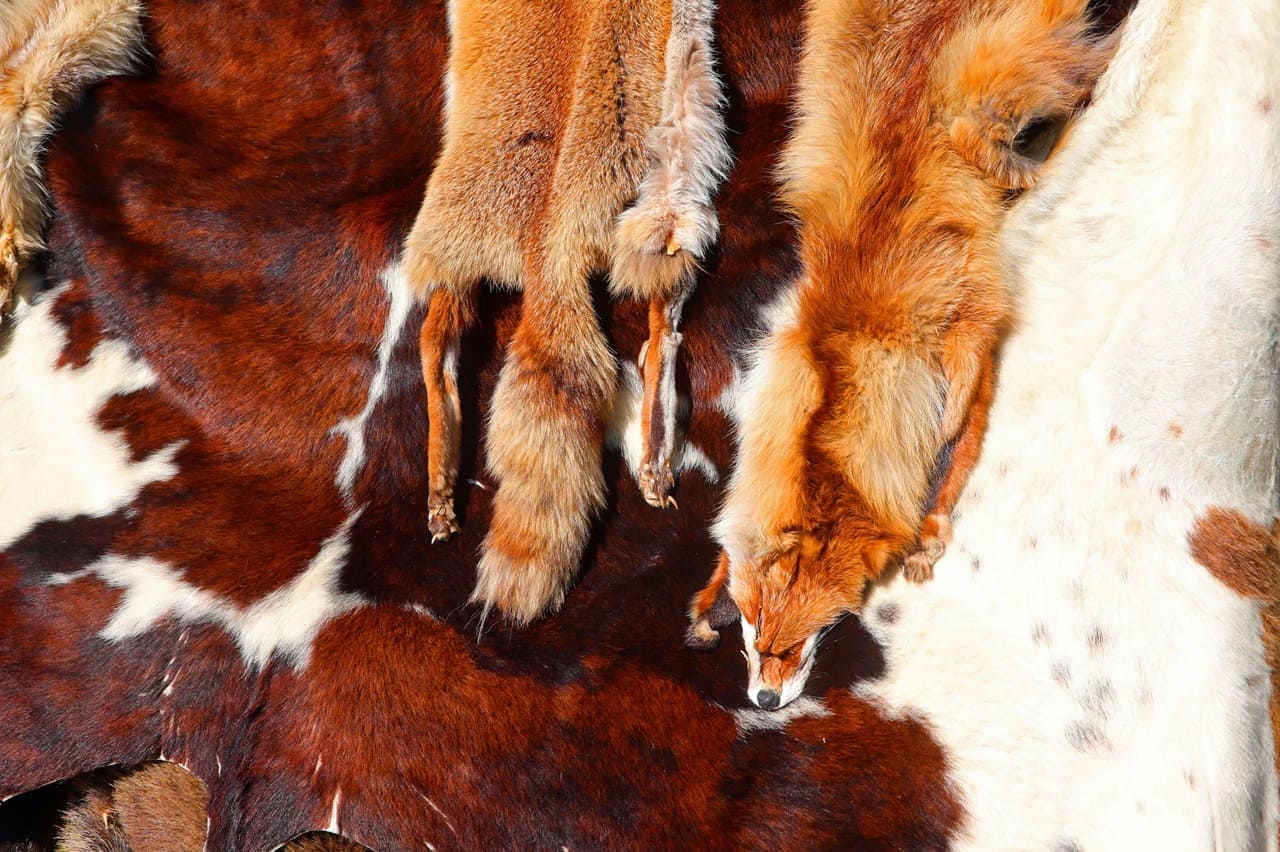
With the fox, the pattern is particularly instructive because shooting is considered normal in many regions, while the effect is rarely transparently documented.
3.1 Urbanization: The fox has long been in settlement areas
A key Swiss study shows how widespread foxes are in cities and how rapidly urban populations have developed, including evidence of observations and dens in many Swiss cities. This means: Anyone promising to 'reduce populations' must reckon with high adaptability. Management here is not a question of 'shooting more', but of clear objectives and measurable impact.
3.2 Replacement through immigration: Why shooting often only produces gaps
Very strong for the debate is the research on 'restricted-area culling', i.e. intensive removal in limited areas. A PLOS ONE study models annual dynamics and shows that removals are in many cases replenished through immigration and intensive effort is needed to keep densities low. Another study reaches a similar finding: The effect was temporary and rather small, populations compensated for the intervention.
Journalistically translated: Recreational hunting often provides the feeling of control, but not automatically the promised effect. If the goal is 'fewer foxes', the question must follow: over what timeframe, in what space, with what evidence?
3.3 Health arguments: Fox hunting as the wrong tool
When fox hunting is justified with health risks, it's worth looking at the evidence: A study on combating Echinococcus shows that fox removal as a management tool can be problematic and an effective strategy doesn't simply mean 'shoot more'. When health serves as justification, targeted, effective measures are needed instead of symbolic actions. What matters is the effect, not the symbolism, not ritual politics with rifles.
4) Ground-nesting birds, meadow birds and the predation trap
In hunting circles, predation is frequently sold as the main cause of declines because it leads to a simple solution: shooting. The evidence is more complex.
There is a well-cited systematic review that reports positive effects of predator removal for certain vulnerable bird populations. At the same time, a meta-analytical study shows that non-lethal protective measures like exclosures and nest protection can significantly increase hatching success. This is important because it provides alternatives that work without culling. And a newer systematic review with meta-analysis focuses explicitly on non-lethal methods for nest protection and evaluates their effectiveness.
The key point for wildlife protection: When effective, non-lethal options exist, killing is not 'without alternative'. Then hunting doesn't become the solution, but rather a convenient shortcut that replaces working on the causes.
5) Geneva: a cantonal counter-model to recreational hunting
Geneva has been a canton without hunting since 1974, introduced following a popular initiative and vote. The structure is important: Official regulation remains possible, but it is a state responsibility. This is also confirmed by a federal presentation that explicitly states that hunting is banned in Geneva and state game wardens intervene when necessary.
The example of Geneva clearly shows: It doesn't take hundreds of hobby hunters to manage wildlife conflicts. It takes a few specialists with mandate, training, documentation obligations and political accountability.
Internal analysis: Studies and Dossiers
Sources:
Urban Fox Switzerland
Gloor, S., Bontadina, F., Hegglin, D., Deplazes, P. & Breitenmoser, U. (2001). The rise of urban fox populations in Switzerland. Mammalian Biology, 66, 155–164.
Replacement through immigration after removal
Porteus, T. A., et al. (2019). Restricted-area culling and population recovery in carnivores. PLOS ONE, 14(5), e0215632.
Temporary effects of removal
Kämmerle, J.-L., et al. (2019). Limited and short-term effects of predator removal on mesocarnivore populations. Conservation Biology, 33(4), 910–920.
Ground-nesting birds, predation and removal
Smith, R. K., Pullin, A. S., Stewart, G. B. & Sutherland, W. J. (2010). Effectiveness of predator removal for enhancing bird populations. Conservation Biology, 24(3), 820–829.
Non-lethal nest protection, early meta-analysis
Isaksson, D., Wallander, J. & Larsson, M. (2007). Managing predation on ground-nesting birds: a meta-analysis of predator exclosures. Journal of Wildlife Management, 71(3), 948–954.
Non-lethal nest protection, systematic review and meta-analysis (2024)
Gautschi, D., Čulina, A., Heinsohn, R., Stojanovic, D. & Crates, R. (2024). Protecting wild bird nests against predators: A systematic review and meta-analysis of non-lethal methods. Journal of Applied Ecology, 61, 1187–1198.
Health arguments, Echinococcus and fox management
Hegglin, D. & Deplazes, P. (2013). Control of Echinococcus multilocularis: strategies, feasibility and cost-benefit analyses. International Journal for Parasitology, 43(5), 327–337.
Wolf Switzerland, assessment of proximity to settlements and food
KORA – Koordinierte Forschungsstelle Raubtiere (2025). Fact sheet: Wolves in proximity to settlements and food in Switzerland. Switzerland.
Geneva without hunting
Canton Geneva (République et canton de Genève). La chasse à Genève. Official cantonal information.
Federal Office for the Environment FOEN. Special regulations for hunting in Switzerland: Canton of Geneva. Federal representation on enforcement.
Fact box: 6 hard statements with evidence
- Hunting is often symbolic politics when goals and impact monitoring are lacking. Without clear target values, before-after comparisons and transparent data, 'acting' is confused with 'achieving results'. This exact mechanism drives conflict communication and escalation.
- With foxes, removal in limited areas often leads to rapid replenishment through immigration. Research on population dynamics after removal shows that gaps are often quickly reoccupied and strong, sustained interventions would be necessary to keep densities low.
- Effects of fox removals can be small and temporary, rather than sustainable. Studies report that populations compensate for interventions and long-term benefits remain limited unless extremely intensive intervention occurs.
- Non-lethal nest protection can have measurable effects and is often underestimated. Meta-analyses show clear improvements in hatching success through exclosures and nest protection, without having to shoot predators.
- Those who sell predation as the main cause often oversimplify a multi-causal reality. Systematic reviews sometimes find effects of predator control, but the evidence is context-dependent and does not replace addressing root causes in habitats and land use.
- Geneva shows: wildlife management works without hobby hunting, with clearly state-mandated interventions with accountability. Geneva banned hunting in 1974 following a referendum and instead relies on professional game wardens for necessary interventions.
Support our work
With your donation you help protect animals and give voice to their concerns.
Donate now →