Wolves Under Constant Fire: Swiss Hunting Policy Ignores Science
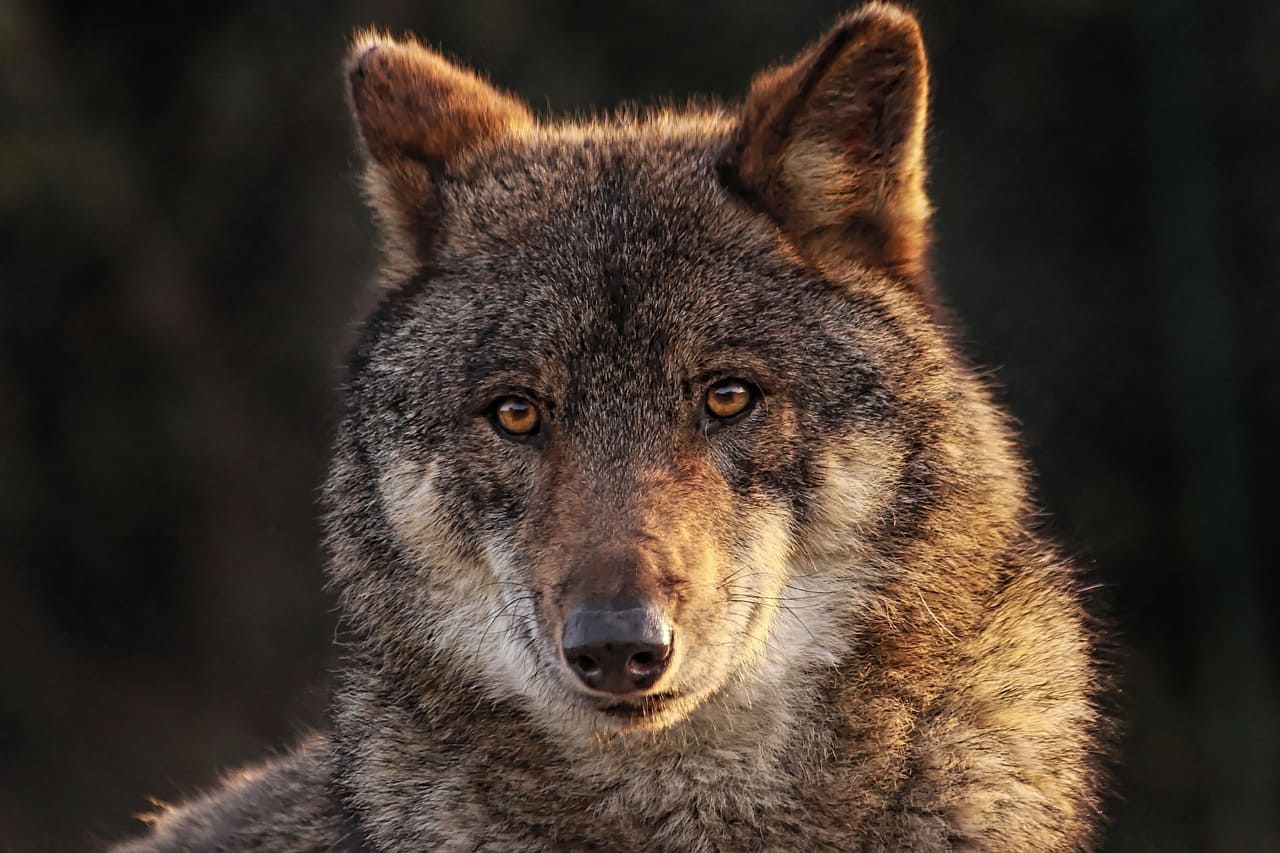
On 9 December 2025, Switzerland stands alone in Europe with a wolf hunt that is unprecedented: within two winters, well over one hundred wolves were shot preventively, primarily pups. Yet pack numbers continue to grow. The official justifications oscillate between protective forests, alpine farming, and public safety. The data tell a different story.

The Federal Office for the Environment has now evaluated the first two major regulation phases of 2023/24 and 2024/25.
In the first phase (December 2023 to end of January 2024), the cantons were permitted to shoot around 100 wolves; 55 animals were actually killed. In the second phase (September 2024 to end of January 2025), FOEN authorised the culling of approximately 125 wolves; 92 were actually shot, almost exclusively on a preventive basis. Nine entire packs were to be removed. Nevertheless, after the second phase, 36 packs remained, 25 of them with territories entirely within Switzerland.
Current wolf monitoring by KORA shows: in the monitoring year 2025/26, 41 packs have already been confirmed, 31 of them entirely within Switzerland and 10 cross-border. In addition, 130 pups have been documented so far.
In other words: Switzerland is conducting one of the most intensive wolf hunts in Europe, without the population declining. It continues to grow, only more slowly. Yet politically, the discourse has shifted away from population management and increasingly towards open talk of decimation.
Pup Hunting as a Management Strategy – A Large-Scale Experiment Without Results
An analysis by SRF in collaboration with KORA reveals what lies behind the dry FOEN figures. In 2024, 221 wolves were genetically documented in Switzerland. From early June 2024 to end of January 2025, seven solitary wolves and 92 pack members were proactively shot. A large proportion of these were pups. According to KORA expert Sven Buchmann, around 60 pups were killed — nearly half of that year’s cohort.
The idea: packs are to be regulated without eliminating the parent animals everywhere, in order to preserve the social structure. What this actually does to behaviour, damage levels, genetics and acceptance is unknown to anyone. KORA emphasises that Switzerland is running a worldwide experiment with this approach to regulation — ongoing research projects exist, but there are as yet no reliable results.
At the same time, BAFU itself states that neither the longer-term population trend nor the effects of regulation on wolf behaviour can be assessed after just two periods. Yet year after year, new and far-reaching shooting rights are written into the hunting ordinance. Wolf hunting is thus taking place explicitly, even though the authorities' own state of knowledge describes the impacts as largely unresolved.
Graubünden as an example: 48 dead wolves, one National Park pack wiped out
The canton of Graubünden is regarded as the testing ground for this hard line. Between September 2024 and January 2025, 48 wolves were shot there. Particularly controversial was the complete elimination of the Fuorn pack, which lived partly within the Swiss National Park.
DNA analyses later revealed that a one-year-old female from the pack had been involved in a cattle kill. In the case of a second kill, the traces were too poor to assign responsibility unambiguously to any one animal. Nevertheless, the entire pack was hunted down. The National Park criticised the fact that it had not been consulted by the federal authorities, and that despite a petition bearing tens of thousands of signatures, no alternative course of action was examined.
It is precisely here that the extent to which the logic of hunting dominates becomes apparent: the legally protected population of large predators is being massively reduced at the request of cantons and hunting authorities, even though neither the ecological effects nor any alternatives were seriously explored — including at the very heart of a National Park.
How serious is the wildlife problem in forests, really?
A central political argument runs as follows: without intensive hunting of roe deer, red deer and chamois, and without strict regulation of wolves, forests suffer. Wildlife browsing, it is claimed, endangers protective forests and the climate-adapted restructuring of woodland stands.
The research itself paints a more nuanced picture. A Switzerland-wide overview by WSL researcher Andrea Kupferschmid and colleagues shows that foresters rate wildlife impact as low or insignificant on around 68 percent of the assessed forest area. 27 percent fall into a middle category, and only 5 percent are rated as silviculturally unsustainable.
Yes, browsing can cause significant problems locally – particularly for silver fir, oak and rowan, which are important for protective forests and climate adaptation. But the data refute the narrative that Switzerland is facing a widespread browsing collapse.
What wolves actually do – and do not do – in the forest
The ecological role of the wolf is often reduced to buzzwords in public discourse. Some hope for a second Yellowstone, while others warn of a “forest without wildlife.” Both views are too simplistic.
A synthesis on the influence of wild ungulates on forest regeneration in Switzerland shows that wildlife browsing is a relevant factor, but varies considerably by region, tree species and location, and is not problematic everywhere.
An analysis of the role of wolves on forest and wildlife concludes: a single wolf pack cannot on its own reduce wildlife populations in a heavily human-influenced cultural landscape to a desired level, but it can significantly alter their behaviour. Browsing becomes more fragmented, wildlife becomes more mobile and retreats to rocky or forested areas. The equation “wolf = less wildlife = browsing” does not work automatically; the effects are complex and location-dependent.
The Calanda region in particular, where Switzerland's first wolf pack emerged, illustrates this: browsing on important tree species such as silver fir, maple and rowan has declined markedly in the pack's core territory, while pressure can increase in winter habitats. A nuanced picture that rarely features in the political debate.
New major study: hunting and land use drive deer populations, not the wolf
An international study led by the University of Freiburg and published in the Journal of Applied Ecology in 2023 examined what influences red deer density at 492 sites across 28 European countries. The finding: in Europe's cultural landscapes, human hunting and land use determine population density significantly more than large predators such as wolf, lynx and bear.
Only where all three large carnivores coexist and human influence is relatively low does deer density measurably decline. In typical Alpine regions with intensive hunting, tourism, grazing and forestry, the numerical impact of large carnivores remains minimal.
Translated to the Swiss context, this means: how many deer, roe deer and chamois move through the forest is determined primarily by hunting regimes, supplementary feeding, agricultural land, winter sports and roads. Wolves change the behavior and distribution of prey animals, but they cannot single-handedly repair a wildlife management system that has been thrown into complete disarray for decades, largely due to hunting interests.
Livestock protection works – and exposes the weaknesses in the hunting arguments
While politicians and parts of the hunting lobby continue to push for more culling, data has been available for years that clearly shows what actually reduces livestock depredation: herd protection.
An analysis by the «Bote der Urschweiz» together with Gruppe Wolf Schweiz shows that the number of livestock killed per wolf has dropped from over 50 to a consistently below 10 since the species' return. The main reason, according to Gruppe Wolf: improved herd protection.
For 2023, multiple sources confirm that in the most affected cantons of Valais and Graubünden, kill figures fell by 55 and 80 percent respectively in the first half of the year, even as the wolf population continued to grow. The decisive factor was the newly implemented, federally funded livestock protection measures such as guard dogs, fencing and supervised herds.
Nevertheless, the Federal Council simultaneously lowered the damage thresholds for culling and eased the regulation of packs. In technical terms, this means: rather than consistently expanding a functioning strategy (herd protection), policymakers have enshrined a second, scientifically barely evaluated strategy (preventive culling) alongside it on equal footing – primarily to satisfy hunting and agricultural interests.
Hunting policy in conflict with species conservation
The revised hunting ordinance sets a minimum of just twelve wolf packs for the whole of Switzerland. Experts such as former National Park Director Heinrich Haller openly speak of a decimation policy and criticize the fact that this figure is not biologically justified but politically determined.
At the same time, the FOEN emphasizes in its own press release that the consequences of regulation on wolf behavior and future population development cannot yet be assessed at all. Nevertheless, one hundred animals per year are targeted — in a population of just a few hundred individuals.
For species conservation, this means: A species strictly protected under international agreements is hunted so heavily in the name of 'conflict management' that an ecologically meaningful role for wolves in the forest–wildlife–human system can never develop in the first place. At the same time, the actual levers in wildlife management — hunting quotas, feeding practices, winter rest areas, tourism management — remain largely untouched.
What Switzerland needs now
Instead of ever-lower culling thresholds and symbolically charged pack eliminations, Switzerland needs a hunting and wildlife policy oriented around three simple principles:
- Primacy of science over the shotgun
Management measures must be tied to clear objectives and measurable indicators. Without independent outcome monitoring, a general monitoring obligation, and transparent data, wolf hunting remains a political reflex, not an instrument of evidence-based environmental policy. - Herd protection first, culling last
The available data on livestock losses, losses per wolf, and the effectiveness of herd protection clearly indicate where priorities should lie. Culling can defuse individual cases, but does not replace prevention that is comprehensively funded and professionally supported. - Making hunting policy honest
Large-scale studies on red deer in Europe show that we primarily manage wildlife populations in our cultivated landscapes ourselves — through hunting, land use, and disturbance. When the hunting community claims that only strict regulation of the wolf can save the forest, this contradicts the international specialist literature in its own field.
On 9 December 2025, Swiss wolf hunting is not an objectively justified tool within a finely balanced ecosystem management framework, but rather an expression of a political power dynamic. Wolves are being shot in large numbers, even though
- populations continue to grow,
- herd protection demonstrably works,
- the ecological consequences of regulation remain largely unexplored, and
- the major problems in the forest are primarily linked to climate, land use, and human wildlife management.
The central question is therefore not how many wolves “Switzerland can tolerate.” The question is how long a modern society can afford to align its wildlife policy with hunting-political reflexes rather than research, ethics, and long-term ecological responsibility.
Dossier: Wolf Switzerland: Facts, Politics, and the Limits of Hunting
Further Articles
- Wolves Under Constant Fire: How Swiss Hunting Policy Ignores Science and Ethics
- Protective Forest: Hobby Hunters Create the Problems They Claim to Solve
- The Wolf Is Not the Problem – It Is the Solution
- Forest Conversion: Paths to Resilient Mixed Forests in the Face of Hunting
- Forest Conversion at the Lukmanier Pass
- Hunting Is Not the Solution for Forest Conversion
- Hobby Hunters Do Not Help Forest Conversion
- The Conflict Between Forestry, Hunting, and Wildlife