Three 'rescued' wildcats in Geneva: A success story and a lesson
A success story and a lesson about how we treat wild animals.

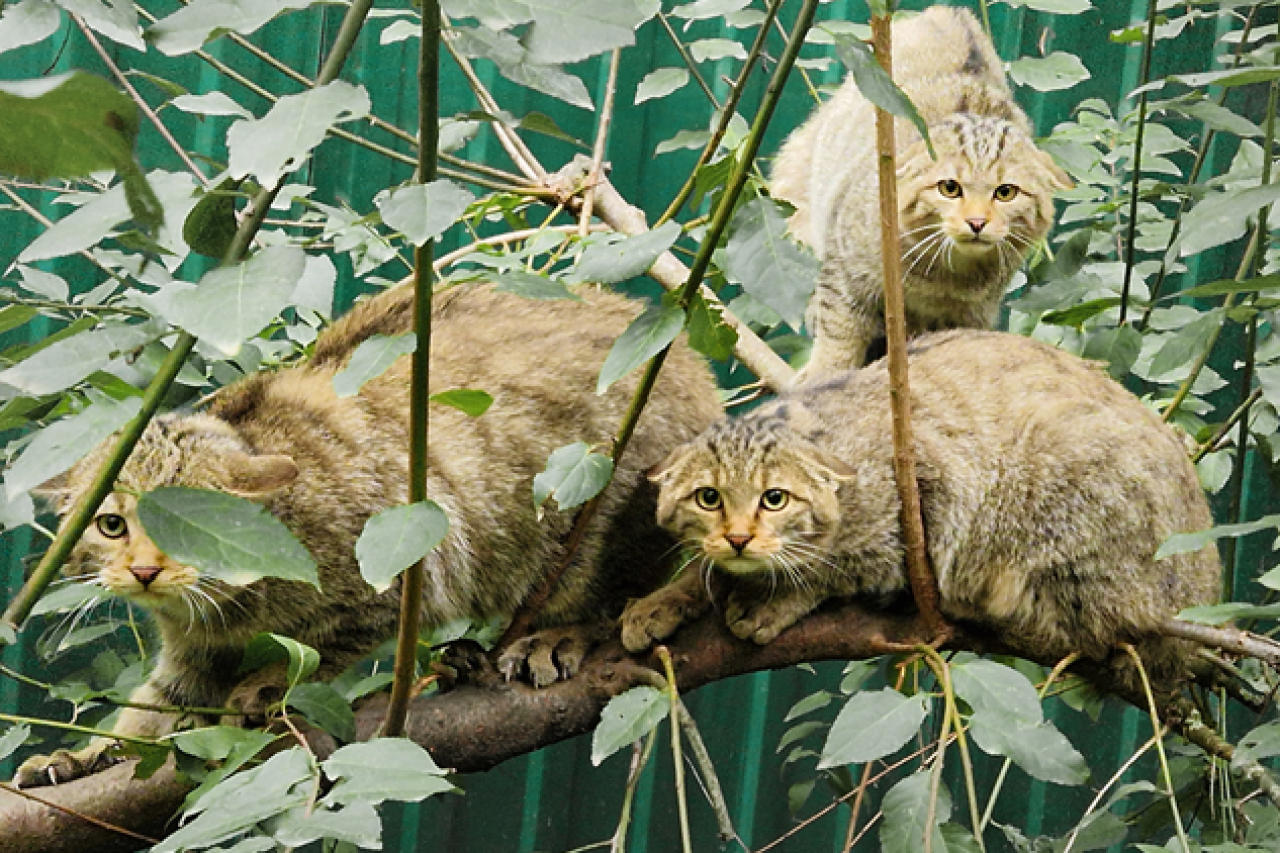
Three small, grey-striped bundles of fur in the forest above the Barrage de Verbois.
Two walkers meant well, took what they believed to be abandoned 'domestic kittens' with them and brought them to the Geneva animal welfare organisation. What sounds like an act of care was in reality an intervention in a sensitive system. For the animals were not stray kittens, but young European wildcats (Felis silvestris).
That this story does not end as a tragedy is above all a matter of professionalism. The SPA Genève responded correctly, reported the find immediately, and specialists then took over: the Centre de réadaptation des rapaces et de la faune sauvage (CRR) and the Geneva environmental wardens. The young animals were raised in a way that preserved their wildness. Minimal contact with humans, protection from disease, feeding with prey animals, training in a near-natural enclosure monitored by motion-detector cameras rather than through any 'cuddling approach'. Their species identity was confirmed by DNA analysis. In autumn they were released back into the wild in a suitable area on the right bank of the Rhône, close to where they were found and in a location where wildcats already occur. Today the canton describes it as a successful return to freedom.
'Rescued' sometimes means: correcting the mistake
The conclusion is uncomfortable, but important: these wildcats had to be rescued because humans had 'rescued' them from the forest in the first place. This is precisely why the canton explicitly states: a beige-grey striped juvenile in the forest is not automatically in need of help. Only in cases of acute danger or injury does intervention make sense. Otherwise the rule is: keep your distance, do not touch, report rather than remove.
This is more than a rule of conduct. It is a matter of respect. Wildlife is not our property, not our project, and not our photographic subject. Those who collect them often alter their fate irreversibly. The fact that Geneva was able to return three animals to the wild this time is the exception, not the rule.
Geneva demonstrates an alternative: protection instead of shooting
It is no coincidence that this story takes place in Geneva. The canton officially designates itself as a «canton sans chasse» — a canton without hobby hunting. This is a political and cultural statement: wildlife management is not organised primarily through recreational hunting and trophy logic, but through professional oversight, monitoring, habitat planning, and interventions only where they are justified. The Geneva model has been regarded since 1974 as proof that professional wildlife management works.
Naturally, a hunting ban does not automatically solve all problems. But it shifts the fundamental tone: away from the notion that wildlife must be «regulated», towards the question of how coexistence can be achieved in practice. This is precisely what the Geneva operation demonstrates — precise, minimally invasive, scientifically grounded, and with a clear objective: to allow the animals to live free once more.
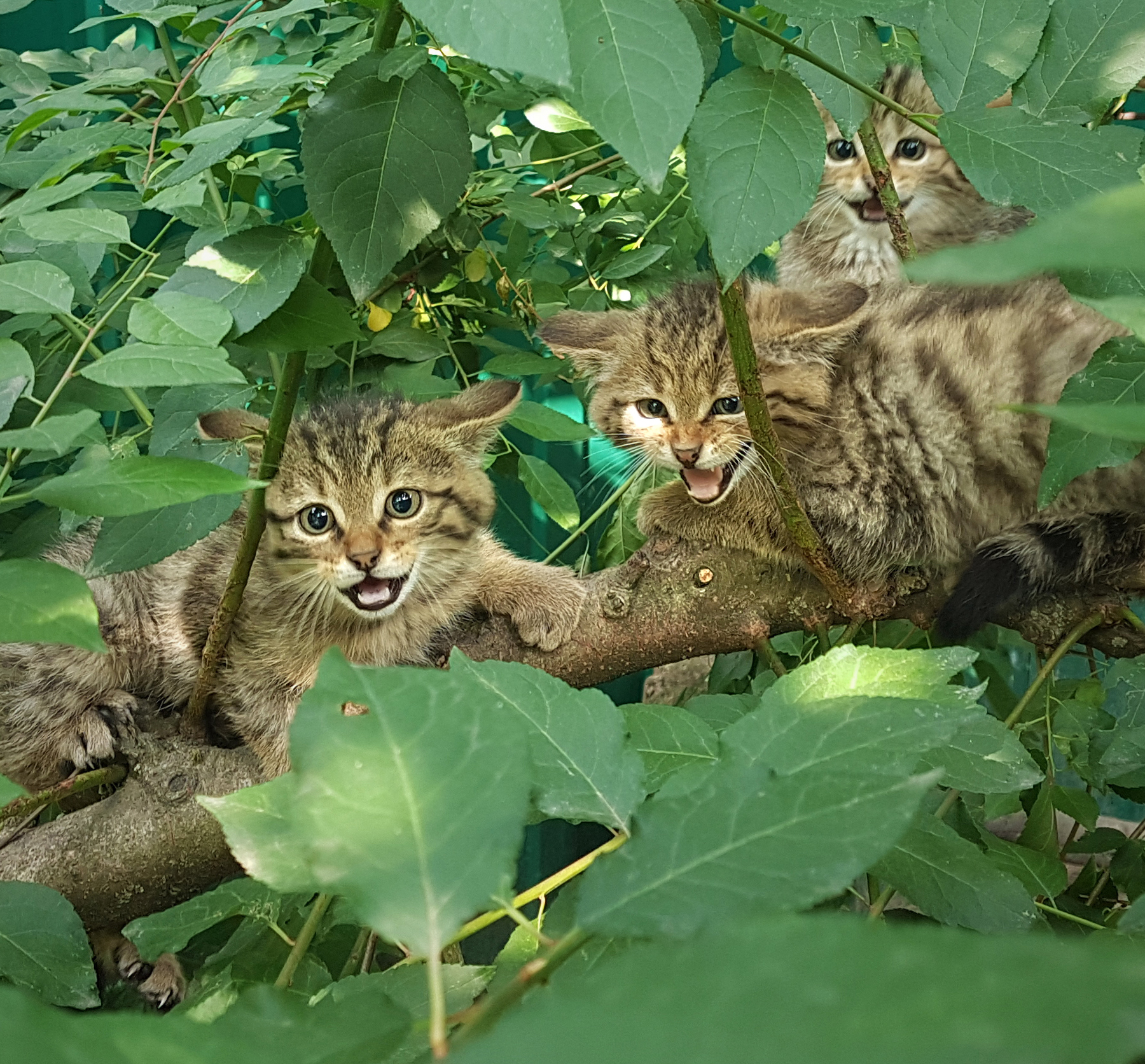
A «protected» species that nevertheless remains precarious
The canton describes the wildcat as «protected yet threatened». In the past it was persecuted and survived locally only in the Jura; it has been spreading across the Geneva plain again only since the beginning of this century. This return is fragile.
The greatest danger does not come from the forest, but from our own doorstep: hybridisation with free-roaming domestic cats. When domestic and wild cats interbreed, the genetic distinctiveness of the wildcat becomes blurred. Pro Natura describes this intermingling as the central medium-term risk and emphasises the responsibility of cat owners: neuter, control, particularly in rural areas and near woodland. KORA identifies, alongside hybridisation, diseases transmitted by domestic cats, habitat fragmentation, and road traffic as further threats.
This also makes clear why the Geneva approach was so strict: keeping distance from humans and domestic cats was not «excessive» — it was wildlife protection in practice.
A hunting-critical perspective: the real risk is the «useful or gone» system
The wildcat offers a striking example of how arbitrary our categories are. The communiqué describes it as 'harmless,' 'discreet,' and an 'auxiliary' to agriculture because it hunts mice. Translated: it is welcome as long as it is useful.
This is precisely where the problem of hunting policy begins in many regions: those who are useful are tolerated. Those regarded as competition or nuisance quickly end up in the crosshairs. Pro Natura recalls that the persecution of predators was historically systematic, and simultaneously warns that other species such as the lynx are once again coming under political pressure today. The pattern remains: it is not ecological facts that decide, but lobbying pressure, emotions, and an old sense of dominance over 'our' wildlife.
Geneva, with its wildcat story, offers an alternative model. Not because everything is perfect, but because the guiding question is a different one: how do we keep an endangered, native wild species within the system without domesticating, instrumentalising, or shooting it?
What you can do concretely
- Found in the forest: do not touch, do not take away. Act only in cases of immediate danger, and otherwise contact specialist authorities.
- Domestic cats near woodland: neuter or spay them, limit outdoor access — especially at night and in forest edge zones.
- Politically: ask questions when 'regulation' reflexively means shooting. Geneva shows that professional wildlife management works without hobby hunting as the default mode.
In the end, three wildcats remain — wildcats that are once again permitted to be wildcats. And a reminder that genuine animal protection does not consist of drawing animals close, but of leaving them space. In a country where hunting is often defended as tradition, that may be precisely the most radical message of this quiet Geneva success story.