Wisents in the Thal: Semi-freedom Comes Despite Resistance
The Wisent im Thal association is pressing ahead with the reintroduction of Europe's largest wild cattle and intends to release the animals into supervised semi-freedom from 2027, even though two municipalities refused to provide the necessary land in May.
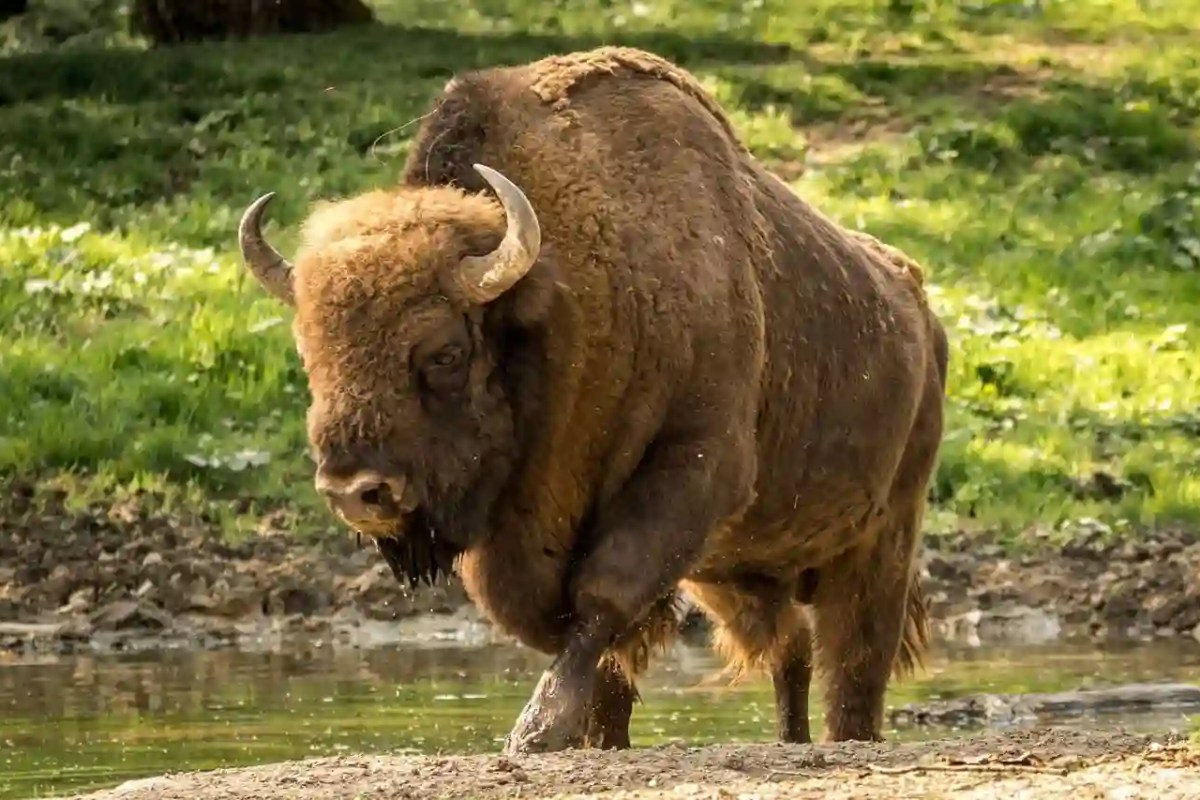
In a media release dated 27 May 2026, the Wisent im Thal association reaffirmed that it would continue planning the next project phase.
According to its own statement, the association has carried out in-depth clarifications and is sticking to its aim of no longer fully fencing in the wisents from 2027 onwards.
The decision comes at a tense moment. In early May 2026, the citizens' municipality of Welschenrohr and the municipality of Herbetswil refused to make land available to the project. As a result, the area earmarked for semi-freedom shrinks from the original roughly 12 square kilometres to about 6.4 square kilometres. Part of the missing space is being absorbed by the citizens' municipality of Solothurn, which is providing the project with around 600 hectares of forest.
Since autumn 2022, a test herd of up to 25 animals has lived in the Thal Nature Park within a fenced area of around 100 hectares on the Sollmatt in Welschenrohr-Gänsbrunnen. It is the first free-living wisent population in Switzerland for around 1,000 years, after the species was wiped out here in the Middle Ages.
What "semi-freedom" actually means
In the planned phase, the wisents would no longer be fenced in but would still be strictly monitored and confined to a clearly defined area. The association hopes that the animals will live out their natural behaviour more fully and that the public will gain a more realistic picture of these shy herbivores.
If semi-freedom proves successful, the wisents could be released fully into the wild after 2032. The basis for this will be a scientific final report scheduled for 2027.
Resistance from agriculture and hobby hunting
Opposition to the return comes above all from the Solothurn Farmers' Association and the "Wisentansiedlung Nein" interest group. Its spokesman publicly describes the wisent as a "damage-causing animal". This classification is not scientifically tenable: accompanying studies by the Swiss Federal Institute for Forest, Snow and Landscape Research (WSL) as well as studies from Denmark show that wisents tend to increase the diversity of herbaceous vegetation and act as landscape shapers.
The regional hobby hunters are also positioning themselves against the project. Their representative criticises the fencing and the influx of visitors, invoking the "tranquillity of the game". The constellation is remarkable: while the return of a once native wild animal species enjoys broad support, of all groups it is part of the hobby hunting community that is among those slowing it down. A district forester also warns of long-term forest damage caused by bark stripping on trees.
This is offset by clear facts. A complaint by the Farmers' Association against the project was dismissed by the Federal Supreme Court. And the second WSL survey of January 2026, in which 418 of 1,554 households contacted took part, found that the clear majority perceive the bison as exciting, peaceful and an enrichment for the nature park.
Support our work
With your donation, you help to protect animals and give their voices a hearing.
Donate now →