What does recreational hunting really cost Switzerland?
Public discussion about recreational hunting focuses almost exclusively on benefits and tradition. The costs are kept silent. Yet recreational hunting generates considerable expenses for public authorities: administration, wildlife damage regulation, accident costs, environmental damage from lead ammunition and the loss of biodiversity. The dossier on the true costs reveals this calculation for the first time.


The hunting lobby likes to emphasize that hobby hunters pay patent fees and hunting leases.
What is concealed in this argument: These revenues do not even remotely cover the actual costs of the system. A correct calculation must also include expenses for hunting administrations at cantonal level, the costs of wildlife damage processing, expenses for game wardens and hunting supervisors as well as the costs of criminal prosecution for hunting offences.
The dossier What recreational hunting really costs Switzerland shows that a complete cost calculation for the recreational hunting system in Switzerland has never been publicly presented. This is not an oversight, but a structural problem of a system that has never been examined for its social efficiency.
The costs of hunting administration
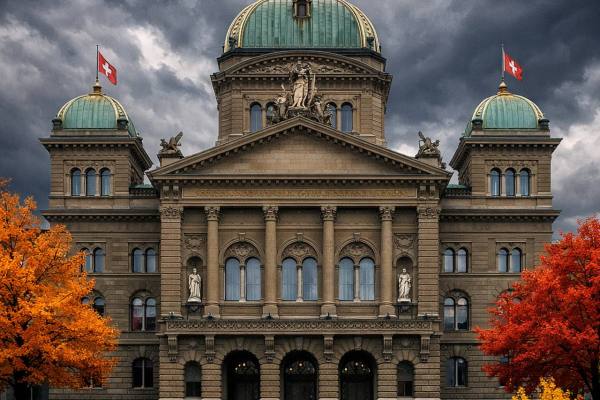
In Switzerland, recreational hunting is a cantonal matter – the cantons regulate, monitor and control it. For this purpose, they maintain hunting inspectorates, game warden corps and administrative apparatus. The costs of this infrastructure are rarely disclosed transparently and are often hidden in broader budget items in cantonal budgets.
Added to this are the indirect costs: legal disputes, administrative communication, political work in parliamentary committees and the costs of hunting legislation at federal and cantonal level. The Swiss Hunting Act (JSG) and its cantonal implementing regulations require ongoing maintenance, revision and enforcement.
Wildlife damage and its consequential costs
Part of the costs are directly measurable: wildlife damage to agricultural crops and forests is reported annually in the millions in Switzerland. This does not only involve damage caused by species that are actually hunted. Parts of this damage are caused by wild animals whose population structure has been altered by recreational hunting, for example through the decimation of natural predators.
The wildlife management model shows that professional management can prevent such damage by maintaining wildlife populations in an ecologically sensible way instead of manipulating them through hunting.
Hunting accidents: The hidden social costs
Every year, hunting accidents with injuries and fatalities occur in Switzerland. The dossier Hunting Accidents in Switzerland documents that official statistics are incomplete and the actual number of accidents is underestimated. Accidents that do not trigger reports, near-accidents and psychological consequences for those affected are not systematically recorded.
The social costs of these accidents – hospital stays, disability, trauma treatment, criminal prosecution – are borne by the general public. They do not flow into the hunting lobby's cost-benefit calculation, although they are real and substantial.
Lead ammunition: Creeping environmental poisoning
One of the most frequently underestimated cost problems of recreational hunting is the use of lead ammunition. The dossier Lead Ammunition proves that lead particles from hunting ammunition contaminate soils, waterways and wild animals. Birds of prey that eat remains of shot or unrecovered wild animals suffer chronic lead poisoning.
The costs of this environmental pollution are difficult to quantify, but real: species that are decimated by lead poisoning are missing from the ecosystem, and the ecological consequences are long-term. Legal restrictions on lead ammunition would prevent considerable social costs – but they fail due to resistance from the hunting lobby.
Hunting and biodiversity loss as social damage
Recreational hunting influences biodiversity, and biodiversity loss has economic costs. The dossier Hunting and Biodiversity analyzes how hunting interventions change population structures and what consequences this has for ecosystem services. Ecosystem services – pollination, water purification, soil formation, pest regulation – are economically valuable and far more expensive than the revenue generated by recreational hunting.
When this economic damage is included in the calculation, the cost-benefit ratio of recreational hunting clearly reverses.
The problem of missing overall accounting
A central problem is: There is no public overall accounting of recreational hunting in Switzerland. No canton and no federal office has ever presented a complete cost-benefit analysis of the recreational hunting system. This is remarkable in a country that sets high transparency requirements for other public expenditures.
This structural lack of transparency is no coincidence. As long as no complete accounting is available, the argument that recreational hunting 'pays off' cannot be refuted – but also cannot be confirmed.
What would make a professional system more cost-effective
The Hunting Ban Switzerland and the Alternatives to Recreational Hunting demonstrate that a state-organized wildlife management system would be more efficient than the current recreational system in many areas. Administrative costs would decrease because hunting licenses, territory permits, and private quotas would no longer need to be managed. Costs for accident consequences, criminal prosecution, and wildlife damage regulation would be reduced through better training and clear protocols.
Whether such a system would ultimately be cheaper can only be assessed once the complete accounting of the current system is available.
Conclusion
The costs of recreational hunting in Switzerland are systematically not collected, not published, and not debated. What is known – accident costs, administrative burden, lead contamination, biodiversity losses – points to a significant disproportion between the actual societal costs and the claimed benefits. A comprehensive public accounting is long overdue.
Further Content
- What Recreational Hunting Really Costs Switzerland
- Hunting Accidents in Switzerland
- Lead Ammunition
- Hunting and Biodiversity
- The Wildlife Management Model
- Hunting Ban Switzerland
Support Our Work
With your donation, you help protect animals and give voice to their concerns.
Donate Now →