Wolf Traps in the Vaud Jura: Sabotage, Criticism, Open Questions
The sixth trapping campaign of the KORA project “Wolves and Cattle” ended on April 18, 2026, without a single wolf being fitted with a tracking collar — but with a triggered trap appearing on Facebook. Beneath the scandal over the sabotage lies a more uncomfortable question: How independent can a foundation be when it catches wolves for research purposes while simultaneously evaluating the effectiveness of cantonal culling policy?
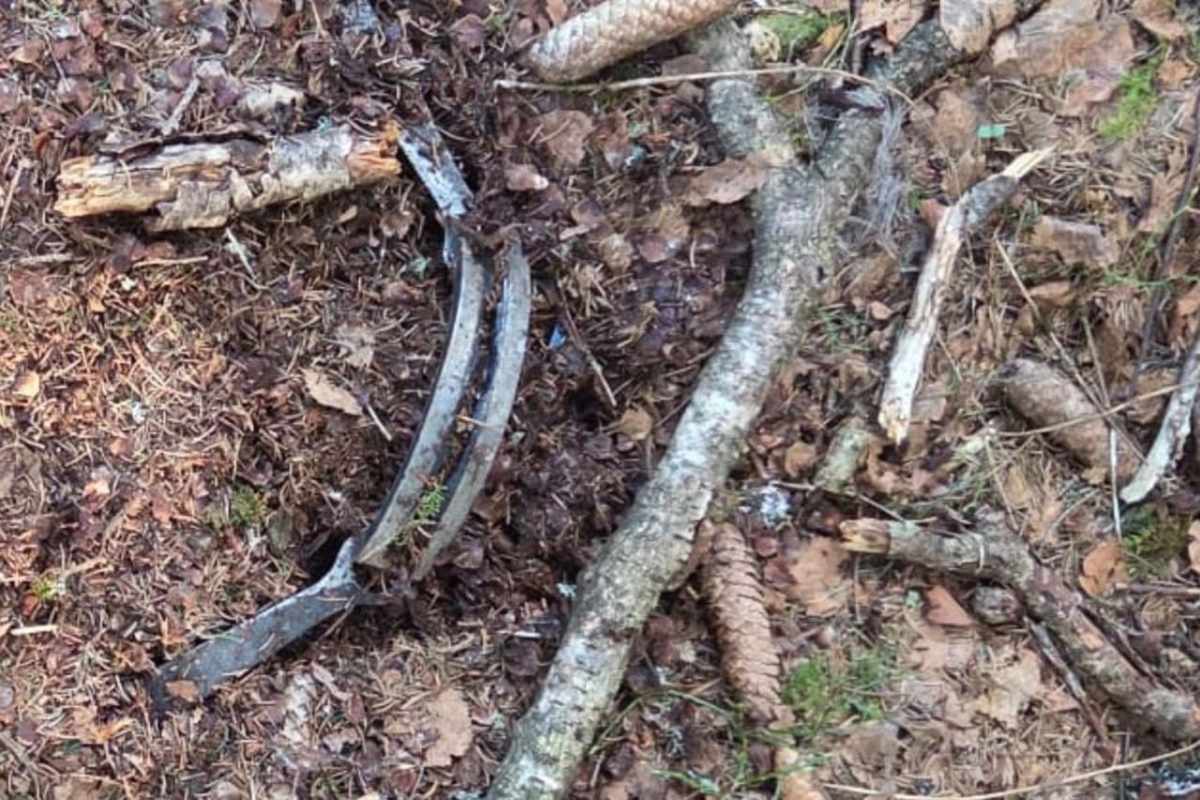
Between March 17 and April 18, 2026, the KORA Foundation and the Département d’écologie et d’évolution of the University of Lausanne set out 28 rubber-padded foot snares between Montricher–Marchissy and L’Orient–Le Brassus.
Not a single wolf was caught.
On the final evening of the campaign, according to KORA biologist Fridolin Zimmermann, one trap site was “deliberately located, triggered, and moved approximately 30 meters along with a roe deer carcass decoy.” Images of the triggered trap and the relocated decoy soon appeared on the Facebook page “T’es de la vallée de Joux si…” and sparked a wave of outraged comments branding the method as the tool of a “braconnier.”
The public outrage over the photos is one thing. The more uncomfortable question lies beneath it: What role does KORA actually occupy when the same foundation traps wolves in the name of science while also being commissioned by the canton of Vaud to evaluate the effectiveness of its culling policy?
Rubber-Padded Traps: Method and Legal Framework
KORA emphasizes that the traps used are rubber-padded, are internationally standard practice for wolf collaring operations, and have been officially authorized. The traps are deactivated during the day, marked on-site, and designed so that animals lighter than wolves cannot be caught in them; they are placed away from paths used by ungulates. A GSM or satellite alert triggers a response on-site within 45 minutes at most.
The Swiss Animal Welfare Act generally requires that animals be protected as effectively as possible from foreseeable harm and injury (Art. 4 and 6 AniWA). The fact that KORA reinforced signage and “optimized” deactivation after a 2023 incident in which an accidentally caught dog was reportedly examined by a veterinarian and released unharmed proves the point: the residual risk is real and not merely a communication problem. To this day, there is no independent veterinary documentation accompanying each trapping operation that is not curated by KORA itself.
The Scientific Framework “Wolves and Cattle”
The project has been running since 2022 in the canton of Vaud, funded by private foundations and carried out in collaboration with AGRIDEA, the University of Lausanne, the FIWI at the University of Bern, and the organizations OPPAL and FJML.
By April 2026, three wolves had been fitted with transmitters: the females F186 and F259, and most recently the male M637, who received a GPS collar on October 29, 2025. In January 2026, M637 covered nearly 240 kilometers in eleven days, traveling from the foothills of the Vaud Jura through the canton of Fribourg to the Emmental and back to his starting point.
A KORA report No. 129 published in September 2025 (Surer, Christe, Zimmermann) records 84 cattle attacked by wolves in the Vaud Jura for the years 2023 and 2024, which the authors state represents 17 to 33 percent of cattle mortality on alpine pastures in the areas studied. For comparison: in 2025, the canton of Vaud recorded a total of around 160 predations on livestock (cattle, sheep, goats), 88 of them in the territory of the Mont-Tendre pack alone. Against this backdrop, the canton is politically pressing for wolf collaring.
KORA also acknowledges that the GPS data collected for the project is recorded at four-hour intervals with a transmission delay of at least 16 hours. The foundation itself states that the data is unsuitable as a warning system for alpine farms. It is therefore equally unsuitable for real-time localization to support culling operations. However, it is central to retrospective territory analyses that feed into cantonal culling applications and regulation perimeters. This is precisely the real interface between research and regulation that KORA consistently downplays in its communications.
Critical Assessment: When Monitoring and Regulatory Evaluation Bear the Same Handwriting
During the 2024/2025 regulatory period, the canton of Vaud had ten wolves killed — mostly young animals from the Mont-Tendre pack — without any noticeable decline in attack numbers. After the second preventive regulatory period expired at the end of January 2026, the canton commissioned KORA of all organizations to analyze the effectiveness of its culling policy. The same foundation that fits wolves with radio collars and supplies monitoring data is now supposed to assess whether the culls are working — culls that are themselves based on that very data. The conflict of roles between scientific monitoring, capture research, and the evaluation of government action is not merely an allegation here; it is a structural feature.
In parallel, the Swiss culling record for 2025/2026 documents a logic that is barely compatible with the wolf's protected status under the revised Hunting Act (JSG) and the Bern Convention: between September 1, 2025 and January 31, 2026, 24 wolves were killed in Valais under the so-called proactive regulation, plus three under individual culling orders, totaling 27 animals — including entire packs and seven young animals from the “basic regulation.” In the canton of Graubünden, 35 wolves were removed, including 18 young animals from seven packs. A detailed assessment and the political dimension of these figures can be found in the article “Valais Wolf Tally 2025/2026: Numbers of a Massacre” and in the dossier “The Wolf in Switzerland: Facts, Politics, and the Limits of Hunting”.
The capture campaign in the Vaud Jura may be scientifically legitimate. It is taking place, however, in a political environment in which the wolf is treated in practice as a resource available for culling rather than as a species protected under international and national law. The fact that part of the cantonal enforcement work is carried out with the involvement of hobby hunters, while hobby hunting lobbies are politically pushing for a downgrading of the wolf's protected status, further compounds this imbalance.
What Remains Unanswered
The act of sabotage can be criticized. However, it does not absolve researchers and authorities of their responsibility to transparently justify the use of traps, to have their deployment accompanied by a veterinary body independent of the canton and the livestock lobby, and to openly document risk communication toward pedestrians, dog owners, and ungulates. As long as KORA simultaneously supplies monitoring data that supports shooting permits and is supposed to evaluate the effectiveness of those very same culls, the credibility of a “purely scientific” collaring operation remains vulnerable to challenge — even without a single sabotaged trap site.
The real question is therefore less whether individual traps are technically well-constructed. It is whether, in a Swiss predator policy that increasingly relies on culling under the revised JSG, there is any room left for scientific work that does not serve the wolf — but instead makes it available for the massacres.