Nidwalden: SVP wants only 50 to 100 wolves left in Switzerland
Two SVP cantonal councillors from Buochs are demanding a cantonal initiative to abolish wolf protection. Identically worded motions are pending in Uri and Lucerne. The figures contradict their reasoning.
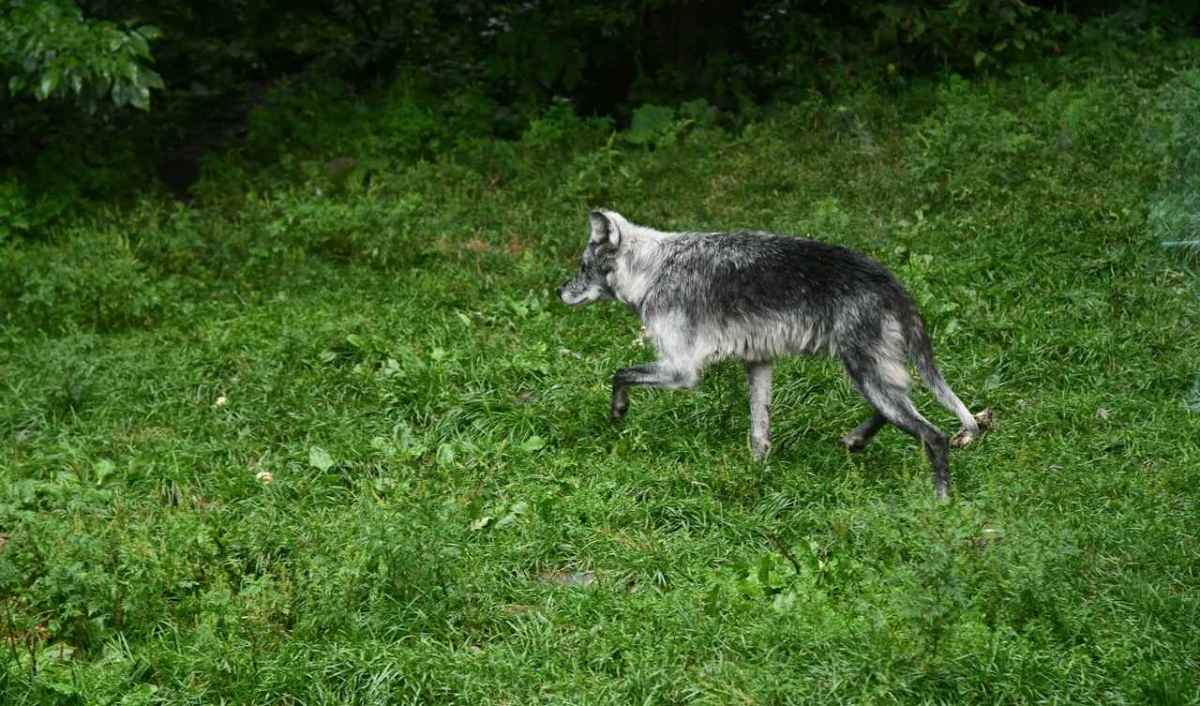
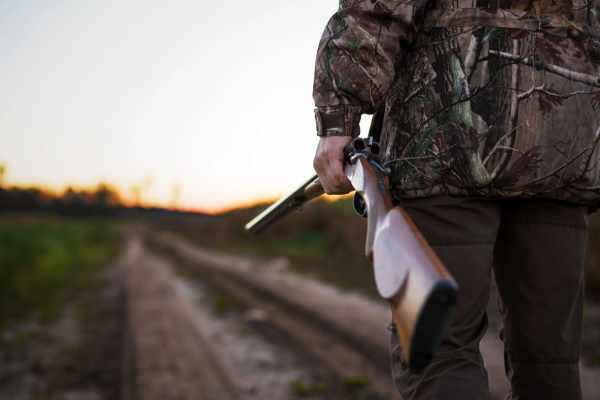
Illustrative image. Photo: Terence Pais / Unsplash
«In Reserve»
The Buochs SVP cantonal councillors Beat Risi and Sepp Gabriel want to abolish wolf protection in Switzerland and reduce the population to between 50 and a maximum of 100 animals.
They submitted their motion to the Nidwalden cantonal parliament on 23 October 2026. It would require the canton to submit a cantonal initiative to the federal government to abolish wolf protection. The SVP made the proposal public in a statement on 2 November, which was published by the “Nidwaldner Zeitung” and the “Bote der Urschweiz”, among others. Proposals with the same thrust are also pending in Lucerne and Uri: in Lucerne, motion M 744 by SVP cantonal councillor Fritz Gerber has been pending since 30 March 2026, and in Uri a motion was submitted in September.
What the motion demands
The wolf is to be huntable as a matter of routine in future, with the exception of the Swiss National Park. The cantons would be allowed to designate additional protected areas, and the federal government would set annual kill numbers. The aim is uniform regulation across Switzerland and a population reduction to 50 to 100 animals.
The justification given is a burden on alpine farming, livestock keeping and, increasingly, on the population. In the statement, cantonal councillor Beat Risi is quoted as saying: “In Nidwalden the wolf is no longer a fantasy but a reality. Sheep killed, farmers unsettled, sightings near settlements”, with children also said to be frightened after encountering a wolf. Sepp Gabriel stresses: “This is not about extermination, but about a balance that works again.” According to the text of the motion, which the “Schweizer Bauer” cited, the motion's authors also point to rising numbers of kills, to approved culls that could not be carried out, and to the pack density in neighbouring cantons. They give no kill figure for Nidwalden.
In Uri, Landrat member Alois Arnold (SVP) submitted a motion in September that likewise calls on the cantonal government to launch a cantonal initiative to lift wolf protection; there too, the wolf is to be opened up to regular hunting everywhere except in the National Park, as the «Bote der Urschweiz» reported on 30 September. In Lucerne, Fritz Gerber's motion had already drawn criticism in spring, as the «Luzerner Zeitung» reported.
Three quarters of the population are to disappear
The motion is based on the figures from the KORA monitoring: 350 wolves, 43 packs and over 150 pups in the 2025/26 monitoring year. A ceiling of 50 to 100 animals would mean killing between 250 and 300 wolves, that is 71 to 86 per cent of the 350 animals recorded. This has little to do with a «balance». Even today's lower limit of 12 packs, spread across five regions, is politically set. In BAFU files from 2023, which IG Wild beim Wild holds under the Freedom of Information Act, the federal office describes 20 packs as «the smallest biologically and legally justifiable wolf population». On the figure of 12 it states: «There is no technical justification for 3+3+2+2+2=12.» A ceiling of 50 to 100 animals, counting lone animals and pups, would sit far below even that.
The Gruppe Wolf Schweiz considers even today's culling policy unsustainable. If Switzerland were an island, the wolf would die out here, David Gerke said at a media conference held by the environmental associations on 3 November; this is only offset by immigration from Italy. How many wolves have been killed since September alone is shown by our Wolf kill counter Switzerland 2026/27.
Kills are declining
The motion comes at a time when damage is falling markedly. According to a review by the Gruppe Wolf Schweiz, around 180 livestock animals were killed across Switzerland up to the end of July, compared with slightly more than 400 in the same period last year; Ticino is not included. In Valais, of the 267 livestock animals killed up to the end of October, 110 were on pasture without herd protection, as the official kill statistics show, which we analysed in our Valais ticker.
The image of the wolf as a danger to children also fails to stand up to the facts. According to current knowledge, there has been no documented attack by a free-living wolf on a human being in Switzerland since the species returned. The article «Is the Wolf Dangerous to Humans in Switzerland? Facts and Myths».
On thin legal ice
At federal level, the debate is already heading in a similar direction. On 23 September the National Council adopted motion 25.4464 by 116 votes to 73 with 6 abstentions; it would allow wolves to be killed once a predefined population threshold is reached. We reported on this in the article «Wolf threshold: National Council approves stockpiled kills» reports. However, a complete removal of protection would go far beyond that. According to Pro Natura, around 220 parliamentary motions on the wolf have now been submitted in the federal parliament, as the organisation's Western Switzerland director Sarah Pearson Peret told RTS on 4 November. The associations are demanding an end to this series of individual amendments and want the wolf to be dealt with in the comprehensive revision of the hunting act planned from 2028.
Switzerland is bound by the Bern Convention (SR 0.455). Even after the wolf was downgraded from “strictly protected” to “protected”, under Article 7 of the Convention the contracting states must regulate its use in such a way that populations are not endangered. The article «15 assurances to the Council of Europe» shows which assurances the FOEN has already given to the Council of Europe and how practice departs from them. Moreover, in September 2020 the electorate rejected a revision of the hunting act that would have made preventive wolf kills easier. Two years later, parliament nevertheless wrote preventive regulation into law.
Next, the Nidwalden cantonal government must comment on the motion, after which the Landrat will decide. A cantonal initiative only obliges the federal parliament to deal with the matter. To make the wolf huntable, the hunting act would have to be amended, and a referendum could be called against that.
Commentary: Fear as grounds for killing
The SVP press release gives no figure for livestock killed in its own canton, but it does mention children who are afraid. Anyone who wants to kill three quarters of a protected species should be able to show more than moods. The figures show the opposite of what the motion claims: where protection is applied, damage falls, and according to David Gerke of Gruppe Wolf Schweiz, Switzerland already has the lowest number of livestock kills per individual wolf of any Alpine country.
The fact that the SVP has submitted motions with the same thrust in Lucerne (March), Uri (September) and Nidwalden (October) within seven months shows that this is not about local problems but about a coordinated campaign. Predators such as the wolf are not a nuisance that can be shot down to a politically convenient number. They regulate ungulate populations and relieve the forest, as our Wolf dossier shows. If, according to Gruppe Wolf Schweiz, even the current population would not survive without immigration, a population of 50 to 100 animals would certainly not be a viable population.
Sources
- Nidwaldner Zeitung (SVP press release, published identically in Bote der Urschweiz), 2 November 2026: Nidwalden to submit cantonal initiative on the wolf
- Schweizer Bauer: Nidwalden: SVP councillors want to lift wolf protection
- Bote der Urschweiz (CH Media), 30 September 2026: Wolf to be opened up to hunting
- Luzerner Zeitung: Lucerne SVP cantonal councillor wants to lift protection of the wolf
- BauernZeitung, 3 November 2026: Environmental organisations call for a comprehensive overview instead of piecemeal measures in the JSG revision
- Keystone-SDA via nau.ch, 3 November 2026: Environmental organisations call for full revision of the hunting act because of the wolf
- RTS, 4 November 2026: Pro Natura, Groupe Loup Suisse and BirdLife campaign for the interests of the wolf
Do you have a tip, a source or a correction for this article? Write to us.
Seen something yourself?
A driven hunt next to a hiking trail, a shot fired near houses, a trap in the forest or an injured wild animal: report it to the Recreational Hunter Radar. We check every tip-off and treat your details confidentially.
More on the subject of recreational hunting: What the research says about this is shown by Hunting fact-checked: the state of research.
The position of IG Wild beim Wild: IG Wild beim Wild rejects recreational hunting. Our model is the canton of Geneva, which has managed without recreational hunting since 1974: without hunting seasons, without hunting dogs, without driven hunts, without high seats, without the animal cruelty and crime that go hand in hand with hunting season elsewhere. What has worked there for over fifty years disproves every position paper by JagdSchweiz. An association that bases its policy on claims it refutes in its own documents is not a professional organisation, but a factory for misinformation.
Wild animals need a voice
Investigations, petitions and background on recreational hunting. As a thank-you, you will immediately receive our free guide «Recreational hunting on your doorstep: what you can do».
Support our work
With your donation you help protect animals and give their voice a hearing.
Donate now →