Stepping-stone habitats: how small spaces connect wild animals
A new synthesis report shows how small habitats contribute to connectivity, and sets out concrete recommendations for amphibian ponds and other links.
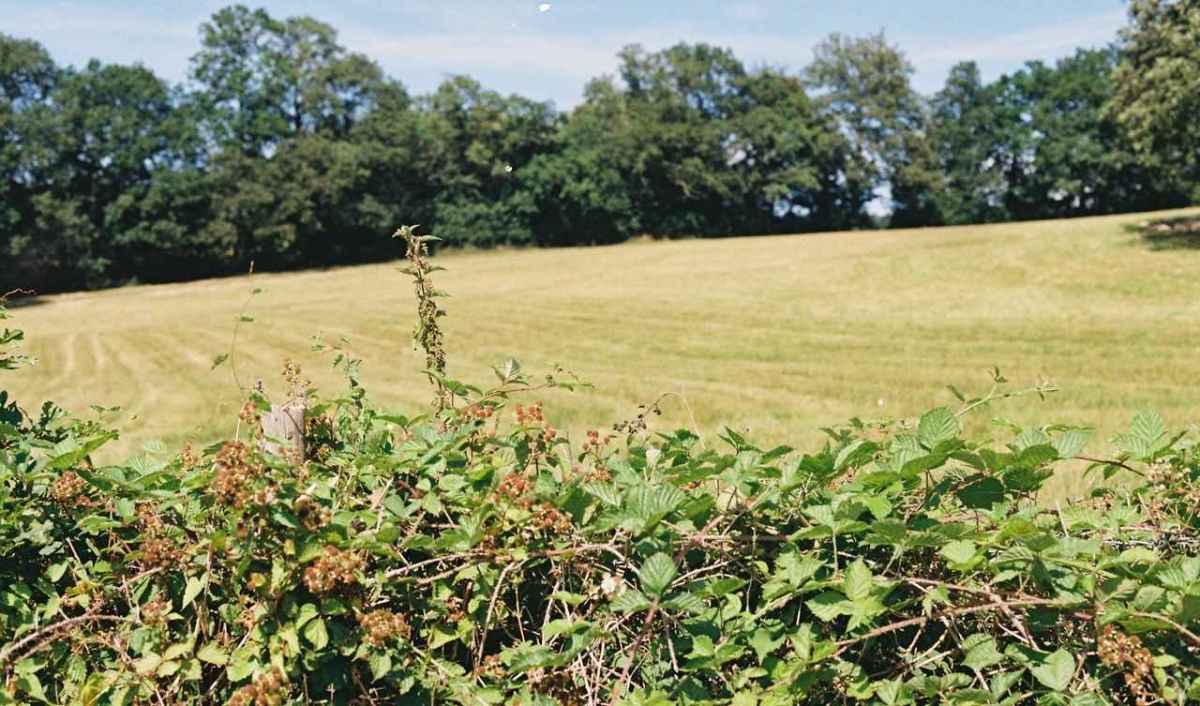
Photo: tanyabarrow / Unsplash
10 Million Switzerland
A pond on the edge of a village, a hedge between two fields, a green roof in the city: for many wild animals, such small areas determine whether they can make it from one habitat to the next. Experts call them stepping-stone habitats. A synthesis report published in 2026 by ETH Zurich, WSL and Eawag brings together the state of knowledge for Switzerland and, for individual applications, offers remarkably concrete recommendations.
What is a stepping-stone habitat?
A stepping-stone habitat is a small patch of habitat between larger core areas such as forests, bogs or floodplains. Unlike a continuous wildlife corridor , stepping stones do not form an unbroken axis but a chain of islands. Non-human animals move, as it were, from stone to stone: they rest, feed, hide or reproduce there before moving on.
Such islands matter above all for species with a small range of movement: amphibians, reptiles, insects, snails and small mammals such as the Hedgehog . Nor does a green bridge on its own create a functioning network: for a common toad, suitable spawning waters and terrestrial habitats must also be within reach on the other side of the road.
What the new synthesis report finds
The report «Functional connectivity of habitats: a consolidated knowledge base for Switzerland» comes from a working group of the Biodiversity Synthesis Centre, in which ETH Zurich, WSL and Eawag are involved. Experts from universities, public administration, environmental organisations and planning offices have compiled the state of knowledge in it. The key findings:
- The fragmentation of habitats is considered a particular threat to Switzerland's biodiversity. It restricts the movement of organisms and can lead to the extinction of species.
- According to an estimate cited in the report, railways and roads render at least 2.38 per cent of the Swiss landscape uninhabitable for most species. The actual share is likely to be higher today.
- For amphibian ponds, the report reproduces the recommendation of one study: at least 100 square metres of water surface, a location in open terrain and no more than 500 metres from the nearest suitable body of water. The size and spacing of stepping stones must, in principle, be guided by the mobility of the species in question.
- Hedges, ditches and wildflower strips are regarded as important connections. Even elements with little natural character, such as disused railway bridges, can enable connectivity.
- In woodland, the report recommends 20 to 25 cubic metres of deadwood per hectare.
The report is honest about this: bridges, tunnels and stepping stones prove effective in many examples, yet the results of individual studies are inconsistent and depend heavily on the location and the species. The authors therefore call for closer cooperation between research and practice, with measures reviewed jointly.
Why a few hundred metres can be decisive
For amphibians, just a few hundred metres between suitable bodies of water can be decisive. The 500 metres are a planning recommendation, not a rigid biological limit: how readily animals reach the next pond depends on the species, the terrain and obstacles such as roads. If a pond is filled in, dries out or a new road cuts across the route, the connection between local populations can weaken or break off entirely. What then looms is known from a larger scale: small, isolated populations lose genetic diversity, become more vulnerable and can disappear locally. The lynx of north-eastern Switzerland show what this looks like: in that small population, barely connected to other occurrences, researchers have documented a fatal genetic defect .
Traffic itself is also a barrier. The report cites data from Norway showing that at 60 km/h there were around 1.9 times as many collisions with wild animals, and at 80 km/h around 2.6 times as many, as at 50 km/h. That the weeks following the clock change are particularly dangerous for wild animals has already been described in detail.
Stepping stones in the middle of built-up areas
A large share of the gaps lies where people live. For settlement areas, the report recommends ponds, nest boxes, green roofs, native planting and green links. For night-time lighting, it advises shielded lamps and LED light below 3000 Kelvin, because artificial light can become a barrier for light-shy species and interrupt their routes between habitats. More on this in the article on Light pollution.
Connectivity also counts in agriculture. Agroscope has shown that biodiversity promotion areas located within connectivity projects contribute a particularly large amount to species diversity in the agricultural landscape. A single flower meadow helps; a network of many helps considerably more.
Every garden can be a stepping stone. How deadwood, Benjes hedges and stone piles become habitats is described in our article on small structures in the garden, with all further tips on the page Wildlife-friendly garden. What you leave out matters just as much: robotic lawnmowers at night turn a stepping stone into a trap.
The cantons are planning the ecological infrastructure
Stepping-stone biotopes are one component of the ecological infrastructure, a nationwide network of core areas and connectivity areas. According to the FOEN, the cantons are the «master builders» of this network. They plan it within the framework of the programme agreements with the Confederation, and the FOEN issued a revised version of its guidance on the subject on 1 February 2026.
The need for action is considerable. In the Biodiversity Action Plan, the Confederation states that almost half of all habitats in Switzerland are classed as threatened and that 17 per cent of all species are threatened with extinction or highly endangered. On 12 December 2025, the Federal Council expanded the action plan for the years 2025 to 2030 to 22 measures. In May 2026, the Control Committee of the Council of States also sharply rebuked the Federal Council: its measures for biodiversity were not sufficient.
Commentary: a stepping stone needs peace and quiet
Connectivity is more than a line on a cantonal structure plan. A pond or a hedge fulfils its role as a stepping stone all the better the more peace animals find there. And that is precisely where things go wrong: hedges, field copses and forest edges are at the same time the places where recreational hunters pursue foxes and badgers right into their dens. Earth hunting takes place in exactly those structures that are meant to serve as islands of refuge.
On top of this comes hunting pressure. A study published in the journal «Science» published analysis of 76 studies covering 62 mammal species showed in 2018 that mammals shift markedly into the night when disturbed by humans, hunting included. For red deer in areas with high hunting pressure we described this in the article on the wildlife corridors: they become predominantly nocturnal and avoid open stretches. In our view, a network of stepping stones in which shooting takes place has holes in it.
Switzerland therefore does not need more kills, but more ponds, hedges, dark nights and quiet zones, and densely enough spaced that even a toad can reach the next stepping stone.
What you can do
- Create a small pond without fish, or give an existing one a near-natural design.
- Plant hedges of native shrubs and leave leaf litter, branches and stones in place.
- Switch off outdoor lighting at night, or change to warm-white, shielded light.
- Ask your municipality which areas the cantonal planning for ecological infrastructure earmarks locally.
Do you have a tip, a source or a correction for this article? Write to us.
More on the subject of recreational hunting: What the research says about this is shown by Hunting fact-checked: the state of research.
The position of IG Wild beim Wild: IG Wild beim Wild rejects recreational hunting. Our model is the canton of Geneva, which has managed without recreational hunting since 1974: without hunting seasons, without hunting dogs, without driven hunts, without high seats, without the animal cruelty and crime that go hand in hand with hunting season elsewhere. What has worked there for over fifty years disproves every position paper by JagdSchweiz. An association that bases its policy on claims it refutes in its own documents is not a professional organisation, but a factory for misinformation.
Wild animals need a voice
Investigations, petitions and background on recreational hunting. As a thank-you, you will immediately receive our free guide «Recreational hunting on your doorstep: what you can do».
Support our work
With your donation you help protect animals and give their voice a hearing.
Donate now →