WWF Report 2026: The balance after 100 years of «game management and care»
Globally down 73 percent, in freshwater down 85. In Switzerland, a third of the assessed species are endangered or extinct, while recreational hunting presents itself as nature conservation.
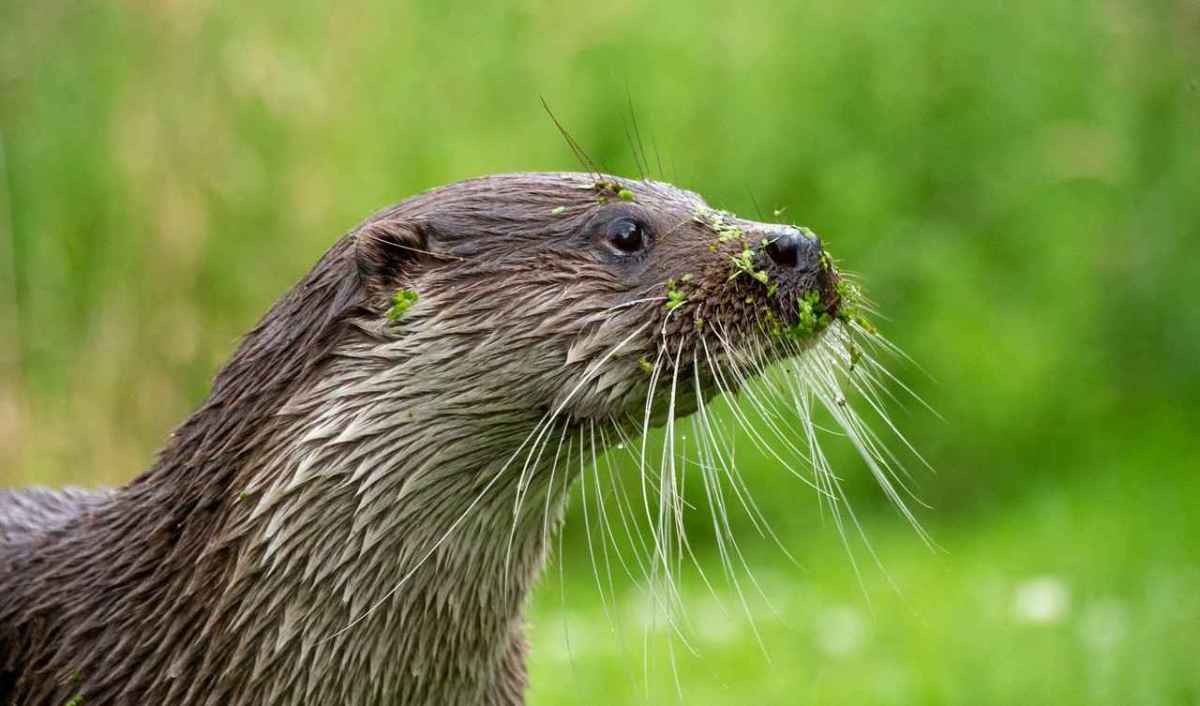
The otter is slowly returning to Switzerland. Stock image: Andy Willis / Unsplash
Wildlife Management
The WWF's «Living Planet Report», published in October 2026, shows an average decline of 73 percent in the vertebrate populations studied worldwide between 1970 and 2022, with the figure reaching 85 percent in rivers and lakes.
The index is based on 35’803 populations of 5’790 species of mammals, birds, fish, reptiles and amphibians. On land, the decline amounts to 69 percent, and in the sea to 59 percent. On the situation in Switzerland, WWF chief Thomas Vellacott said on 8 October in an interview with SRF: «In the Swiss public, there is always the feeling that Switzerland is a model pupil. But we have some catching up to do compared to other countries.»
What the 73 percent figure means
The figure does not mean that three-quarters of all wild animals have disappeared. What is measured is how the size of the observed populations has changed on average. According to the report, around half of the populations are stable or growing. However, these increases are outweighed in the global average by larger losses elsewhere. The previous edition is summarised in the article WWF Report 2024: Understanding species extinction and climate change.
As the most important direct causes, the report cites loss of habitat, overexploitation and climate change. It draws on an evaluation by the World Biodiversity Council IPBES of 163 studies, which puts the relative influence of these drivers on biodiversity loss at 30, 23 and 14 percent respectively. Under overexploitation, it groups together the unsustainable killing and trapping of wild animals, including poaching, as well as fisheries bycatch. In the SRF interview, the direct killing of wild animals goes unmentioned, even though overexploitation ranks second in the report.
Switzerland: a third of species endangered, bottom of the league on protected areas
According to the Federal Office for the Environment of 10,844 assessed species, 35 percent are classified as endangered or already extinct, with a further 12 percent potentially endangered. Half of all habitats are also threatened. Vellacott cites protected areas as one reason, noting that Switzerland lags behind other countries in this regard.
This is consistent with the European Environment Report 2020. The FOEN summarised it as follows: “Switzerland performs worst on biodiversity: of all European countries, it has the lowest proportion of protected areas relative to its land area.” The background is covered in the article Switzerland Lags Behind on Protected Areas. That the federal government's measures are insufficient was also noted in 2026 by the Control Committee of the Council of States, as the article Biodiversity in Switzerland: GPK-S sharply reprimands the Federal Council shows.
Otters: once hunted with federal funds, now a sign of hope
As Swiss examples of a turnaround, Vellacott cites the lake trout, which once again spawns in the renaturalised Hasliaare in the canton of Bern thanks to sufficient residual water, and the otter, which is returning thanks to renaturalised rivers and improved water quality.
Part of the otter's history is how it disappeared. The 1888 Fisheries Act aimed to exterminate it and other fish-eating animals: with bounties for dead animals, free traps, training courses and state-paid trappers. By 1917, around 2,000 otters had been killed, as an overview by Christof Angst and Irene Weinberger records. It was not until 1952 that the federal hunting act placed the species under protection. The population nonetheless continued to shrink, also due to artificially altered waterways and environmental toxins. The last traces were found at Lake Neuchatel in 1989.
In 2009, a camera at a fish ladder on the Rhine in Grisons captured a Eurasian otter once again. Since autumn 2017, the species has been confirmed along the Inn near Samedan, where, according to the Grisons Office for Hunting and Fishing, it has also been reproducing ever since. In January 2026, the Canton of Solothurn reported the first confirmed sighting since 1935. On the Red List, the species is now classified as “endangered”.
Commentary: Over 100 years of “management and conservation” — and this is the result
Recreational hunting markets itself as applied nature conservation. For over a hundred years, it has claimed the “management and conservation” of wild animals as its own achievement, and the hunting press celebrates recreational hunters as “part of the solution”, as the fact check on lobby PR shows. The balance sheet of this century is written in the Red Lists. Granted: the main causes of species decline are destroyed habitats and intensive land use. But anyone who calls themselves a conservationist must be judged by the results — and by what they do politically.
When Switzerland's second national park was due to be created in the Locarnese region in 2018, the majority of recreational hunters opposed the hunting ban in the core zones. According to swissinfo, their most prominent representative was National Councillor Fabio Regazzi, who was already on the board of JagdSchweiz at the time. Six out of eight municipalities voted no. Two years earlier, the Parc Adula project had failed, with the core zone and its usage bans again the main point of contention. To this day, Switzerland has only a single national park, founded in 1914.
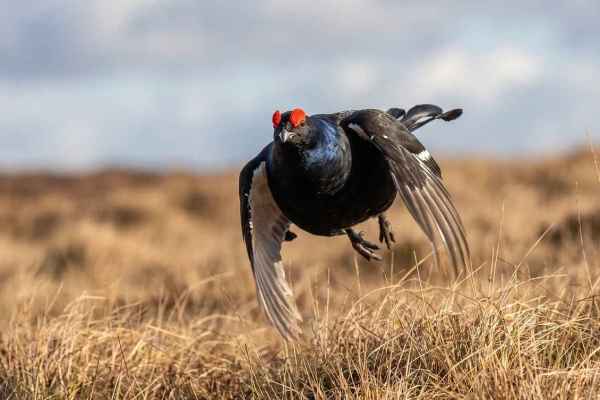
The pattern continues. JagdSchweiz defends recreational hunting of black grouse, ptarmigan and mountain hare, opposes a general ban on lead ammunition, and wants to reduce the wolf population through an upper limit, as the article JagdSchweiz argues against itself demonstrates. How recreational hunters vote on environmental matters in the Federal Parliament is shown in the article Environmental Rating Exposes the «Mitte» in the Council of States.
The WWF report shows what works: populations recovered where trapping bans, quotas and the fight against poaching took effect and habitats returned. Switzerland is doing the opposite. It is opening up species for killing that the Red List classifies as potentially endangered or vulnerable: black grouse, ptarmigan, mountain hare and brown hare will be hunted in mountain cantons this autumn, as documented in the article Low-ground hunt 2026: What Grisons, Ticino and Valais are releasing for the kill. It is having wolves killed — at least 26 since 1 September (as of 8 October) — as shown by the interim report on wolf regulation 2026. And until 16 October, the consultation on the hunting act is underway, which aims to enable wolf kills during the whelping season and in protected hunting areas.
The otter was persecuted because it had been declared a competitor of the fishing industry. Anyone who today divides non-human animals into beneficial and harmful species repeats the mistake of 1888. Where this thinking originates is shown in the article Pest or beneficial species: the ideology behind fox hunting.
Vellacott says: “We can make a difference. It is not hopeless.” An immediately possible step would be to remove endangered and potentially endangered species from the cantonal lists of huntable species. Article 5 paragraph 4 of the Hunting Act allows cantons to restrict these lists, and obliges them to do so when the protection of locally threatened species requires it. Wildlife management worthy of the name begins with not shooting.
Sources: WWF, Living Planet Report 2026. The Science of Hope (Chapters 1 and 2); SRF News, interview with Thomas Vellacott, 8 October 2026; 20 Minuten, 8 October 2026; Federal Office for the Environment, Biodiversity in Switzerland (Red Lists, as of 2022) as well as The Environment in Europe, State and Outlook 2020; Angst C., Weinberger I., Status of the Eurasian otter (Lutra lutra) in Switzerland, Journal of Mountain Ecology 13 (2020); Office for Hunting and Fishing Grisons, Beaver and Otter; Canton of Solothurn, press release of 16 January 2026; swissinfo, National park project as a divisive issue, 2018; RSI, voting result Parco del Locarnese, 10 June 2018; Année Politique Suisse, Parc Adula; Hunting Act (JSG), Art. 5 para. 4.
More on the subject of recreational hunting: What the research says about this is shown by Hunting fact-checked: the state of research.
The position of IG Wild beim Wild: IG Wild beim Wild rejects recreational hunting. Our model is the canton of Geneva, which has managed without recreational hunting since 1974: without hunting seasons, without hunting dogs, without driven hunts, without high seats, without the animal cruelty and crime that go hand in hand with hunting season elsewhere. What has worked there for over fifty years disproves every position paper by JagdSchweiz. An association that bases its policy on claims it refutes in its own documents is not a professional organisation, but a factory for misinformation.

All articles are written by IG Wild beim Wild as well as by external co-authors. Research, structuring and editorial processes may be supported by AI-assisted tools.
Support our work
With your donation you help protect animals and give their voice a hearing.
Donate now →