WWF: Anti-Beaver Regulation Is a “Dangerous Wrong Turn”
The WWF has responded sharply to the announced anti-beaver regulation in Upper Austria, which provides for the killing of up to 158 beavers per season. The conservation organisation describes the approach as a “dangerous wrong turn” and warns of the negative consequences for the environment and climate protection posed by hunting.


Instead of resorting to killings, the WWF calls for more natural habitats for wildlife, for example through designated riparian buffer strips.
“This would not only help beavers avoid conflicts, but also reduce the input of fertilisers and pesticides into waterways,” explains Layendecker.
The organisation criticises the regulation as “populist culling policy” and advocates for a fundamental rethink. Investments in preventive and compensatory measures would be more effective in the long term for species protection and protection against the consequences of the climate crisis.
While the beaver was nearly extinct in the 20th century, the population has risen significantly in recent decades thanks to corresponding protection and reintroduction measures; in 2023/24, just over 2’200 of the animals were counted in Upper Austria.
“The beaver is strictly protected and an absolutely key species that benefits both humans and numerous other animals and plants,” says Sarah Layendecker. As an “eco-engineer,” the beaver creates valuable wetlands that store water in the landscape, thereby mitigating both flooding and drought periods.
The beaver is regarded as a keystone species in many European river landscapes. Its activities promote biodiversity and contribute to the stabilisation of ecosystems — a factor that is becoming increasingly important in times of growing extreme weather events. The culling is to be carried out by recreational hunters.
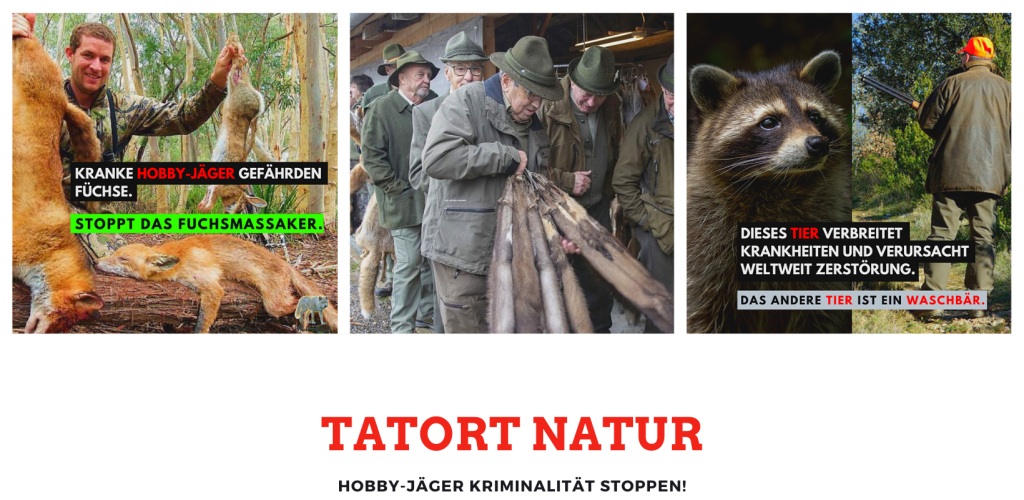
More on the subject of recreational hunting: In our dossiers on recreational hunting gather fact-checks, analyses and background reports. The scientific evidence is presented in the overview Studies on the Effects of Recreational Hunting.
The position of IG Wild beim Wild: IG Wild beim Wild rejects recreational hunting. Our model is the canton of Geneva, which has managed without recreational hunting since 1974: without hunting seasons, without hunting dogs, without driven hunts, without high seats, without the animal cruelty and crime that go hand in hand with hunting season elsewhere. What has worked there for over fifty years disproves every position paper by JagdSchweiz. An association that bases its policy on claims it refutes in its own documents is not a professional organisation, but a factory for misinformation.