Dispute over the goosander: Fabio Regazzi calls for culls
The goosander remains protected, but can be selectively regulated to better protect endangered fish species. This approach is controversial, as the impact of the goosander on fish populations has not yet been sufficiently scientifically substantiated.

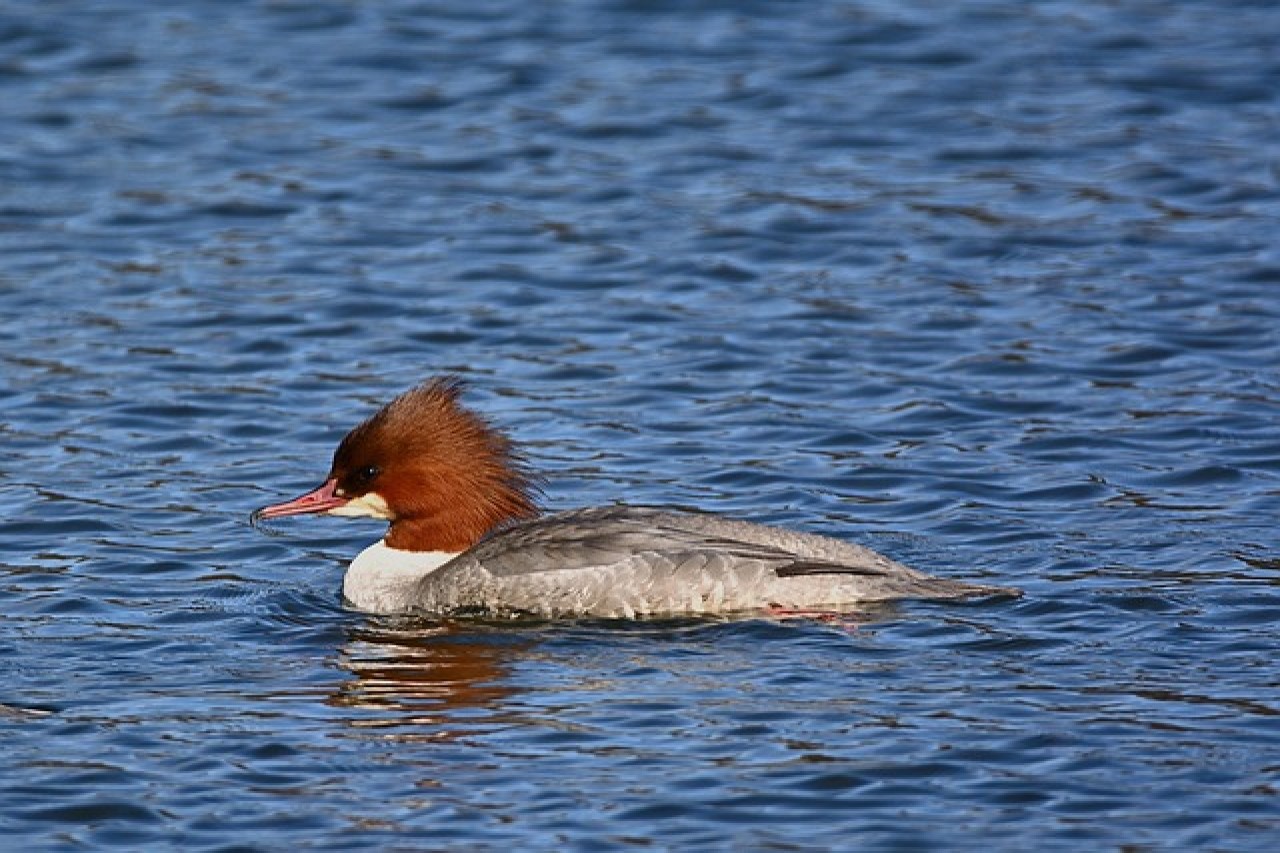
The debate over the protected status of the goosander is gaining momentum.
By 10 votes to 3, the Committee on the Environment, Spatial Planning and Energy of the Council of States (Urek-S) has backed a parliamentary initiative by hobby hunter and former hunting association president Fabio Regazzi (Centre/TI).
We must not allow fish-eating birds, which are today unjustifiably under absolute protection, to hunt and catch fish undisturbed. – Fabio Regazzi
This could mean that in future the goosander – similarly to the cormorant – could in certain situations be culled through hunting. While fishing associations welcome the relaxation, conservationists are raising the alarm.
Swiss Ornithological Institute urges restraint
The Swiss Ornithological Institute in Sempach takes a very different view. Although the goosander population has grown over the past 20 years, the concrete impact on fish populations is barely scientifically substantiated. Factors such as engineered waterways, rising water temperatures and competition from invasive species have a far greater effect.
A spokesperson for the Swiss Ornithological Institute emphasises: “Switzerland bears a special responsibility for this genetically distinct Alpine population. Interventions may only take place in strictly limited situations – and only when clear harm has actually been demonstrated.”
Conservation organisations warn of precedent
Pro Natura, WWF and BirdLife also oppose the planned legislative change. They regard the possible downgrading of protected status as a weakening of international species protection. There is a risk, they argue, that the federal government would transfer its conservation responsibilities to the cantons, thereby undermining the constitutional mandate to protect biodiversity.
"This is a shooting law through the back door," says Pro Natura. Instead of targeting the common merganser, comprehensive measures are needed to revitalize waterways and adapt to climate change.
Political decision still pending
With the decision of the Council of States committee, the path for a change in legislation is not yet clear. First, the sister committee in the National Council must take a position. Only when both chambers approve the motion could the protected status actually be relaxed.
Until then, the dispute is likely to continue — between fishermen fighting for their stocks and conservationists who see the common merganser primarily as a symbol of the value of biodiversity.
- Fabio Regazzi and Switzerland’s shoot-first wolf policy
- Shoot-first politics: How Fabio Regazzi shifts the wildlife debate from evidence to vested interests
- Dispute over the common merganser: Fabio Regazzi demands culling, conservationists warn against hasty decisions
- Ticino hunters’ association FCTI celebrates 30 years of nonsense
- Hobby hunters in Ticino shoot nursing hinds
- National Councillor Fabio Regazzi from the problematic association “Jagd Schweiz”
- Hunting association president agitates before the Federal Council
- Ticino hunting president wants to profit at others’ expense
- Hunters do not want the ptarmigan protected
- The Ticino wolf-baiter
- The wildlife killers
- Ticino: Chamois population collapses in popular hiking area
- Success: Association Jagd Schweiz loses
- Locarnese National Park will not happen
- A hit dog will bark
Unterstütze unsere Arbeit
Mit deiner Spende hilfst du, Tiere zu schützen und ihrer Stimme Gehör zu verschaffen.
Jetzt spenden →