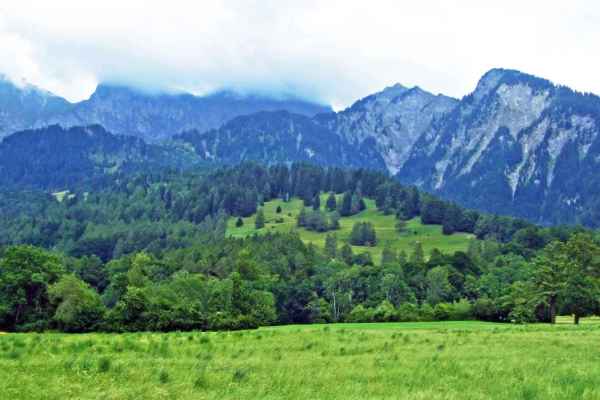
Beavers in the Rhine Valley: The FDP wants to regulate, but the question of space remains unresolved
A St. Gallen cantonal motion targets federal law, while the question of space for waterways remains unresolved.
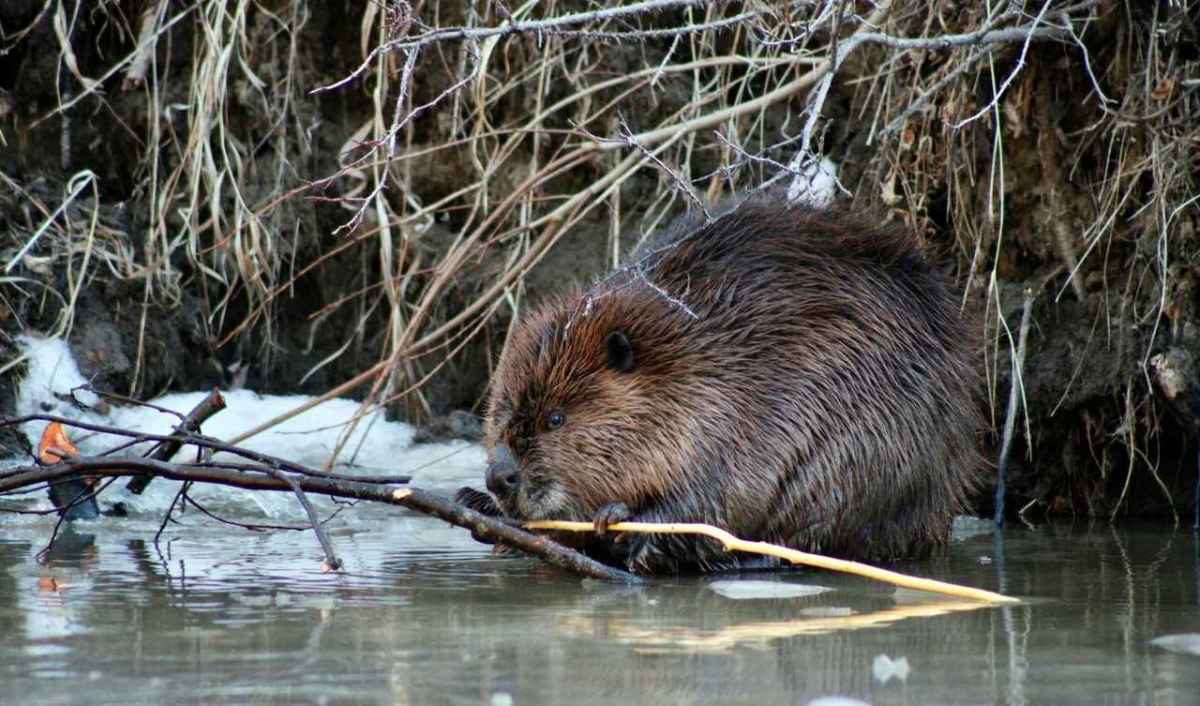
Symbolic image. Photo: Mark Ma / Unsplash
“What it builds”
Dams, dammed water, felled trees: what the beaver has always done is increasingly colliding with drainage systems and flood protection in the St. Gallen Rhine Valley.
The FDP wants cantons to be allowed to regulate beaver populations regionally. This puts a non-human animal at the centre of attention, while the question of space for waterways is barely raised.
The regional broadcaster TVO reported on 4 October 2026 that the beaver's natural activity in the Rhine Valley was “increasingly colliding with flood protection and drainage systems”. The effort involved was increasing, and with it the costs. The FDP was therefore calling for more leeway in regulation.
The demand has already been given concrete political form. In its review of the 2026 autumn session, the FDP cantonal parliamentary group names the cantonal motion “Regulating beaver populations regionally and effectively”. With it, the party is calling for a change to federal law so that “affected cantons can regulate the population regionally and proportionately”. In doing so, the FDP wants to go beyond the existing options for dealing with individual beavers causing damage. As justification, it cites a fivefold increase in the population since 2011, around 425 beavers in the canton, and 250 dam-related measures in the Rhine Valley in 2025. These figures are the FDP's own figures and not an independently confirmed damage assessment.
Prevention is already taking place
How the situation looks on the ground was shown at an information event held by the municipality of Diepoldsau on 24 September 2026, attended by around 120 visitors. «Der Rheintaler» reported on it. Game warden and beaver specialist Nathan Rudin and Claudio Senn, head of operations and maintenance at the Rhine authority, provided an update on the current state. In 2022, the canton counted around 425 beavers, and the beaver is now found throughout the entire canton.
The Rhine authority already protects trees with wire mesh and a beaver-repellent paste mixed with quartz sand. Senn estimates the annual costs for tree protection and other measures at «around 250,000 francs, with an upward trend». These are estimated costs for measures, not automatically proven beaver damage. A graduated approach was also presented: tolerate, guide or deter, restrict, and, as a last resort, the removal of individual beavers — a step that has not been applied so far. A new population survey is planned for the winter of 2026/27.
What matters, therefore, is not only whether measures are implemented, but whether they are complemented by sufficient water space and long-term adaptations to infrastructure.
A returnee with ecological benefits
The beaver was wiped out in Switzerland in the early 19th century. It was only reintroduced from 1956 onwards. The national population survey of 2022 counted around 4,914 beavers in 1,382 territories. The history of this return is traced in the dossier The beaver in Switzerland: exterminated, reintroduced and now released for killing.
The Federal Office for the Environment notes that beaver dams create «new, dynamic habitats». Beaver ponds store water in the landscape, replenish groundwater reserves and can help keep streams cool in summer. Beaver dams can retain water and slow down runoff. Locally, backwater effects and undermined dams can at the same time cause conflicts with infrastructure. The FOEN also acknowledges this: beaver activity can cause damage to facilities, transport infrastructure, flood dams and agricultural crops. At the same time, the office emphasises: «Many conflicts can be prevented through suitable preventive measures.» Studies from North America even show that beaver landscapes withstand wildfires better (Beavers curb wildfires, yet Switzerland allows them to be killed). One could say no public works department operates this cheaply.
The Rhine Valley lost reed beds and floodplain landscapes
The conflict in the Rhine Valley has a history. With the Rhine regulation and the land reclamation projects of the 19th and 20th centuries, large areas of former marshland and floodplain were drained, channelled and made usable for agriculture. Drainage pipes, straightened canals and land use right up to the edge of embankments characterise large parts of the valley floor today. When a beaver builds a dam in such a system, a non-human animal that creates wetlands collides with infrastructure designed specifically to drain away that very moisture.
The debate must therefore also take into account the available watercourse space and existing infrastructure. Since 2011, the Water Protection Act has obliged the cantons to define a watercourse space for their waterways that must be designed and managed extensively (Art. 36a GSchG). More near-natural watercourse space can defuse conflicts. The canton must disclose the extent to which this potential is being used along the affected canals in the Rhine Valley.
What the law already permits today
Under Art. 9d of the Hunting Ordinance, the cantons may order measures against individual beavers if they cause significant damage or endanger people and no reasonable preventive measures are available. The beaver remains a protected species. Individual kills were already possible under certain conditions before the 2025 revision, but since 1 February 2025 the cantons have been deciding on this without prior consultation with the federal government. The IG Wild beim Wild views this expansion critically, because in 2020 the electorate rejected a revision of the Hunting Act with expanded kill powers at the ballot box.
The FDP's cantonal petition would go a step further: from measures against individual beavers causing damage to regional population regulation. However, a kill changes neither the drainage system nor the location of endangered infrastructure. It therefore does not replace a long-term solution to the conflict. What's more, a territory vacated on an attractive waterway may sooner or later be occupied by another beaver.
What the canton must now clarify
Before regional population control measures are decided upon, transparency is needed. What damage has been documented, to which infrastructure and at what cost, separate from the costs of prevention? How far advanced is the designation of watercourse space along the affected canals? Where could drainage systems, culverts or riparian strips be adapted so that beavers and human use can coexist? The population survey planned for winter 2026/27 would be a good opportunity to answer these questions together.
The international flood protection project on the Alpine Rhine shows that the region is willing to give water more space again. The same logic should also apply to tributaries and inland canals. A beaver in a sufficiently wide, near-natural riparian strip can create habitat without immediately clashing with adjacent land use.
The question the Rhine Valley should ask itself is therefore not only how many beavers it can tolerate. It is also how much watercourse space it is willing to grant its streams and canals. Anyone who focuses solely on the beaver is managing a symptom and shifting the costs into the future.
Sources: TVO, «The beaver is becoming a problem in the Rhine Valley», 4 October 2026; Der Rheintaler, «Well-attended information event: Beaver poses challenge for flood and tree protection», 24 September 2026; FDP St. Gallen, «Review of the 2026 autumn session», press release; Federal Office for the Environment (FOEN), beaver topic page; Federal Act on the Protection of Waters (GSchG), Art. 36a; Hunting Ordinance (JSV), Art. 9d; national beaver population survey 2022.
More articles: Grisons: Europe's Highest-Altitude Beaver Family in the Engadine, Category Environment & Nature Conservation
More on the subject of recreational hunting: The scientific evidence is presented in the overview Studies on the Effects of Recreational Hunting.
The position of IG Wild beim Wild: IG Wild beim Wild rejects recreational hunting. Our model is the canton of Geneva, which has managed without recreational hunting since 1974: without hunting seasons, without hunting dogs, without driven hunts, without high seats, without the animal cruelty and crime that go hand in hand with hunting season elsewhere. What has worked there for over fifty years disproves every position paper by JagdSchweiz. An association that bases its policy on claims it refutes in its own documents is not a professional organisation, but a factory for misinformation.

All articles are written by IG Wild beim Wild as well as by external co-authors. Research, structuring and editorial processes may be supported by AI-assisted tools.
Support our work
With your donation you help protect animals and give their voice a hearing.
Donate now →