Beavers slow down wildfires, yet Switzerland has cleared them for the kill
While studies prove that beaver landscapes stop fires and heal burn scars, since 1 February 2025 the rodents may be shot in this country in cases of «considerable damage», without prior consultation of the federal authorities.
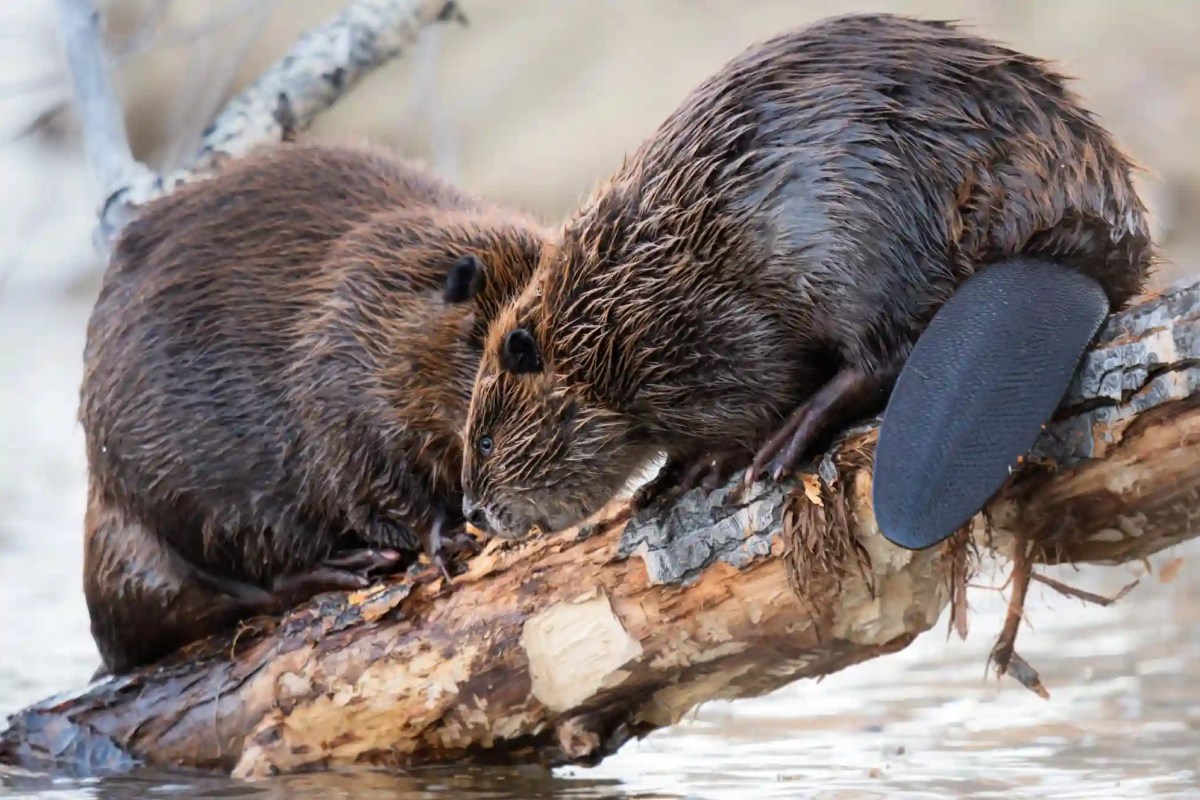
While in July 2026 historic wildfires laid waste to entire regions of France and Spain, beavers are coming into focus as a natural fire protection.
Of all animals, this one has been on the kill list in Switzerland since 1 February 2025.
When your own smoke clouds ignite new fires
According to a Euronews report of 29 July 2026, scorching heat and a lack of rain have unleashed fires of unprecedented scale in parts of France and Spain. In Spain, more than 80’000 hectares have reportedly burned, in France around 42’000 hectares. Hundreds of thousands of people had to leave their homes, in one of the largest evacuations in Europe since the Second World War.
On 27 July a fire in France reached such force that its own smoke cloud formed a thunderstorm. Lightning struck the ground and ignited new fires outside the original hotspot. The EU’s firefighting capacities can barely keep up with the intensity of the fires.
A green oasis amid the ash
The scientific core of the story is older than the current wave of fires. When the major «East Troublesome» fire devastated around 193’800 acres in Colorado in 2020, the second-largest fire in the state’s history, a green island survived amid the charred expanse. Responsible for this was the beaver.
Beavers build dams, dig canals and transform streams into extensive wetlands. The vegetation around their ponds stays lush even during long periods of drought and is far harder to ignite than parched terrain. Fire takes the path of least resistance and skirts the wet zones. This creates refuges for animals that can barely escape a blaze.
A study published in 2020 in «Ecological Applications», titled «Smokey the Beaver», analysed satellite data from five major wildfires in the western United States between 2000 and 2018. The result: the decline in vegetation density during the fire was on average 3.05 times as great in areas without beavers as in areas with beavers. One year after the fire, however, the vegetation recovered regardless of the presence of beavers. The effect therefore lies in the resilience during the fire, not in a faster recovery afterwards.
A model calculation for the Californian Sierra Nevada, published in 2025, estimates for the North American beaver native there that its structures could store up to 120 million cubic metres of surface water and create around 2’200 square kilometres of fire-resistant landscape. According to this, half of the original dam-building capacity is still present in the region.
Beavers even heal the burn scars
Researchers at Colorado State University go a step further. They erected artificial beaver dams in so-called burn scars, the charred areas left after a fire, in order to study the recovery of the ecosystems. Wildfires destabilise soils and reduce their ability to absorb rain. The consequences are stronger run-off, a higher flood risk and polluted water.
The artificial dams slow the flow of water and spread it across the floodplain. Sediments settle to the bottom instead of being washed downstream. According to the researchers, initial results suggest that water quality improves.
The contradiction: comeback in Europe, kill in Switzerland
The European beaver population has recovered spectacularly. Between 1960 and 2016 the number of animals (excluding Russia) rose by around 16,000 per cent; today more than 1.2 million beavers live on the continent. Their range grew by around 835 per cent between 1955 and 2020. As a result, additional natural firebreaks are being created everywhere, alongside benefits such as flood protection and clean water.
In Switzerland, the national population survey of 2022 counted around 4,914 beavers in 1,382 territories. The species was removed from the Red List and is considered not endangered. It is precisely this recovery that is now proving to be the animal's undoing: under the revised hunting ordinance, since 1 February 2025 the cantons have been able to shoot individual beavers that cause «significant damage», provided this cannot be prevented by other means. Prior consultation with the federal government is not required. An ecosystem engineer that slows fires, cushions droughts and creates biodiversity is thereby declared a potential pest, even though around 30 years of practice show that conflicts can be resolved through prevention. IG Wild beim Wild considers the regulation to be possibly unlawful, because in 2020 the electorate rejected a corresponding expansion of shooting powers at the ballot box.
The case fits a familiar pattern: it is not the armed leisure lobby that is regulated, but those species that would take on ecological functions free of charge. While France and Spain spend billions on firefighting, Switzerland is shooting one of its most effective natural fire-protection allies.
More on this in the dossier The beaver in Switzerland: exterminated, reintroduced and now released for shooting as well as in the analysis Regulate recreational hunters, not the predators.
More on the subject of recreational hunting: In our dossiers on recreational hunting gather fact-checks, analyses and background reports. What the research says about this is shown by Hunting fact-checked: the state of research.
The position of IG Wild beim Wild: IG Wild beim Wild rejects recreational hunting. Our model is the canton of Geneva, which has managed without recreational hunting since 1974: without hunting seasons, without hunting dogs, without driven hunts, without high seats, without the animal cruelty and crime that go hand in hand with hunting season elsewhere. What has worked there for over fifty years disproves every position paper by JagdSchweiz. An association that bases its policy on claims it refutes in its own documents is not a professional organisation, but a factory for misinformation.
Support our work
With your donation you help to protect animals and give their voice a hearing.
Donate now →