The capercaillie is practically extinct in Fribourg, while recreational hunting pushes for more technology
While an emblematic species of the pre-Alps disappears from the canton of Fribourg, the recreational hunting lobby is demanding more night vision devices and an earlier roe deer buck hunt.

“What We Lost”
Two reports from the canton of Fribourg do not fit together, and that is exactly what makes them remarkable.
The first: the capercaillie, once a characteristic inhabitant of the Fribourg pre-Alps, is today considered practically vanished from the canton. The second: precisely now, the Fribourg recreational hunting lobby is pushing for more technical aids and an earlier roe deer buck hunt, while the cantonal government has already partially authorised the use of night vision devices. Anyone who reads both threads together sees a pattern that reaches far beyond the capercaillie.
An emblematic species disappears
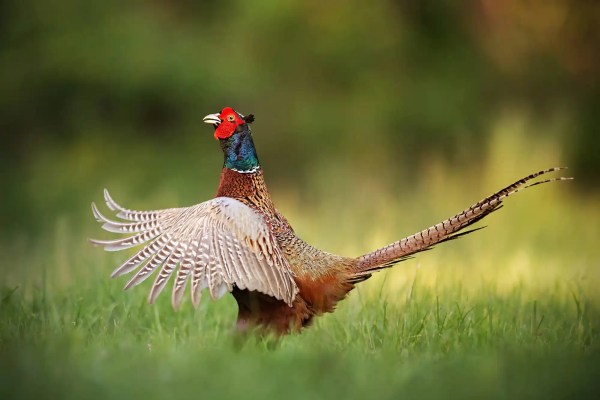
On 1 July 2026 «La Liberté» headlined unequivocally: «Le grand coq fribourgeois n’est plus», the great Fribourg cockerel is no more. According to the article, experts in the canton have for years no longer observed any viable population of the capercaillie, as 20 Minuten reported citing «La Liberté» and Michael Lanz of the Swiss Ornithological Institute in Sempach. Isolated sightings still occur, but no self-sustaining population.
The association Wildtierschutz Schweiz (WTSS) from Landquart has taken this as an occasion to put the development into context in its own contribution: «The capercaillie is disappearing, Fribourg is losing an emblematic species of the Swiss mountain forests». In it, the association announces that it will write to the canton of Fribourg to request information on which protection measures have been implemented so far and why the loss of the population could not be prevented.
What the figures actually show
The figures cited in the WTSS article stand up to scrutiny. According to surveys by the federal government and the Swiss Ornithological Institute Sempach, around 1’100 displaying cocks were still counted across Switzerland in the early 1970s. A nationwide survey in 2001 found only 450 to 500 cocks, and more recent estimates by the Ornithological Institute put the number at 380 to 480 cocks. That is a decline of more than half within just a few decades.
What matters is when this decline took place. The capercaillie hen has been protected in Switzerland since 1962, the capercaillie cock since 1971. The entire documented population crash, from around 1’100 to today's 380 to 480 displaying cocks, thus falls entirely within the period in which not a single bird could legally be shot any longer. A hunting ban alone was therefore unable to halt the decline.
This does not retrospectively exonerate recreational hunting. Historical surveys such as the capercaillie concept of the canton of Grisons document kill figures for the 1940s of in some cases more than a hundred birds per year in this canton alone. In the first half of the 20th century, hunting exerted a real extraction pressure, and the 1’100 cocks of 1971 are already the result of these decades, not an undisturbed baseline. Whether the Grisons figures can be transferred to Fribourg remains open, given the lack of comparable cantonal statistics.
At the same time, habitat loss did not begin only after 1971, but ran in parallel. The densification of mountain forests is a consequence of the abandonment of woodland grazing, litter use and firewood extraction, a process that began in the late 19th century and accelerated with the decline of alpine farming after the Second World War. Recreational hunting therefore acted as an additional pressure on a habitat that was already shrinking anyway. Its removal took out one factor, while the structural causes continued to operate unchanged, and from the 1970s and 1980s onwards leisure pressure was added as a third factor.
Particularly striking is the loss along the western edge of the range. The capercaillie has already disappeared from the Vaud Alps, the Lower Valais and Ticino. Historically, according to the records of the Federal Office for the Environment (FOEN), the canton of Fribourg was one of the range areas along the northern edge of the Alps, alongside the Bernese Alps and Prealps as well as the cantons of Neuchatel and St. Gallen. Today Fribourg effectively belongs to the cantons without a viable population, while the population's centre of gravity is increasingly shifting eastwards, particularly towards Grisons.
The Action Plan for the Capercaillie in Switzerland, published in 2008 by the FOEN, the Sempach Ornithological Institute and BirdLife Switzerland, is also correctly referenced. It names as the main causes of the decline the densification of forests, the loss of open, structurally rich mountain forests, the fragmentation of habitats, and the growing recreational pressure from hikers, mountain bikers, snowshoers and ski tourers. Responsibility for implementing the measures envisaged in the action plan lies with the cantons, which makes the question raised by the WTSS about Fribourg's implementation all the more legitimate.
A debate that has long since begun
What the WTSS contribution does not mention: the article in «La Liberté» that triggered it has already sparked a controversial debate among readers, showing how differently the causes of the disappearance are interpreted.
A reader from Senèdes sharply criticised the original article for not saying «a single word» about ground predators, and pointed to the fox and the lynx, which she claimed are «multiplying rapidly». She also brought up the Télémixte of La Berra, a year-round mountain railway which in summer, owing to a rest zone near the mountain station, may only open to hikers and bikers from 1 July. Given the alleged disappearance of the species that had already taken place, she considered this summer protection period unnecessary. This attribution does not hold up against the chronology.
The lynx was only reintroduced in Switzerland from 1971 onwards, that is, practically at the same time as the capercaillie was placed under protection. The documented decline of the species had long been under way by that point.
A second reader's letter from Lossy directly contradicted the article's headline: the author, who describes himself as a climber, hunter, angler and «keen observer of flora and birds», stated that he had been observing a pair of capercaillie for three consecutive years in an area he knew and kept secret. At the same time, however, he warned that human disturbance remained the greatest threat and that the article's headline could yet become reality if nothing were done.
This dispute over cause and extent is typical of the public debate around endangered mountain forest species: is the decline primarily attributed to habitat loss and human disturbance, as the scientific consensus of the BAFU and the Ornithological Institute suggests, or is the responsibility, as in one of the readers' letters, shifted onto natural predators? The Capercaillie Action Plan Switzerland itself names predation pressure as one of several factors, but explicitly places it behind habitat loss and human disturbance as the principal causes.
A look across the border: Germany and Austria
The Fribourg finding does not stand alone. A comparison with neighbouring countries shows how differently the same species is treated and how little recreational hunting says about the state of the populations.
In Germany the capercaillie is formally still classed as a huntable game species under the Federal Hunting Act, but is subject to a year-round closed season. Legal hunting is therefore ruled out. Nationwide the species is listed as critically endangered on the Red List. The best-documented trend is in the Black Forest, where the population collapsed to a third in some areas between 2012 and 2022. The lek counts recorded 97 displaying cocks in 2022, 106 in 2023, 111 in 2024 and 103 in 2025. The most recent survey arrives at 93 cocks. Elsewhere the species has already vanished: in the Ore Mountains, the Franconian Forest, the Upper Palatinate Forest, the Odenwald and the Spessart it is dying out or is regarded as extinct; in the Harz and the Hochsauerland the reintroduction programmes were discontinued and the remnant populations abandoned. Germany thus stands where Switzerland stands: full protection, unchecked decline.
Austria takes a different approach. There, the capercaillie continues to be hunted, and to a considerable extent. In the 2023/2024 hunting year, according to Statistik Austria, 419 capercaillie were killed, of which 110 in Tyrol, 103 in Styria and 98 in Carinthia. No kills were recorded in Burgenland, Vienna, Vorarlberg and Lower Austria. To put this into perspective: this annual bag corresponds to roughly twice the entire remaining Swiss population of 380 to 480 displaying cocks. In Carinthia the hunting season runs from 11 to 31 May, in other words in the middle of the courtship display. The kill figures there hovered around some 120 cocks for years. In 2001 and 2002 the province had to protect capercaillie all year round.
Why are the populations larger there? The answer does not lie in a better protection policy, but in the surface area. A viable population requires around 50’000 hectares of contiguous, richly structured forest. Austria has several such areas, whereas Switzerland, outside the Grisons, has practically none left. Added to this is the altitude: at capercaillie-suitable elevations, forest management has, in the assessment of experts at the University of Natural Resources and Life Sciences in Vienna, remained essentially unchanged for quite some time, because intensive use there is barely worthwhile. In Tyrol, 44 per cent of the forests are preserved as natural or near-natural ecosystems. Forestry is therefore not fundamentally different, it simply reaches these locations to a lesser extent. The same pattern explains why in Switzerland too the population's centre of gravity has shifted to the Grisons.
Nevertheless, there can be no talk of an intact population. The Red List of breeding birds of Austria classifies the capercaillie as endangered. As causes of decline it names the reduction of berry-bearing dwarf shrubs, in particular the bilberry, through the darkening and densification of forest stands, along with increasing disturbances and poor breeding success in unfavourable weather. This is exactly the list of causes in the Swiss action plan. In Vienna the last capercaillie was killed at the beginning of the 20th century, in Burgenland in 1956. In the eastern parts of the Alps as well as in parts of Carinthia and Vorarlberg, too, the species is now markedly rarer. Austria is going through the same process, merely with a time lag and from a higher starting level.
It is precisely from this that Austrian recreational hunting derives its main argument, however. An expert report on the EU Birds Directive states that the capercaillie and black grouse populations hunted in spring show a largely stable development across Austria, while in other Alpine countries declining trends are observed despite hunting having in some cases been suspended. The conclusion that hunting does no harm, or that game management is even beneficial, nonetheless has a methodological flaw: in Austria, population surveys are conducted largely via lek counts carried out by the recreational hunters themselves – that is, by those who profit from the kill approvals derived from them. The same report concedes that in Bavaria the hunting, despite a kill quota, was based on an overly imprecise population assessment. Whoever does the counting also has a say in how much may be shot.
Three countries, three regimes, one trend. Switzerland has fully protected the female capercaillie since 1962 and the male capercaillie since 1971, Germany for decades via a year-round closed season, while Austria continues to hunt. The decline is occurring in all three. This relieves recreational hunting as the cause, but at the same time reverses the burden of proof: if a species is threatened with extinction in Switzerland and Germany despite full protection, then the Austrian practice of shooting over four hundred birds of the same species each year – a considerable proportion of them during the lek and specifically targeting the dominant males – becomes all the harder to justify.
The Fribourg hunting association: more technology instead of more protection
While this debate is being conducted over a vanishing bird species, the Fédération fribourgeoise des sociétés de chasse (FFSC), the cantonal umbrella body of recreational hunting, is pursuing a contrary agenda. It documents this itself on its own website.
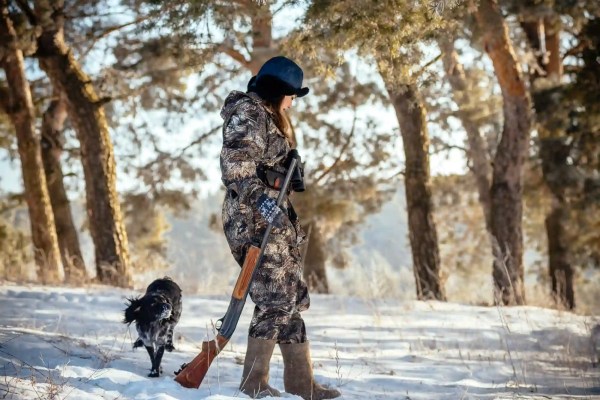
On 28 May 2026 the FFSC published two official statements on motions in the Grand Council. Motion 2025-GC-234, submitted by councillors Bernard Bapst and Dominique Zamofing, calls for the authorisation of thermal imaging and night vision devices during recreational hunting. In its statement, the FFSC expressly welcomes the fact that the Council of State already permits the use of such devices as a supplement to the follow-up search with tracking hounds and refers approvingly to the canton of Valais as a model for closer cooperation between recreational hunters and cantonal authorities. The second statement concerns motion 2025-GC-278 on the summer boar hunt.
This authorisation is precisely the point that Jacques Rime, an animal illustrator and engraver from La Tour-de-Trême, had already described as a «disgrace to hunting» in his own letter to the editor back in June 2026, together with the opening of the roe buck hunt from 1 July, in the middle of the rutting season, proposed by the FFSC leadership around president Michaël Rey and Eric Gobet. On 22 July 2026, Rime received public support in a further letter to the editor: two readers from Ependes and Fribourg argued that a recreational hunter should have to identify his target unambiguously even without night vision devices before shooting, and that such devices deprive the animal of any chance of camouflage and thus of any equality of opportunity.
Two realities, one pattern
There is no direct connection between the FFSC demands and the disappearance of the capercaillie; night vision devices and the roe buck hunt do not affect the species. What emerges is a setting of priorities. A threatened, disturbance-sensitive species is disappearing from a canton whose responsible authorities have, according to the action plan, been obliged to implement protective measures since 2008. At the same time, the cantonal recreational hunting association is campaigning for more technical aids and extended hunting periods, and is finding partial support for this from the Council of State. Demands that critical voices such as Jacques Rime interpret as an expression of a hunting culture that leaves disturbed wildlife even less room for retreat.
Whether and how the canton of Fribourg will respond to the announced enquiry from Wildtierschutz Schweiz remains open. wildbeimwild.com continues to follow the hunting legislation and the campaigns against recreational hunting in western Switzerland.
More on the subject of recreational hunting: In our dossiers on recreational hunting gather fact-checks, analyses and background reports. The scientific evidence is presented in the overview Studies on the Effects of Recreational Hunting.
The position of IG Wild beim Wild: IG Wild beim Wild rejects recreational hunting. Our model is the canton of Geneva, which has managed without recreational hunting since 1974: without hunting seasons, without hunting dogs, without driven hunts, without high seats, without the animal cruelty and crime that go hand in hand with hunting season elsewhere. What has worked there for over fifty years disproves every position paper by JagdSchweiz. An association that bases its policy on claims it refutes in its own documents is not a professional organisation, but a factory for misinformation.
Support our work
With your donation you help to protect animals and give their voice a hearing.
Donate now →