
IWC Hobart: Switzerland withdraws its own dolphin resolution
Pro Wildlife criticises the withdrawal at the 70th meeting of the International Whaling Commission as a missed opportunity.
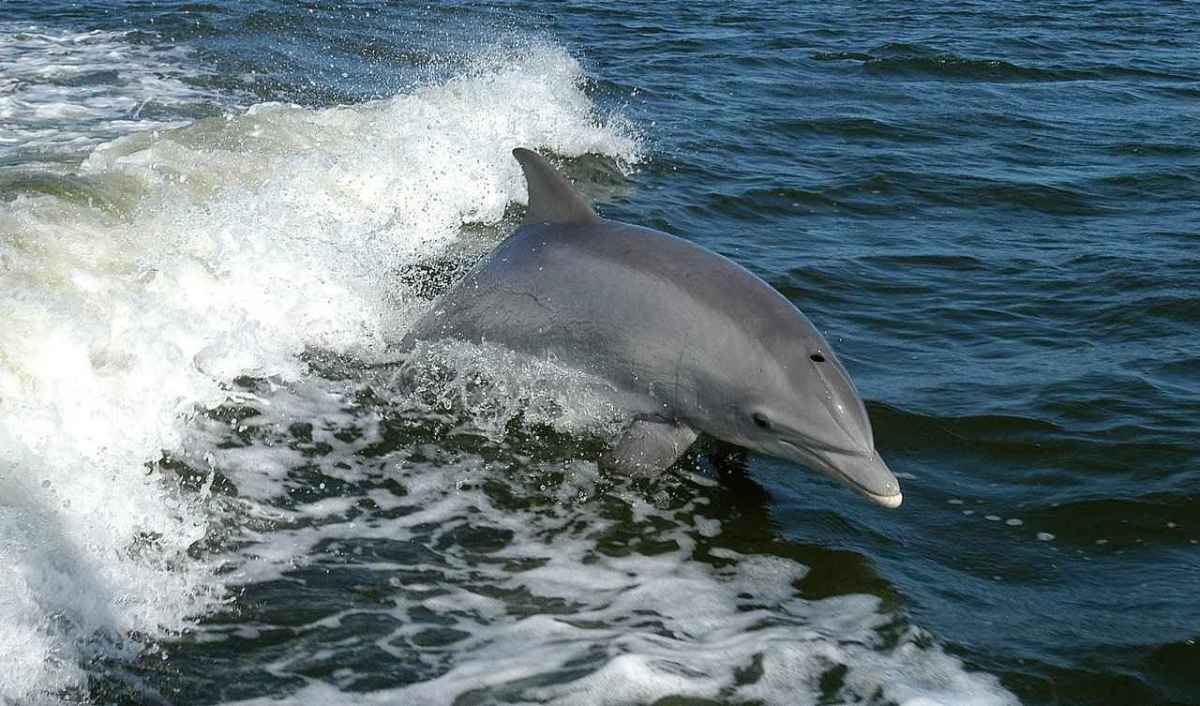
At the 70th meeting of the International Whaling Commission (IWC) in Hobart, Australia, Switzerland withdrew its own resolution on the protection of dolphins and small cetaceans on Wednesday morning.
The withdrawal took place before the working group already scheduled could negotiate changes to the text. The species protection organisation Pro Wildlife, which is following the meeting on site, describes it as a severe blow to species protection.
«The resolution had broad support in the plenary, constructive amendment proposals were on the table, and the negotiation round had already been scheduled,» says Dr Mona Schweizer, marine conservation expert at Pro Wildlife. «It was withdrawn without any need.»
What the resolution would have required
The Swiss draft «Small Cetacean Directed Takes Linked to Commercial Fisheries» addressed the targeted killing of dolphins and other small cetaceans in connection with commercial fisheries. It would have instructed the Scientific Committee to identify affected species and populations and prioritise them for scientific recommendations. Contracting states would have been called upon to provide data on targeted killings. Based on the findings, the Conservation Committee would have been tasked with developing and implementing protection plans where necessary.
Several states had backed the proposal in the preceding days and submitted amendment suggestions. In its own statement, the Swiss delegation noted that the feedback had made clear that a majority supported the resolution. No vote was held on the draft.
Switzerland's reasoning
The delegation justified the withdrawal by arguing that a resolution is only as good as its implementation. The Scientific Committee was already overburdened due to budget cuts. At the same time, it expressed confidence that the issue would feed into the committee's work simply because Switzerland had raised it.
Pro Wildlife considers this reasoning contradictory. If the committee is already overburdened, it is even less likely to address an issue it has no obligation to deal with. «No one disputes that implementation matters. But without a resolution, there is simply nothing to implement,» says Schweizer.
Criticism of the EU as well
Pro Wildlife also criticises the EU. In Hobart, it introduced three resolutions of its own, on bycatch, ship collisions and strandings. According to the organisation, these are issues on which little resistance can be expected from whaling nations. On the one resolution directly addressing targeted killing, the EU's support behind the scenes was reportedly lacking. In the IWC's 80th anniversary year, this creates the impression that the priority is above all to avoid conflict.
According to research by Pro Wildlife, more than 100,000 dolphins and small cetaceans are deliberately killed worldwide every year, affecting at least 30 species. Although the IWC has also dealt with small cetaceans for years, no protection regime comparable to the moratorium on large whales exists for them.
What is still up for a vote
Deliberations in Hobart continue until the end of the week. Among the items up for a vote are a resolution by Antigua and Barbuda on the «sustainable use» of whales, as well as the South Atlantic Whale Sanctuary. This sanctuary narrowly failed at the last meeting in Lima.
Context: A retreat that sends a signal
Switzerland likes to present itself internationally as a voice for species conservation. By its own account, a majority in Hobart was emerging in favour of its proposal, yet it gave up before a single sentence had been negotiated. For dolphins and small cetaceans that are deliberately killed, among other things to end up as bait in fisheries, a concern without a resolution is worthless. Pointing to tight budgets is not a convincing justification for the withdrawal.
The pattern is a familiar one: Europe's double standards in species conservation becomes apparent precisely where things get uncomfortable. That change is possible is shown by Iceland, which has announced a legal end to commercial whaling. It is all the more significant when it is precisely a country without whaling interests that voluntarily withdraws.
Further articles on whales, dolphins and marine conservation can be found in the category Wildlife.
More on the subject of recreational hunting: The scientific evidence is presented in the overview Studies on the Effects of Recreational Hunting.
The position of IG Wild beim Wild: IG Wild beim Wild rejects recreational hunting. Our model is the canton of Geneva, which has managed without recreational hunting since 1974: without hunting seasons, without hunting dogs, without driven hunts, without high seats, without the animal cruelty and crime that go hand in hand with hunting season elsewhere. What has worked there for over fifty years disproves every position paper by JagdSchweiz. An association that bases its policy on claims it refutes in its own documents is not a professional organisation, but a factory for misinformation.

All articles are written by IG Wild beim Wild as well as by external co-authors. Research, structuring and editorial processes may be supported by AI-assisted tools.
Support our work
With your donation you help protect animals and give their voice a hearing.
Donate now →