Open letter to Landammann Andreas Hostettler on fox hunting
Seven questions for the Landammann of Zug, reply deadline 9 December 2026.
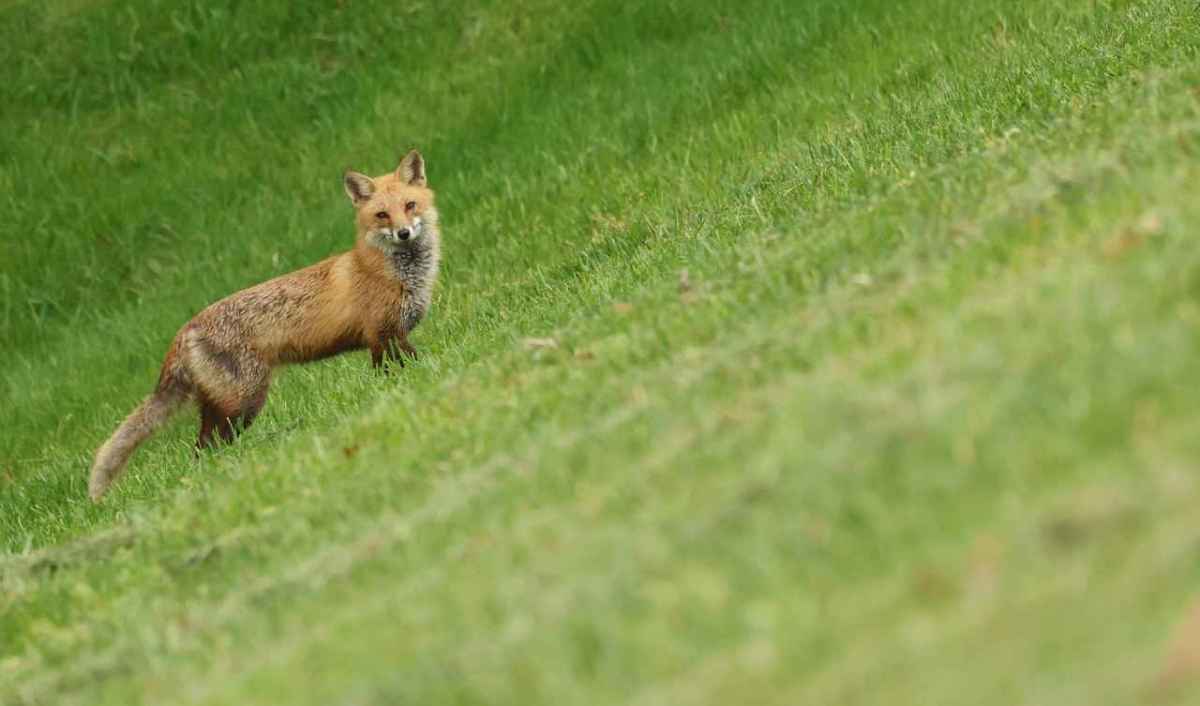
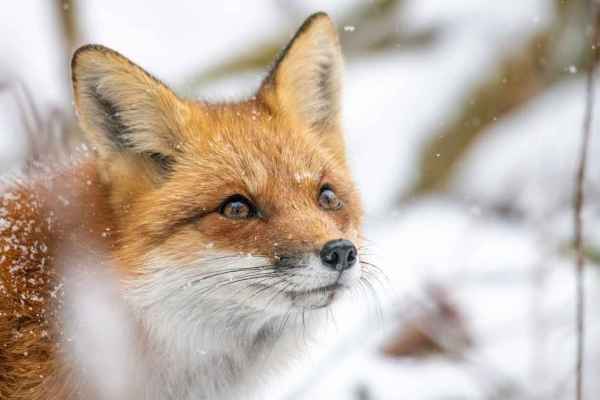
Stock image. Photo: Jan Allbeck / Unsplash
Red Snow
Following the rejection of the petition 'Ban on general fox hunting', IG Wild beim Wild is sending an open letter to Zug Landammann Andreas Hostettler, who signed the reply as head of the Department of the Interior. Seven questions, a reply deadline of 9 December 2026 and the announcement that the response will be documented publicly.
By letter of 24 November 2026, the Department of the Interior replied to the second Zug petition by the Lucerne lawyer Pascal Wolf (reply letter as PDF). The petition of 14 October 2026 (proposal no. 4201.1) called for a general ban on fox hunting and its replacement by official management with narrowly defined exceptions. The Department rejects a 'fundamental change of system' and for the time being keeps to the existing hunting system. It points to the need to weigh competing interests, to the organisational and financial consequences of a change, and to different conditions in Geneva and Luxembourg. At the same time, it concedes that the canton of Zug lacks reliable population data and robust findings on the effects of current hunting practice.
Even so, Zug is not a canton like the others. In response to the first petition, it had fox hunting scientifically examined by SWILD (technical report as PDF), the hunting commission decided to stop actively promoting fox hunting (Canton of Zug: Authorities Curb Fox Hunting After Study), and the flat-rate bounty of ten francs per fox has been abolished. The canton is currently defending this abolition before the Federal Supreme Court against six recreational hunters (Federal Supreme Court rejects urgent application). From the 2026/27 hunting season, the location, time, health condition and any conflicts are to be recorded for every fox killed. We acknowledge that. The decisive question of justification nevertheless remains open: what concretely demonstrated benefit does general fox hunting have in the canton of Zug? The letter cites no evidence of effectiveness from Zug that would justify its continuation.
The open letter follows the same approach as our letters to President of the Government Pierre Alain Schnegg in Bern, an Government Councillor Carmelia Maissen in Grisons, to the Aargau Landammann Stephan Attiger and to Cantonal Councillor Sibylle Jeker: factual, with concrete questions and the expectation of a verifiable response.
The following open letter was sent on 25 November 2026 to Landammann Andreas Hostettler, with a copy to the Office for Forests and Wildlife. It is documented here verbatim; the subheadings correspond to those in the version that was sent.
Open letter to Landammann Andreas Hostettler
Dear Mr Landammann
We have taken note of the reply from the Directorate of the Interior dated 24 November 2026 (DI DIS 58971-06) to Pascal Wolf regarding his petition “Ban on general fox hunting” (Proposal No. 4201.1). We acknowledge that, in connection with the preceding petition, the canton of Zug commissioned a scientific study on fox hunting, abolished the flat-rate kill bounty of ten francs per fox, and is defending that abolition before the Federal Supreme Court. All the less do we understand the conclusion of your reply. Since you signed the reply, we ask you to comment on the following points.
1. Missing data as a reason for the status quo
Your reply states that reliable population data and robust findings on the effects of current hunting practice are lacking for the canton of Zug. Nevertheless, citing the need to weigh competing interests and possible organisational and financial consequences, the Directorate holds on “for the time being” to the existing system. Yet what is being killed are non-human animals, and under Art. 4 para. 2 of the Animal Welfare Act, no one may inflict pain, suffering or harm on an animal without justification. You also state that research does not allow the conclusion that all hunting interventions are fundamentally ineffective. However, the petition does not demand a ban on all interventions; it expressly allows for narrowly defined exceptions. What specific purpose does general fox hunting serve in the canton of Zug in the Directorate's view, and what evidence supports general fox hunting rather than merely targeted interventions in justified individual cases?
2. The new data collection
From the 2026/27 hunting season, the location and time of kills, the state of health of the foxes killed and any conflicts are to be recorded, ideally via the existing reporting channels. By what method and by whom will the state of health be assessed: by the person who shot the animal, by the wildlife wardens or by a veterinarian? What counts as a “specific conflict”? In the Lucerne records, a finding of illness was noted for 39 of 2’217 foxes killed, while for over 98 per cent no finding of illness was recorded. Will the Zug results be published, and if so, when?
3. The weighing of interests
For a change of system, your reply calls for a comprehensive weighing of interests, in particular regarding animal health, endangered species and wildlife damage. The SWILD report commissioned by the canton lists a total of 67 reported cases of damage caused by foxes for the years 2012 to 2025, with total damage of 28’088.70 francs, roughly 2’000 francs per year. Of the 964 animals affected, 93.5 per cent were chickens. The report also refers to studies according to which protecting coops and free-range runs is more effective in preventing losses than regulating foxes. Which Zug data demonstrate that general fox hunting improves animal health or protects endangered species such as ground-nesting birds? And why must only the change of system pass this weighing of interests, but not the existing practice?
4. Geneva, Luxembourg and the canton's own expert report
According to your reply, the experience from Geneva and Luxembourg cannot readily be transferred to Zug owing to differing framework conditions. The SWILD report drew precisely this comparison: in the canton of Geneva (282 km²), which has had no recreational hunting since 1974, significantly fewer foxes are shot, in absolute terms and in relation to the canton's area, than in the canton of Zug (239 km²); in 2024 and 2025 there was not a single regulatory kill there. From the experience in Geneva and Luxembourg, the report concludes that fox populations would not rise noticeably as a result of abandoning fox hunting. Which specific differences limit the transferability of this experience to Zug, and how does the Directorate weigh them against the conclusion of the expert report it commissioned?
5. Tasks without general fox hunting
Your answer refers to tasks that the hunting community currently performs: observing wild animals, dealing with sick and injured animals, and helping to resolve local conflicts. None of these tasks requires healthy foxes to be killed in general hunting. How many call-outs involving sick or injured foxes, and conflicts with foxes, were there in the last three completed hunting years? And has the Directorate quantified the additional resources that management by the wildlife wardens would require? If so, with what result? If not: why is a resource requirement that has not yet been quantified cited as a reservation about a change of system, and by when is this review to be carried out?
6. Fewer kills, more found dead
Your answer confirms that the number of foxes killed has fallen sharply, while the numbers of animals found dead have risen. According to SWILD, an average of 308 foxes per year were killed in the canton of Zug between 2000 and 2025, with a strongly declining trend, which the report attributes, among other things, to a waning willingness among hunters to shoot foxes. Since this decline, have more damage, more cases of disease or more losses among endangered species been documented that can be attributed to foxes? If no such developments have been documented: what verifiable reasons does the Directorate still see for not abandoning general fox hunting?
7. Criteria, timetable and responsibilities for the review
The Directorate says it intends to review the hunting system on an ongoing basis and to consider adjustments in light of new findings. By when will the data collected in the 2026/27 hunting season be evaluated, and by whom? Which results would, in the Directorate's view, justify abandoning general fox hunting? What role do the Office for Forests and Wildlife, the Hunting Commission and the Directorate play in this? How is the Hunting Commission composed, what vested interests are represented on it, and how will an independent scientific assessment, as well as one grounded in animal welfare and nature conservation expertise, be ensured?
The petition did not demand that decisions be taken without a proper basis. It asked why a canton that cannot itself demonstrate the effect of fox hunting has foxes killed every year. The fact that data are lacking does not answer that question. It is the question.
We ask you to submit a statement by 9 December 2026. This letter and your response, if any, will be published on wildbeimwild.com.
Yours sincerely
Carl Sonnthal
IG Wild beim Wild, Acquarossa
What happens next
If the Directorate replies within the deadline, we will publish its statement and comment on it. If no reply comes, we will record that too. Several cantonal governments have still not answered our questions on fox hunting (Four cantonal governments leave 30 questions unanswered). Zug has replied so far, and as the only canton it also did so with a study. We expect that to remain the case.
In parallel, an appeal by six recreational hunters from Zug against the follow-up search obligation and the end of the flat-rate fox bounty is pending before the Federal Supreme Court. The court has already rejected the requested suspensive effect, but has not yet ruled on the appeal itself.
Commentary: Zug has done more than any other canton that received Pascal Wolf's petition. It commissioned a study, abolished the flat-rate bounty and defends that decision all the way to Lausanne. This makes the ending of its reply all the more striking. By its own admission, the Directorate lacks reliable figures on the fox population and robust findings on what current hunting practice achieves in the canton. Its own expert report concludes that giving up hunting would not cause fox numbers to rise noticeably. And yet the burden of proof applies only to those who want to end the killing, not to those who want to continue it. For sentient beings who hunt mice and raise their young in spring, "for now" is a long time. Every year in which Zug collects data instead of suspending hunting, foxes pay with their lives for a knowledge gap that the canton itself admits.
What you can do: Write directly to the members of the Zug cantonal parliament, ideally in person and in your own words, and ask them to support fox management without recreational hunting. You will find a template text and contact details at Stop Fox Hunting – Write to the Zug Cantonal Parliament. An overview of all cantons is provided by the campaign End fox hunting.
Do you have a tip, a source or a correction for this article? Write to us.
More on the subject of recreational hunting: In the dossier Alternatives to recreational hunting we show political and practical alternatives to recreational hunting. The scientific evidence is presented in the overview Studies on the Effects of Recreational Hunting.
The position of IG Wild beim Wild: IG Wild beim Wild rejects recreational hunting. Our model is the canton of Geneva, which has managed without recreational hunting since 1974: without hunting seasons, without hunting dogs, without driven hunts, without high seats, without the animal cruelty and crime that go hand in hand with hunting season elsewhere. What has worked there for over fifty years disproves every position paper by JagdSchweiz. An association that bases its policy on claims it refutes in its own documents is not a professional organisation, but a factory for misinformation.
Wild animals need a voice
Investigations, petitions and background on recreational hunting. As a thank-you, you will immediately receive our free guide «Recreational hunting on your doorstep: what you can do».
Support our work
With your donation you help protect animals and give their voice a hearing.
Donate now →