Zug: Federal Supreme Court rejects urgent application, follow-up search obligation remains for now
Six recreational hunters from Zug sought to halt the follow-up search obligation and the end of fox bounties by means of an urgent application. The Federal Supreme Court has refused, and the rules remain in force for now. The appeal itself has not yet been decided.
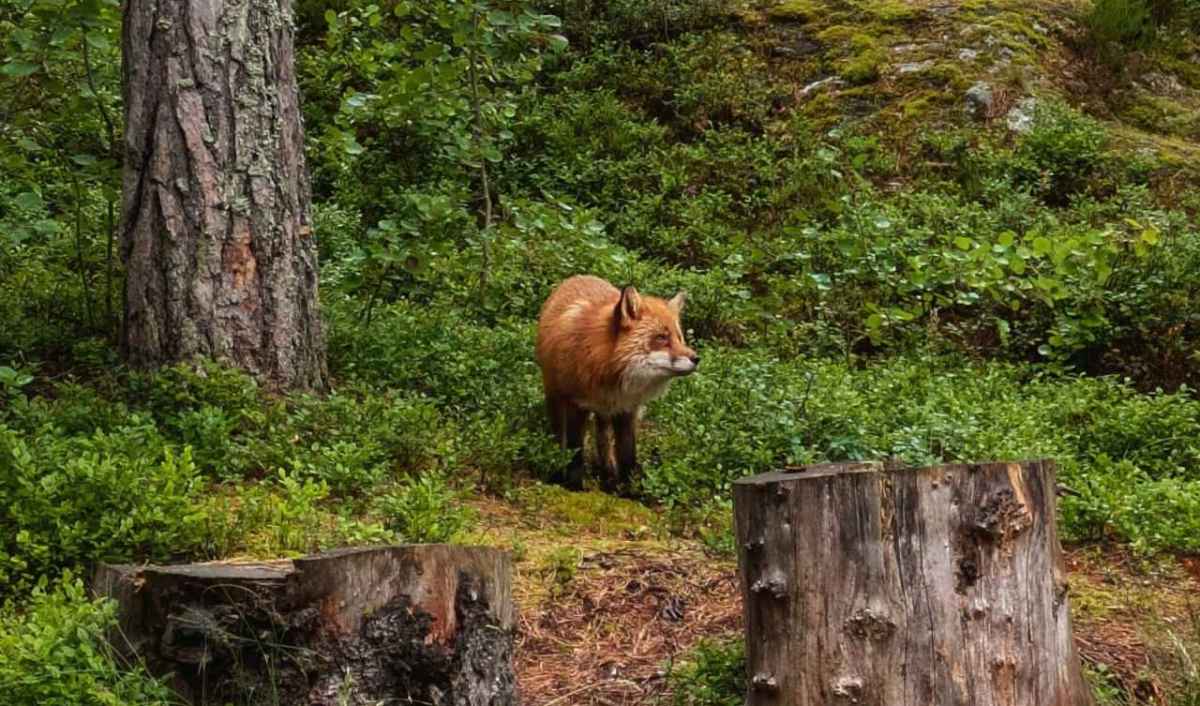
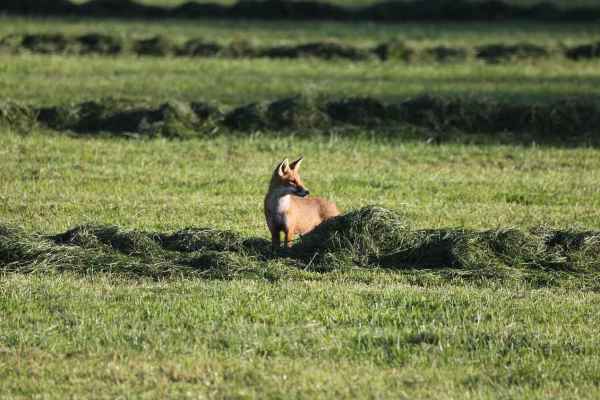
Photo: Mattia Bericchia / Unsplash
“Shot and Wounded”
Six recreational hunters from Zug wanted the new hunting regulations suspended with immediate effect. The Federal Supreme Court has rejected their request for suspensive effect. The obligation to carry out a follow-up search after every shot that does not result in a kill therefore remains in force. The flat-rate bounties for killed foxes and crows remain abolished.
In its order 2C_525/2026 of 5 October 2026, the Federal Supreme Court rejected the request for suspensive effect. The Zug hunting operation regulations 2026/27 therefore remain applicable for the time being. The appeal itself has not yet been decided. The news agency SDA reported this on 9 October.
According to the report, the six appellants failed to demonstrate any significant disadvantages that would justify suspensive effect. The court sided with the Zug Directorate of the Interior: the hunting season had already begun, and there was a public interest in orderly hunting operations. When the judgment on the merits will be delivered remains unclear.
What this is about
The appeal is directed against two points that we reported on in September (Zug recreational hunters challenge follow-up search obligation and abolition of fox bounties before Federal Supreme Court):
- No more flat-rate bounties: Until last season, the canton paid 10 francs for every fox tail handed in and 5 francs for every crow. The Directorate of the Interior abolished these bounties on 29 June 2026. Bounties for the killing of damage-causing animals remain possible under special permits.
- Follow-up search after every missed shot: Section 17 of the hunting operation regulations requires that a follow-up search with a certified dog begin immediately after every shot that does not result in a kill.
This does not challenge an entirely new duty. The principle already applied in the previous hunting season. According to the responsible authority, the cantonal hunting ordinance already requires a professional follow-up search for all game that has been shot at, and the hunting regulations spell this out in more detail.
The follow-up search protects the injured animal
According to the SDA news agency, the Federal Supreme Court regards the follow-up search duty as being in line with animal welfare. The court has not yet ruled conclusively on whether it is lawful. Editorially, this can be seen as a first signal, but no more than that.
Behind the rule lies a practical problem. Whether a shot has hit is judged by the shooter alone, often at dusk, at a distance and under tension. A wounded animal can flee without any visible sign of a hit. Cases from other cantons show what can happen without clear obligations, including Amden, where a wounded animal was not searched for (“Quite common in hunting circles”: what rulings and hunting reports from three cantons show). The Zug rule places responsibility on the human who fired the shot, and not on the possibly injured non-human animal.
The bounty and the canton's study
The complainants warn that without a bounty too few foxes and crows would be shot. Ground-nesting birds, roe deer fawns and brown hares would then come under pressure. Complainant Charly Keiser said he was "stunned" and demanded the "immediate withdrawal" of the provisions.
The canton, by contrast, relies on its own investigation. The SWILD consultancy examined fox hunting on behalf of the Zug Office for Forests and Wildlife. In May 2026 the study concluded that licence hunting of foxes does not reduce populations sustainably and does not curb wildlife diseases. Hunted populations compensate for losses through offspring, survival and immigration. The hunting commission subsequently decided to stop actively promoting fox hunting (Canton of Zug stops promoting fox hunting).
The reference to endangered ground-nesting birds does not prove that blanket kill bounties improve their populations. The complainants have so far failed to provide such evidence. A bounty per fox tail rewards the killing, not its effect. The logic dates from a time when foxes were generally regarded as "vermin" (Pest or beneficial species: the ideology behind fox hunting). The research on fox hunting is set out on the page Hunting Fact Check.
Six against their own association
The complaint does not speak for Zug's recreational hunters. The Zug Cantonal Licence Hunters' Association has distanced itself from the group "expressly and in no uncertain terms". This also applies to the demand to relax the obligation to carry out a follow-up search. The association stands behind the hunting operation regulations. Even within hunting circles, there is opposition to the line taken by the umbrella organisation (Rift in the hunters' camp: Ecological Hunting Association questions JagdSchweiz's fox hunting stance).
What the case means for other cantons
Zug shows that a canton can draw consequences from a wildlife-biology study. Politically, this also raises questions for cantons that continue to pay kill bounties. What legal consequences might arise can only be assessed once the main ruling is available.
All information on fox hunting in Zug can be found on the campaign page Fox hunting in the canton of Zug. An overview of all cantons is offered by End fox hunting, with the background in the dossier «The fox in Switzerland».
Sources: SDA, "Zuger Jagdvorschriften: Keine aufschiebende Wirkung für Beschwerde", 9 October 2026 (swissinfo); zentralplus, "Eine Jagdgruppe schiesst sich auf Hostettler ein"; Canton of Zug, Jagdbetriebsvorschriften 2025/26 and 2026/27 (BGS 932.111); SWILD, Fuchsjagd im Kanton Zug, May 2026.
More on the subject of recreational hunting: In the dossier The Role and Criticism of Recreational Hunters we shed light on the training, power and self-image of recreational hunters. The scientific evidence is presented in the overview Studies on the Effects of Recreational Hunting.
The position of IG Wild beim Wild: IG Wild beim Wild rejects recreational hunting. Our model is the canton of Geneva, which has managed without recreational hunting since 1974: without hunting seasons, without hunting dogs, without driven hunts, without high seats, without the animal cruelty and crime that go hand in hand with hunting season elsewhere. What has worked there for over fifty years disproves every position paper by JagdSchweiz. An association that bases its policy on claims it refutes in its own documents is not a professional organisation, but a factory for misinformation.
Wild animals need a voice
Once a week: research, petitions and background information on recreational hunting. Free of charge and can be unsubscribed from at any time.

All articles are written by IG Wild beim Wild as well as by external co-authors. Research, structuring and editorial processes may be supported by AI-assisted tools.
Support our work
With your donation you help protect animals and give their voice a hearing.
Donate now →