Study: more wolves, but acceptance in Switzerland remains stable
A study by the University of Zurich and the KORA foundation shows that nationwide support for the wolf remained stable between 2015 and 2023. Regional differences are linked more strongly to altitude and population density than to proximity to wolves or livestock kills.
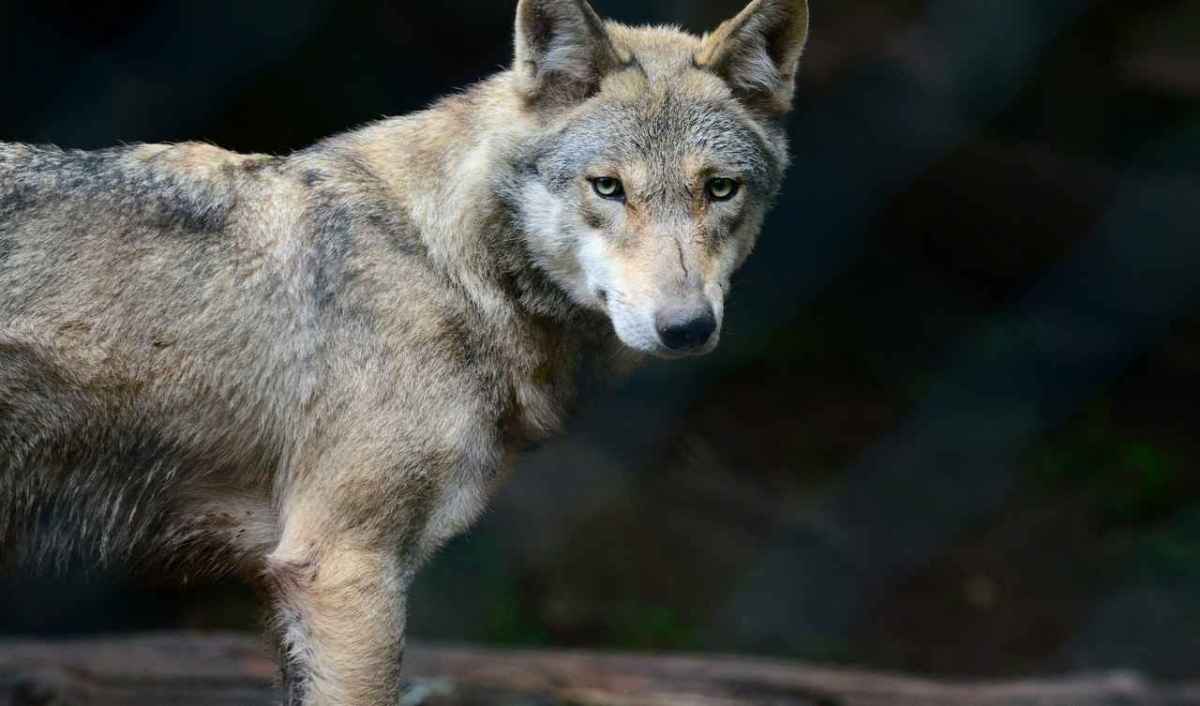
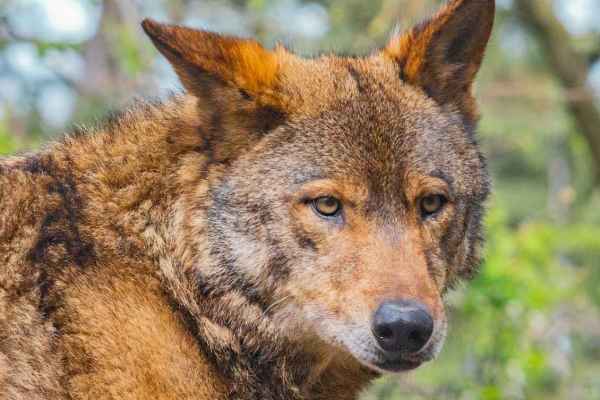
Illustrative image. Photo: Daniela Kelsch / Unsplash
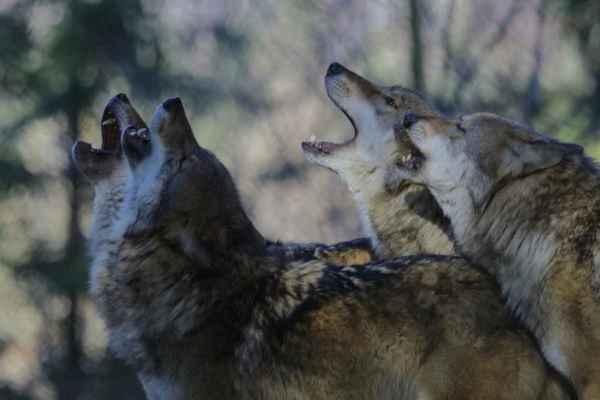
“Wolf Song”
The number of wolves in Switzerland has grown strongly since 2015, yet public attitudes towards the wolf have barely changed. This is shown by a study by the University of Zurich and the KORA foundation, published in the journal «Biological Conservation». Its title sums up the finding: wolf recolonisation does not predict public acceptance.
The team led by first author Carolyn K. Schaltegger compared two nationwide surveys: one from 2015, when the wolf was just beginning to spread again, and one from 2023. According to the study, the population has grown by around 30 per cent a year since the first confirmed reproduction in 2012, and by November 2023 more than 30 packs were living in Switzerland. The same question was asked both times: are you for or against wolves living in Switzerland? The analysis covered 3,142 responses from 2015 and 5,917 responses from 2023, spread across the whole country.
Acceptance remained stable
Nationwide, acceptance barely changed between the two surveys, with a slightly positive shift. The researchers speak of remarkably stable acceptance, and the KORA foundation describes attitudes in its press release as «astonishingly stable». According to KORA, the share of respondents clearly opposed to wolves even fell slightly, from 37.5 to 31.8 per cent, as the Keystone-SDA news agency.
Regionally, there were shifts in both directions. In the cities of Zurich, Basel and Geneva, acceptance rose, while along the Jura and in parts of the Alps in the cantons of Bern, Ticino and Grisons it fell. Strikingly, in some mountain areas of Valais and Grisons, where the wolf returned first and acceptance was lowest in 2015, it rose by 2023 even though the number of wolves continued to grow. The researchers also found high acceptance in mountain regions such as southern Ticino, Central Grisons and the more urban parts of Valais.
Place of residence explains more than proximity to wolves
Altitude is the strongest predictor of where people reject the wolf, followed by population density. Acceptance is lower in mountain areas than in the lowlands, and lower in rural areas than in cities. In the study, altitude stands in for socio-cultural differences such as traditions of land use, political orientation and regional identity.
Factors relating to the wolf itself, by contrast, explain hardly anything. Neither the distance to the nearest wolf record, nor the length of wolf presence, nor proximity to livestock kills, nor the number of sheep, goats and cattle, nor the number of summer pasture farms predicted where attitudes changed. With these variables, the model for the changes achieved an explanatory power of less than one per cent. Local kills therefore did not necessarily lead to less tolerance.
Changes in acceptance occurred in spatial clusters. The researchers suspect that exchange within communities, as well as the influence of local politics and local media, lie behind this. For instance, acceptance fell in the Jura, but not specifically where wolves were closer or had been present for longer. Rejection can arise before the wolf is even there, because fears are passed on socially, the authors write.
Less area with potential for conflict
The study also overlays the acceptance maps on a model showing where Switzerland is ecologically suitable for the wolf. Where good habitat meets low acceptance, the researchers see potential for conflict. This area shrank from 23,578 to 17,955 square kilometres between 2015 and 2023, a reduction of 5,623 square kilometres. The potential for conflict remains greatest in the Central Alps.
The authors themselves point to limitations: people who take part in a voluntary survey are not necessarily representative of everyone. The response rate was 33.3 per cent in 2015 and 29.8 per cent in 2023. KORA plans a further survey for 2027 and 2028.
What this means for wolf policy
The study period ends shortly before the change of system: since December 2023, Switzerland has permitted proactive regulation, that is, the killing of entire packs or of up to two thirds of the young animals before any concrete damage has occurred. We have summarised separately what the revision of the Hunting Act has changed. Whether lethal regulation improves acceptance and reduces conflict has yet to be investigated, the researchers note. Their data provide the baseline for this.
In the current season, numerous wolves have already been killed, as our Wolf kill counter Switzerland 2026/27 shows. At the same time, SVP politicians in Nidwalden, Uri and Lucerne are demanding that the population be reduced to between 50 and 100 animals, as we reported in the article “Nidwalden: SVP wants only 50 to 100 wolves left in Switzerland”. The wildlife ecologist Raphaël Arlettaz.
Comment: More wolves do not mean less acceptance
Kills would secure acceptance of the wolf: this argument is part of the standard repertoire of the wolf debate. The study from Zurich at least calls into question the assumption that more wolves inevitably lead to less acceptance. It provides no evidence that kills increase approval. More wolves have not turned the population against the wolf, and where the wolf has lived longest, acceptance has in some cases even risen. The regional patterns of opposition can hardly be explained by proximity to wolves and livestock kills alone. The researchers cite values, traditions and local public debates as possible background factors.
If local debates and community values help shape acceptance, politicians and the media bear a particular responsibility for factual reporting. There is no documented case of a free-living wolf in Switzerland having become dangerous to humans, as the article “Is the Wolf Dangerous to Humans in Switzerland? Facts and Myths” shows. And where livestock are killed, herd protection is often lacking: in Ticino, according to the canton's figures, only 6 of 131 killed animals were adequately protected.
For us, the conclusion is clear: policymakers should rely on herd protection and honest information, rather than presenting kill quotas as a guarantee of greater acceptance. According to KORA, just under a third of respondents are clearly against the wolf. More about its role in the ecosystem can be found in our Wolf dossier.
Sources
- Schaltegger C. K., Ozgul A., Andres L., Alessandrello V. L., Cozzi G., von Arx M., Gerber N., Behr D. M. (2026): Wolf recolonisation does not predict public acceptance. Biological Conservation 321, 111992 (Open Access)
- Keystone-SDA via blue News, 5 November 2026: More wolves do not reduce public support
More on the subject of recreational hunting: In our dossiers on recreational hunting gather fact-checks, analyses and background reports. What the research says about this is shown by Hunting fact-checked: the state of research.
The position of IG Wild beim Wild: IG Wild beim Wild rejects recreational hunting. Our model is the canton of Geneva, which has managed without recreational hunting since 1974: without hunting seasons, without hunting dogs, without driven hunts, without high seats, without the animal cruelty and crime that go hand in hand with hunting season elsewhere. What has worked there for over fifty years disproves every position paper by JagdSchweiz. An association that bases its policy on claims it refutes in its own documents is not a professional organisation, but a factory for misinformation.
Wild animals need a voice
Once a week: research, petitions and background information on recreational hunting. Free of charge and can be unsubscribed from at any time.

All articles are written by IG Wild beim Wild as well as by external co-authors. Research, structuring and editorial processes may be supported by AI-assisted tools.
Support our work
With your donation you help protect animals and give their voice a hearing.
Donate now →