Wildlife ecologist Arlettaz: wolf kills boost reproduction
The co-director of the Institute of Ecology and Evolution at the University of Bern considers the federal government's wolf regulation unnecessary and biologically counterproductive.
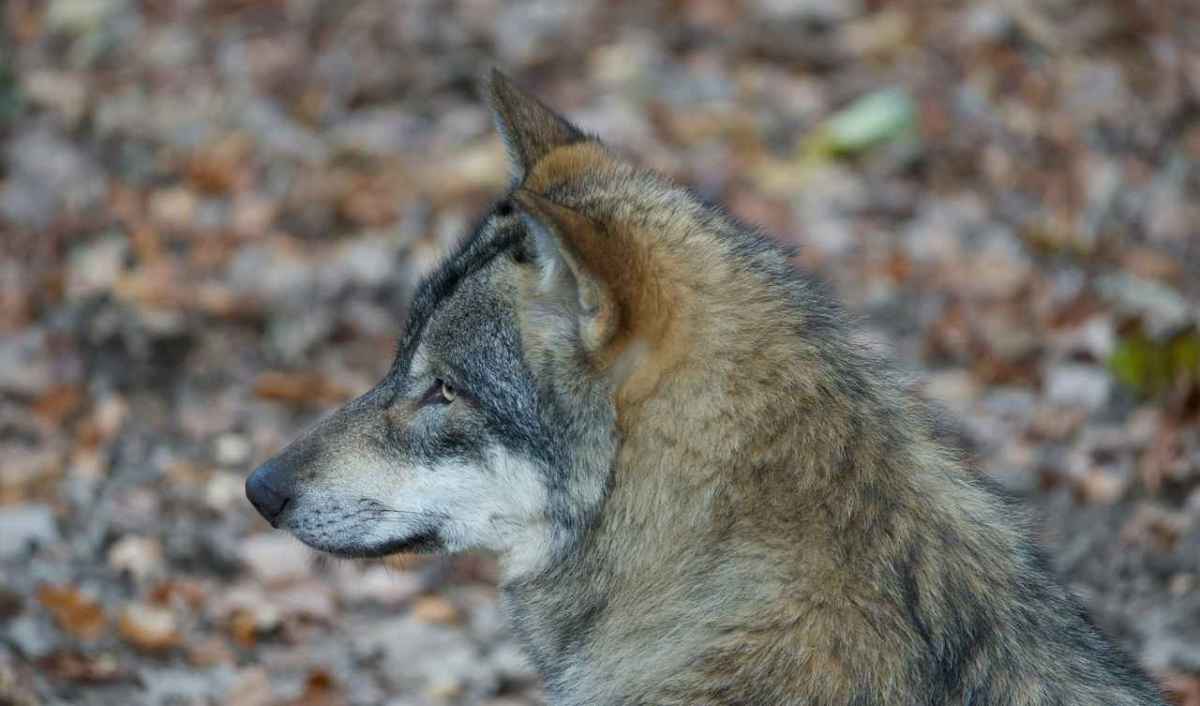
Illustrative image. Photo: Felix Oertle / Unsplash
«In Reserve»
Raphaël Arlettaz, co-director of the Institute of Ecology and Evolution at the University of Bern, considers the federal government's wolf regulation unnecessary. What is more, from a biological perspective it is counterproductive. This is what the Valais wildlife ecologist says in a piece by SRF Wissen, published on 29 October 2026 and based on an edition of “Echo der Zeit” broadcast on 26 October. According to SRF, Arlettaz is one of very few scientists in Switzerland who openly state their position on wolf regulation.
“In theory, no regulation is needed”
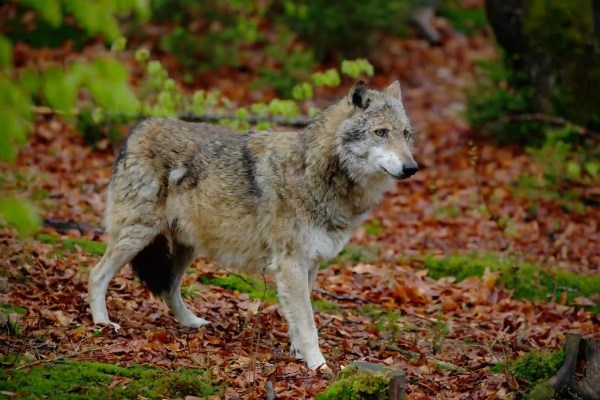
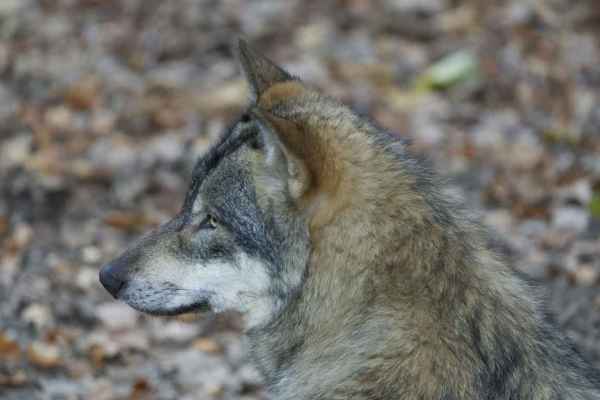
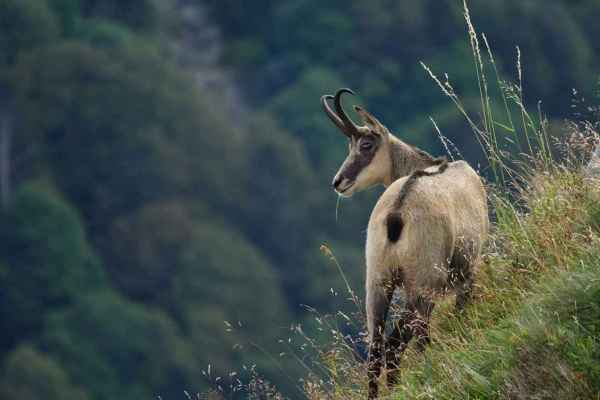
In the Valais, including the Derborence valley south of Sion, Arlettaz studies how wolves and lynx affect chamois, red deer and roe deer, and vice versa. For this purpose, more than 100 camera traps belonging to the University of Bern are installed across the canton. His finding: a wolf population never grows exponentially, but regulates itself in the medium term. It is an illusion, he says, that an ecosystem improves when humans intervene. “In theory, no regulation is needed,” says Arlettaz.
Had it been up to him, the spread of the wolf would simply have been left to run its course, while observing how the packs distribute themselves across the landscape. In that case, Arlettaz says, the wolf population would already be stable today.
Kills drive reproduction
Arlettaz sums up the core of his criticism in a single sentence: regulation merely boosts the reproduction rate. A pack compensates for kills by reproducing considerably more, much as is known from the fox.
This pattern is well documented in hunted wild animals. Under hunting pressure, wild boars, red deer and other species reproduce earlier and more often, as the studies on our page show: «Hunting Fact-Checked» With foxes, even high kill rates are offset by offspring and immigration, as the dossier on the fox in Switzerland documents. With wolves, there is the added problem that killing tears apart the pack structure. We have explained why stable packs kill fewer livestock here.
Room for more than 60 packs, today around 40
In a study, Arlettaz calculated Switzerland's ecological carrying capacity for the wolf. Judged by territories and food supply, the country would have room for more than 60 packs, or around 1,000 wolves. According to SRF, around 40 packs currently live in Switzerland. Politically, such a number has no chance, SRF writes, but ecologically it could be an advantage to allow more predators.
Politics is going in the opposite direction. As SRF reported in February 2026, the Federal Council supports an upper limit on the wolf population. The National Council has also approved, by 116 votes to 73, a motion that would allow kills above a fixed threshold. How many wolves have been killed since 1 September is tracked in our wolf counter by canton and pack.
Wolf and forest
Arlettaz also points to foresters: where wolves and lynx keep roe deer, chamois and red deer in check, young silver firs, oaks and maples regrow more easily. What this means for the protection forest, and why, according to the WSL, recreational hunting influences ungulates more strongly than the wolf, we have set out in “More wolves, more forest damage?” and “No wolf, no forest”. Arlettaz himself, however, does not want to assess the wolf by its “benefit”: ecosystems functioned for millions of years without humans.
Context
That a researcher of this standing so clearly contradicts federal politics is remarkable, but not new for the research group in Bern. Only in September, a study from the same university counted 37 lynx in Valais instead of the 80 claimed by politicians, of all numbers precisely the one with which the canton wanted to justify kills. The pattern is the same: wolf and lynx policy rests on assumptions that do not stand up to research. Anyone who sells kills as population control, even though according to wildlife ecology they drive reproduction, is not regulating but engaging in symbolic politics at the expense of the packs.
More on the subject of recreational hunting: In our dossiers on recreational hunting gather fact-checks, analyses and background reports. The scientific evidence is presented in the overview Studies on the Effects of Recreational Hunting.
The position of IG Wild beim Wild: IG Wild beim Wild rejects recreational hunting. Our model is the canton of Geneva, which has managed without recreational hunting since 1974: without hunting seasons, without hunting dogs, without driven hunts, without high seats, without the animal cruelty and crime that go hand in hand with hunting season elsewhere. What has worked there for over fifty years disproves every position paper by JagdSchweiz. An association that bases its policy on claims it refutes in its own documents is not a professional organisation, but a factory for misinformation.
Wild animals need a voice
Once a week: research, petitions and background information on recreational hunting. Free of charge and can be unsubscribed from at any time.

All articles are written by IG Wild beim Wild as well as by external co-authors. Research, structuring and editorial processes may be supported by AI-assisted tools.
Support our work
With your donation you help protect animals and give their voice a hearing.
Donate now →