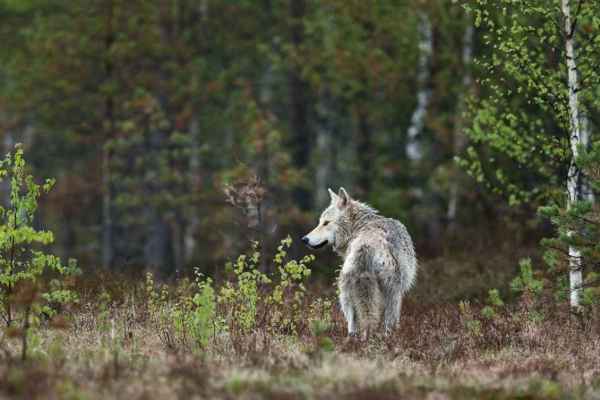
Jougne-Suchet: FOEN approves removal of the entire wolf pack
Because two wolves from the pack were shot in France, the partial regulation was blocked. Neuchatel therefore obtained the FOEN's approval for the removal of the entire pack, even though it only wants to kill the father wolf.
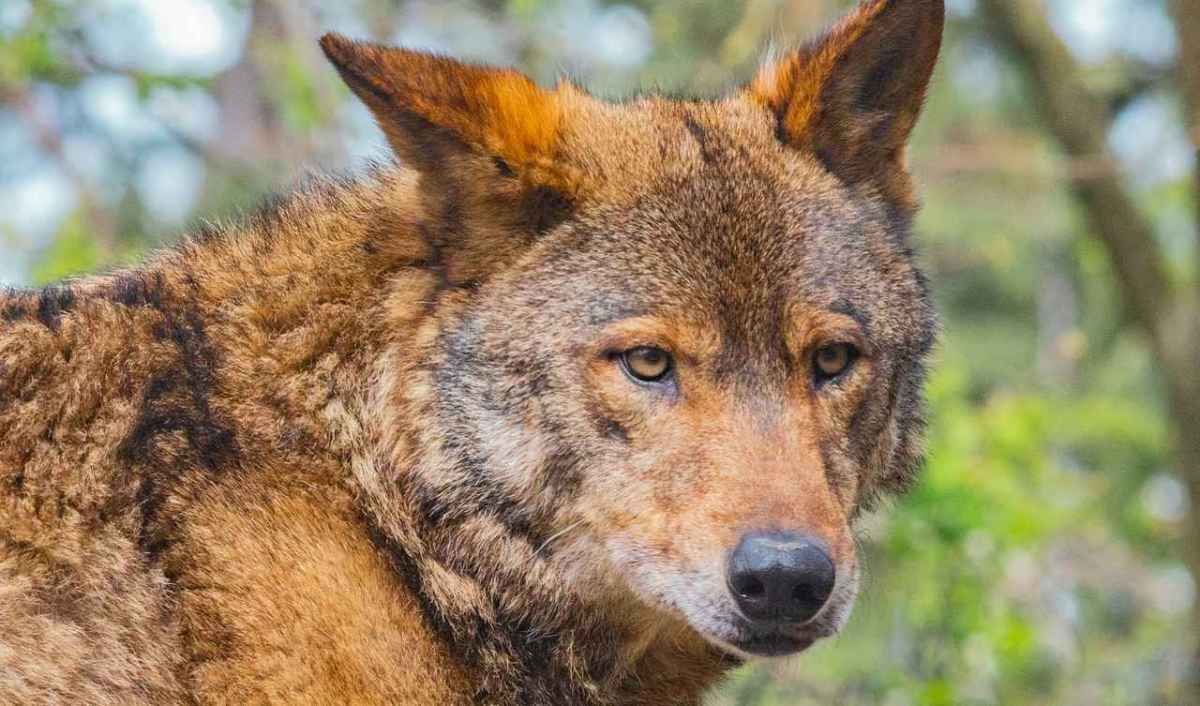
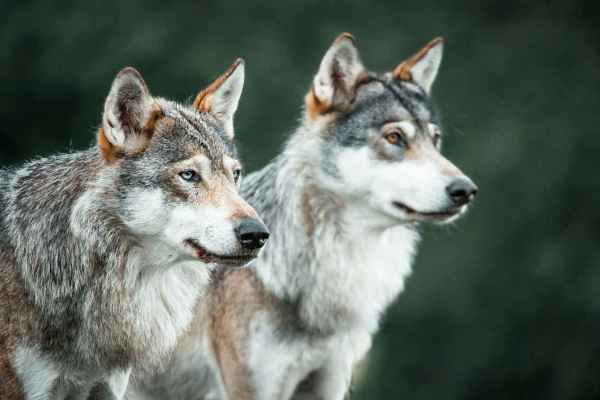
Symbolic image. Photo: Dylan Mullins / Unsplash
«Cull»
The canton of Neuchatel may remove the Jougne-Suchet wolf pack entirely. The Federal Office for the Environment (FOEN) approved a corresponding request on 9 October 2026, as the Neuchatel Service de la faune, des forêts et de la nature (SFFN) announced in the cantonal official gazette on 16 October. By its own account, the canton intends to use the permit only to kill the father wolf M121. The kills already carried out in Neuchatel, including that of the father wolf M583 in the neighbouring Vallée de la Brévine pack, are attributed by the wolf kill counter. The question here is a different one: why would a canton apply for a total removal that it does not intend to carry out in full?
From the father wolf to the whole pack
According to the SFFN, four cattle have been killed and two injured in three attacks on the pack's territory since 7 June, most recently on the night of 2 to 3 October in Les Verrières. For the first two attacks, genetic analysis points to the father wolf M121. In early September, the FOEN had approved a partial regulation: two thirds of this year's pups and one parent animal, as stated in the FOEN overview of 4 October.
Subsequently, two subadult wolves of the pack were killed in France as part of so-called «tirs de défense», that is, officially authorised defensive kills. According to the practice of the Confederation, the canton says, this situation prevents further kills of young wolves and even that of M121 under the partial regulation. The canton does not say what this practice is based on. It also remains unclear why two wolves, which as subadults generally date from the previous year, should block a quota for this year's young wolves and one parent animal. The canton did not accept this limit but asked the FOEN for the removal of the entire pack. Approval came on 9 October. An appeal against the ruling can be lodged with the Neuchatel cantonal court. The 30-day deadline runs from publication on 16 October and ends on Monday, 16 November 2026.
The same block had already stopped Vaud
The mechanism is not new. In January 2026, Vaud wanted to have three young wolves of Jougne-Suchet shot, and the FOEN had approved this on 12 January. According to a press release from the canton of Vaud dated 3 February, the order was suspended because wolves had been killed in France and the federal ordinance requires such kills to be counted. In Vaud, not a single shot was fired.
The rule did exactly what it is meant to do at the time: it prevents a cross-border pack from being decimated from both sides of the border at once. Neuchatel has now bypassed this brake with the broadest possible authorisation.
A wolf with two failed kill permits
M121 is no stranger. According to a Neuchatel ruling of 2025, the male was born in the Marchairuz pack in 2019 and roamed the Jura for a long time as a lone wolf. In May 2025, Neuchatel and Vaud simultaneously ordered his kill because genetics attributed the death of at least eleven livestock animals to him. He was not shot; Vaud lists the permit in its kill table with zero wolves killed.
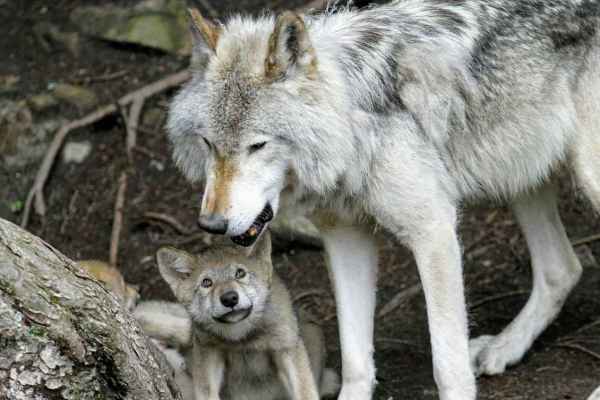
Today M121 is the father wolf of a pack with offspring. With at least three pups, Jougne-Suchet reproduced on Neuchatel soil for the first time in 2026, as Wild beim Wild reported in the article Wolves in the Jura: calm in Vaud, kills in Neuchatel. If M121 falls after M583, two neighbouring Neuchatel packs will lose their father wolf within a few weeks. In the Valais Chablais, according to KORA, the official kill of the lead male M88 led to a mother and daughter reproducing with the same male (Article).
Farmers' protest in Les Ponts-de-Martel
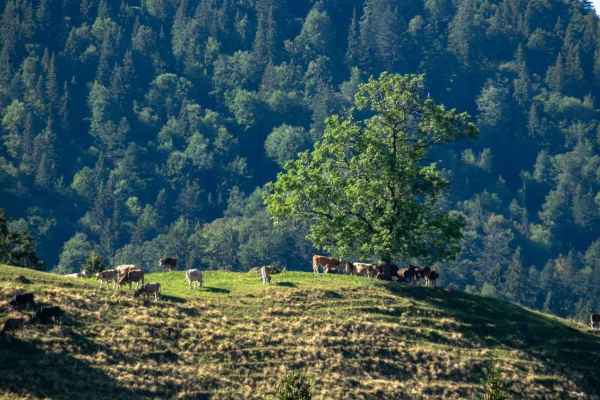
On 20 October, numerous Neuchatel farmers gathered in Les Ponts-de-Martel to make public their distress and anger over wolf attacks, as «ArcInfo» reported. A fire was meant to show solidarity with the affected livestock keepers. The location lies within the home range of the Vallée de la Brévine pack, whose male wolf had been shot twelve days earlier.
Herd protection in the region includes a pilot project: since 1 June, volunteers from the Oppal foundation had been monitoring particularly vulnerable cattle herds at night between Les Ponts-de-Martel and La Chaux-du-Milieu, funded 80 per cent by the federal government, as RTN reported. The project was limited until 15 October. For cattle older than 14 days, the Hunting Ordinance does not require any protective measures. In its approval of the regulation of the Vallée de la Brévine pack, the FOEN expressly deems such protection unreasonable and refers to Art. 10b para. 2 let. c JSV (Decision with FOEN approval, 2 September 2026). In an area with almost exclusively cattle, killing is thus automatically moved to the front of the queue. What works in herd protection is summarised in the dossier Herd protection in Switzerland.
Assessment: A blanket authorisation for all, a promise for one
On paper, Neuchatel may kill every wolf of the Jougne-Suchet pack until the end of the regulation period on 31 January 2027. The restriction to M121 is a declaration of intent by the canton. Whether it is recorded as binding in the decision cannot be determined from the published information.
The rule that kills abroad are counted towards the total protects cross-border packs from being thinned out by two states at once. Anyone who circumvents it by applying for the most stringent of all permits turns the exception into a tool. That the FOEN plays along fits the picture Wild beim Wild already painted in the article Federal government approves before pups are confirmed: the federal government approves in advance, and the assurances to the Council of Europe given by the FOEN remain on paper (Article).
The only independent check now is an appeal to the cantonal court. It must be lodged by 16 November.
Sources
- Keystone-ATS via La Télé: «Loup de la Brévine abattu et nouvelle autorisation de tir en Neuchâtel», 16 October 2026
- FOEN: Fourth preventive regulation, status of applications, 4 October 2026
- Canton of Neuchatel: Order to regulate the Vallée de la Brévine pack with the consent of the FOEN, 2 September 2026
- Canton of Neuchatel: Decision on the kill of the lone wolf M121, May 2025
- Canton of Vaud: Press release on regulation and the KORA mandate, 3 February 2026
- Canton of Vaud: Regulation decisions and kill table
- «ArcInfo»: Report from Les Ponts-de-Martel, 20 October 2026
- RTN: Night-time herd monitoring, 4 June 2026
More on the subject of recreational hunting: The scientific evidence is presented in the overview Studies on the Effects of Recreational Hunting.
The position of IG Wild beim Wild: IG Wild beim Wild rejects recreational hunting. Our model is the canton of Geneva, which has managed without recreational hunting since 1974: without hunting seasons, without hunting dogs, without driven hunts, without high seats, without the animal cruelty and crime that go hand in hand with hunting season elsewhere. What has worked there for over fifty years disproves every position paper by JagdSchweiz. An association that bases its policy on claims it refutes in its own documents is not a professional organisation, but a factory for misinformation.
Wild animals need a voice
Once a week: research, petitions and background information on recreational hunting. Free of charge and can be unsubscribed from at any time.

All articles are written by IG Wild beim Wild as well as by external co-authors. Research, structuring and editorial processes may be supported by AI-assisted tools.
Support our work
With your donation you help protect animals and give their voice a hearing.
Donate now →