Hunting influencers: equipment suppliers keep their distance, but the business carries on
An ARD investigation documents problematic hunting videos by sponsored influencers. Equipment suppliers report ending collaborations, while other sponsors step in.

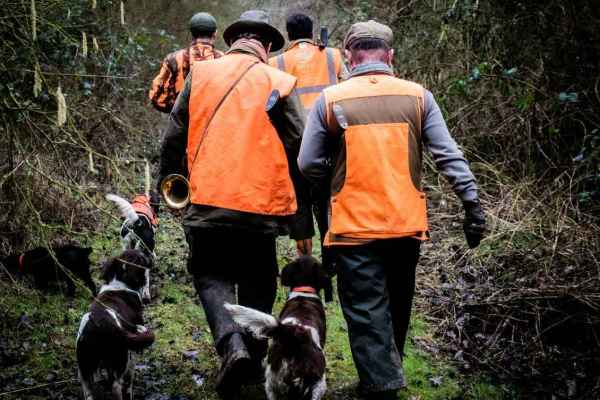
Illustrative image. Photo: Ciocan Ciprian / Unsplash
Green Diploma
Hunting videos on social media generate reach when they show action. An investigation by the ARD business magazine “Plusminus” and tagesschau.de documents that some sponsored influencers have published scenes in which wild animals were not killed in line with animal welfare standards. Several equipment suppliers are now distancing themselves.
What the ARD investigation shows
The report “Hunting as a lifestyle pastime” aired on 23 September 2026 on “Plusminus” on ARD, and tagesschau.de summarised the investigation on 4 October 2026. The finding: suppliers such as the mail-order retailer Frankonia hardly advertise in traditional hunting magazines any more, but instead through sponsored influencers online. According to ARD, some of these videos showed breaches of animal welfare and of the rules of so-called “Waidgerechtigkeit” (fair chase), as well as irresponsible handling of firearms.
The sharpest criticism comes from a man who holds a hunting licence himself. Jörg-Andreas Krüger, president of the Nature and Biodiversity Conservation Union (NABU), told “Plusminus” in an interview that this amounts to “shooting-gallery shooting” at wild animals, and called shots at long range “damn dangerous”.
Four companies distance themselves, others step in
When asked by “Plusminus”, Roedale, Frankonia, Zeiss and Leica distanced themselves from the misconduct of their advertising partners. By their own account, they had already ended collaborations where their standards for sustainability and respectful treatment of game were not met. The report does not say which influencers are affected or by what criteria the decisions were made.
This does little to change the business model. On the pay platform Hunt-on-Demand, which describes itself as the largest streaming platform for hunting videos in the German-speaking world, a number of companies are now missing, according to ARD. Other sponsors have taken their places.
Recruiting the next generation as a business
Behind the advertising lies a growing market. The German Hunting Association counts around 468’000 hunting licences for 2025, 42 per cent more than in 1995. What this figure does and does not tell us has been examined by Wild beim Wild in the article Hunting in decline, hunting licences at a record high.
For the industry, what matters above all is purchasing power. According to ARD, the initial kit of rifle, optics, gun cabinet, binoculars and clothing costs between 3’000 and 10’000 euros, with no upper limit. After that, recreational hunters spend on average more than 4’300 euros a year, according to Frankonia. New licence holders are therefore an economically attractive target group, and influencers give the outfitters an additional route to reach them.
A hunting licence in a few weeks: the missing 'maturation period'
In Germany, the route to a hunting licence is a matter for the federal states. Bavaria prescribes at least 120 hours of training, 60 of them practical. In Mecklenburg-Western Pomerania it is 130 hours of theory and practice, with shooting exercises on top. Other states allow candidates to sit the exam without any preparatory course. The German Hunting Association recommends at least 100 hours of theory.
Even where a number of hours is prescribed, it can be worked through in a few weeks. Private hunting schools offer intensive courses, and individually tailored 'manager courses' cost up to 6’000 euros, according to ARD. Florian Asche, president of the Mecklenburg-Western Pomerania state hunting association, speaks of a missing 'maturation period' and concedes that the trend cannot be pushed back. How such a course works in practice is shown by a reporter's first-hand account, on which Wild beim Wild has reported: A hunting licence in two weeks.
Forest conversion does not justify risky shots
Despite his criticism, NABU president Krüger considers it fundamentally positive that more people are taking the hunting licence. His argument is forest conversion: according to satellite data from the German Aerospace Center, Germany lost more than 900,000 hectares of forest between 2017 and 2024, mainly through storms and bark beetles in spruce monocultures. For young trees to grow back, he says, the populations of roe deer and red deer would have to fall.
That does not answer the question raised here: even a declared conservation goal justifies neither killings that violate animal welfare nor an irresponsible handling of firearms. The ARD report itself also notes that not all newcomers are interested in conservation and that some define themselves by kill successes and expensive equipment. Wild beim Wild addresses the fundamental role of recreational hunting in forest conversion in the articles Protective Forest: Recreational Hunting Creates Problems Instead of Solutions and How the wolf helps the forest.
Commentary: Self-policing is not oversight
The industry is treating the case as an image problem. Four companies say they have ended their partnerships, an association president wants better training programmes, and other sponsors are stepping in. What matters, however, is who is doing the monitoring: whether a video goes too far is judged by companies that earn money from the very same recreational hunters. That is not oversight, it is brand management.
The videos make a problematic hunting practice visible. How often comparable things happen without a camera cannot be inferred from the investigation. What stands out, however, is that the scenes were not filmed in secret but published by those involved themselves. They evidently present these scenes as a showable part of their hunting practice, not as a deterrent example. The same pattern appears with the trophy photo, and it is not a German phenomenon: in autumn, the case of a Grisons recreational hunter who posed with a dead roe deer drew criticism.
The forest argument does not convince us either. In the view of Wild beim Wild, recreational hunting has not regulated roe deer and red deer populations for decades in the way it claims as justification for itself.
The distancing of individual sponsors leaves the crucial questions unanswered: Are documented incidents being investigated independently? What consequences do they have for those involved? And how can it be ensured that an intensive course lasting just a few weeks does not merely prepare people for the exam, but for the responsible handling of wild animals and weapons?
What is needed are independent checks on hunting practice, transparent consequences for violations, and binding training standards that put practical experience, safe weapon handling and animal welfare at the centre. The benchmark should be the police and the army: training lasting months rather than weeks, an aptitude test and regular refresher courses.
More on the subject of recreational hunting: In the dossier The Role and Criticism of Recreational Hunters we shed light on the training, power and self-image of recreational hunters. What the research says about this is shown by Hunting fact-checked: the state of research.
The position of IG Wild beim Wild: IG Wild beim Wild rejects recreational hunting. Our model is the canton of Geneva, which has managed without recreational hunting since 1974: without hunting seasons, without hunting dogs, without driven hunts, without high seats, without the animal cruelty and crime that go hand in hand with hunting season elsewhere. What has worked there for over fifty years disproves every position paper by JagdSchweiz. An association that bases its policy on claims it refutes in its own documents is not a professional organisation, but a factory for misinformation.
Wild animals need a voice
Once a week: research, petitions and background information on recreational hunting. Free of charge and can be unsubscribed from at any time.

All articles are written by IG Wild beim Wild as well as by external co-authors. Research, structuring and editorial processes may be supported by AI-assisted tools.
Support our work
With your donation you help protect animals and give their voice a hearing.
Donate now →