Hunting licence in two weeks: how a reporter passed the firearms examination without ever having been in the forest
An ARD reporter obtained the authorisation to own firearms through a hunting crash course as a self-experiment. Her conclusion exposes just how low the hurdles for lethal weapons in recreational hunting really are.
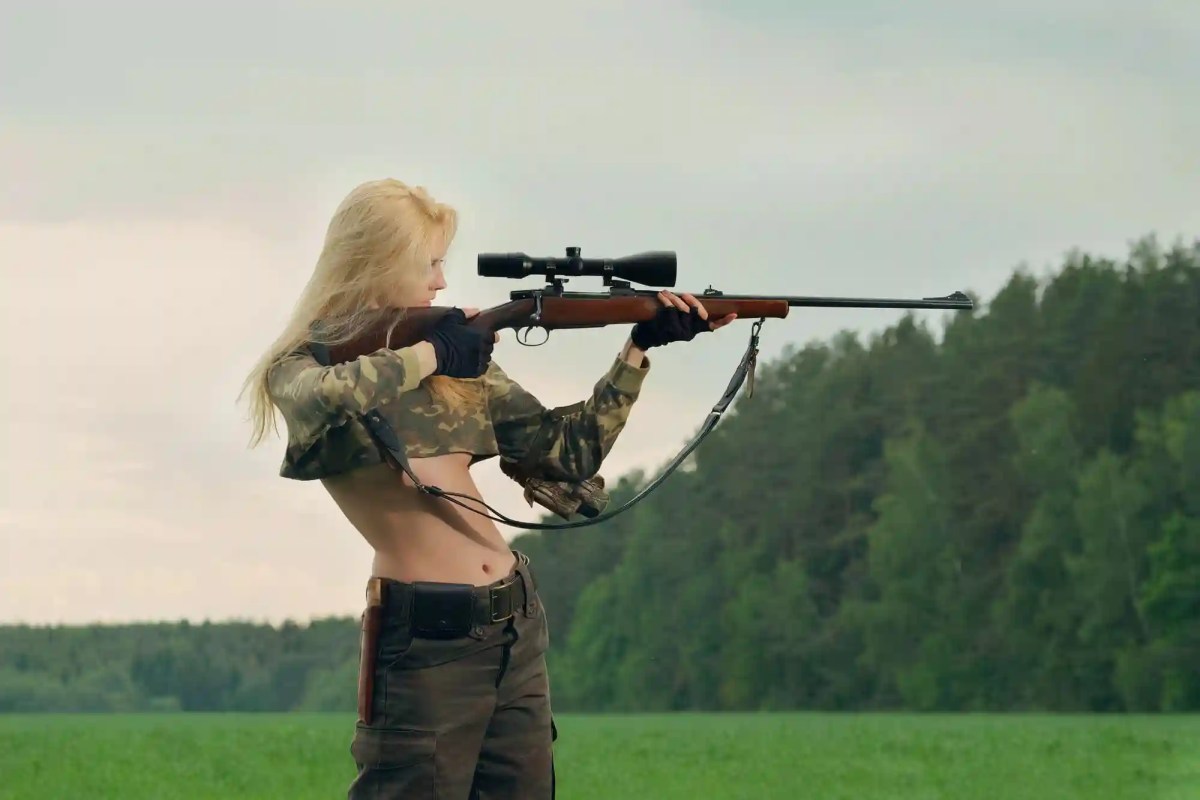
“Green Graduation”
Anyone who wants to carry a lethal weapon should be able to handle it.
What is a matter of course for the police and the army evidently applies only in a limited way to recreational hunting. An investigation by public broadcasting shows how a reporter obtained the authorisation to own firearms as a self-experiment, and how little was required for it.
Passing the examination without ever having been in the forest
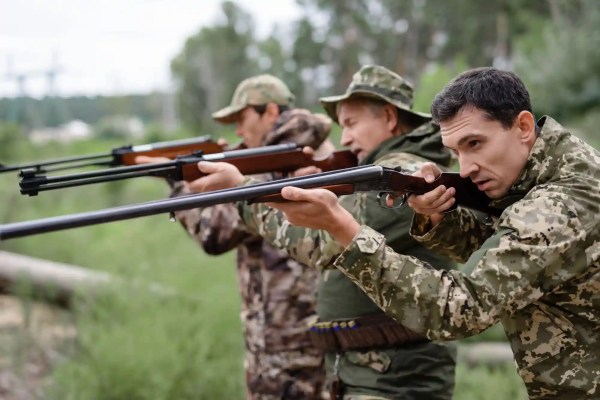
For the report «Shooting, killing, posting: how dangerous is the new hunting hype?» a reporter first investigated how one even obtains a hunting licence at all. She quickly came across commercial offers that promise to provide the authorisation in just two weeks. The so-called crash course compresses the entire training into a few days.
Her own conclusion after passing the examination is devastating: she passed the hunter's examination without ever having been in the forest a single time. The practical reality of recreational hunting, the tracking, addressing and assessing of a live animal out in the open, simply did not feature in her training at all. In the end there was nevertheless a document that legally entitles her to acquire and own firearms.
A disregarded safety rule, and yet a pass
Particularly alarming is the moment of the practical examination. The reporter did not check whether the barrel of the weapon was clear, one of the most fundamental safety rules in handling firearms at all. Such a mistake can end fatally in an emergency. She passed the examination nonetheless.
When confronted about this serious violation, an instructor is said to have laconically explained that the examiners are nice, they want to have hunters. This single sentence sums up the structural problem: where passing becomes a mere formality because one does not want to deter the next generation, the examination loses its actual purpose. It is meant to ensure that only competent persons carry a weapon. That is precisely what it fails to do in this case.
Nine out of ten shots: cruelty to animals foretold
The second scandal concerns the animal. After the shooting exercises, the reporter concluded that of ten shots roughly one had hit well. All the others would have been so poor that they would not have killed the animals but severely injured them. She herself describes this unmistakably for what it is: cruelty to animals.
This is not a minor detail but the core of the problem. Recreational hunting likes to justify itself with the clean, sporting shot that spares the animal suffering. But anyone who, after a two-week crash course, merely wounds nine out of ten animals inflicts precisely the suffering that hunting supposedly seeks to avoid. A wounded animal flees and often perishes in agony only after a long time. The inadequate training thus becomes an immediate animal welfare problem.
The comparison that says it all
Imagine the same procedure with the police or the army. There, people who are to carry a weapon undergo training lasting months to years, with psychological aptitude testing, regular refresher courses and constant official supervision. A candidate who disregards a central safety rule during the examination would fail, without discussion. An instructor who waves such a mistake through with the remark that one wants new recruits, after all, would be untenable.
In recreational hunting it is enough to complete a two-week course and to encounter benevolent examiners. Access to lethal weapons is thereby tied to one of the lowest hurdles conceivable in a society at all, when it comes to tools that can kill.
A hype that outpaces the training
Hunting is in vogue, especially among young people, and hunting content is steadily growing on social media. The German Hunting Association reports record membership; almost half a million people hold a hunting licence, increasingly including young people and women. For the association, this boom is a success that it aggressively promotes.
This is precisely where the responsibility lies that gets lost amid the celebration of record numbers. Anyone who markets access to hunting like a lifestyle product and celebrates membership figures should at the same time ensure that training and safety standards keep pace with this growth. The reporter's self-experiment shows that this is exactly what is not happening. The hype is racing ahead of due diligence.
Not everyone who obtains a licence via a crash course becomes a danger. But the fact that the hurdles are so low that a reporter can pass the examination without ever having been in the forest and without mastering a basic safety rule is a damning indictment of a system that decides over the life and death of wild animals. As long as recreational hunting makes lethal weapons more easily accessible than any other institution that deals with firearms, it remains no serious instrument of wildlife management, but a leisure pastime with deadly consequences for the animals.
More on the subject of recreational hunting: In the dossier The Role and Criticism of Recreational Hunters we shed light on the training, power and self-image of recreational hunters. The scientific evidence is presented in the overview Studies on the Effects of Recreational Hunting.
The position of IG Wild beim Wild: IG Wild beim Wild rejects recreational hunting. Our model is the canton of Geneva, which has managed without recreational hunting since 1974: without hunting seasons, without hunting dogs, without driven hunts, without high seats, without the animal cruelty and crime that go hand in hand with hunting season elsewhere. What has worked there for over fifty years disproves every position paper by JagdSchweiz. An association that bases its policy on claims it refutes in its own documents is not a professional organisation, but a factory for misinformation.
Support our work
With your donation you help protect animals and give a voice to their cause.
Donate now →