Trentino allows bow hunting of wild boars – against a problem that hobby hunting created itself
Ticino hunts wild boars all year round, day and night, and yet the tally doubles. Why the new bow hunting in Trentino solves nothing, but only creates more animal suffering.

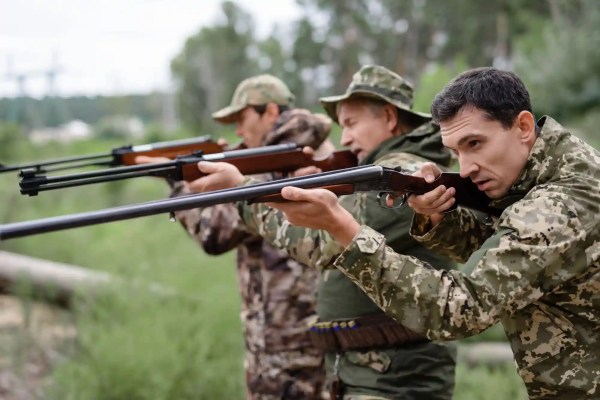
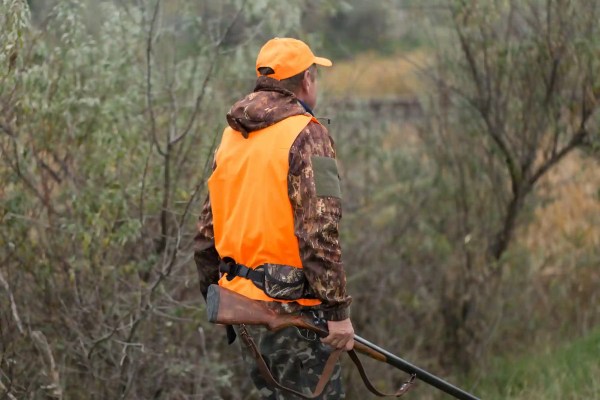
The northern Italian region of Trentino wants to allow bow hunting of wild boars from 2027 in order to curb the growing population.
What is sold as a modern regulatory measure is in truth the next step in a vicious circle that hobby hunting itself set in motion. For the flood of wild boars in Italy is not a natural phenomenon, but to a significant extent the result of hunting interventions.
Hobby hunters introduced the wild boars themselves
The origin of the Italian flood of wild boars lies with hobby hunting. Because the native population had shrunk drastically at the beginning of the 19th century, hobby hunters deliberately imported larger, more prolific wild boars from Hungary and other Eastern European countries and released them in order to be able to keep hunting. These Eastern European animals differ fundamentally from the species originally native to Italy.
While a sow of the native Italian wild boar gave birth to only two to four young on average, the Eastern European form produces eight to ten piglets per year and becomes sexually mature already at the age of six months. The result of this hunting-motivated crossbreeding is a population that reproduces rapidly and is today estimated at over one million animals in Italy. Within two decades it has more than doubled.
The irony is obvious and is named as such even in the Italian media: it is the hobby hunters who caused this plague. Anyone who today wants to combat the wild boars with even more and even newer hunting methods is fighting a problem that, without hobby hunting in this form, would not exist at all.
Why hunting can even accelerate reproduction
The fallacy that more hobby hunting automatically means fewer wild boars persists stubbornly, even though wildlife biology paints a different picture. Wild boars respond to high hunting pressure with increased reproduction. This compensatory effect is a natural balancing mechanism: if a population is heavily decimated, earlier sexual maturity and larger litters set in.
Added to this is the social structure of the sounder. An experienced lead sow controls the reproductive rhythm of the group and suppresses the early maturity of the younger sows. If she is shot, this order collapses, and the young sows become pregnant earlier and in greater numbers. Hobby hunting disproportionately often hits precisely the wrong animals and thus unintentionally accelerates reproduction.
A third factor is baiting, that is, luring the animals with laid-out feed, usually maize, in order to shoot them more easily. This supplementary food improves the animals' condition and their breeding success and thus contributes directly to reproduction. Hobby hunting therefore literally rears up its own prey and creates the very problem it claims to solve.
Ticino proves it with figures: hunting does not regulate, it reproduces
Where the Eastern European wild boars migrate across the border can be observed in Switzerland. In the canton of Ticino, wild boar are hunted year-round, day and night, across the entire territory. If intensive hobby hunting really did regulate, the populations would have to decline. The opposite is the case.
The kill statistics leave no room for interpretation: whereas 1,437 wild boars were still killed in Ticino in 2015, by 2024 the figure had already reached 2,904 — a doubling within ten years. Between 2022 and 2024 alone, kills rose by 73 per cent. In not a single year of this decade did the number of animals killed decline lastingly, despite steadily increasing hunting intensity, and this with around 880 hobby hunters deployed year-round. The hunting bag is thus growing year after year instead of shrinking. That is not a sign of successful regulation, but the opposite.
The reason has been described scientifically. In 2014 the European Food Safety Authority (EFSA) calculated that, under favourable conditions, over 67 per cent of the population would have to be removed each year to achieve a lasting reduction. In open populations with constant immigration from neighbouring areas, this figure is practically unattainable; the actual kill rate in Switzerland stands at around 40 per cent. Anything below this brings no reduction, but merely triggers the compensatory reproduction mechanism, which fuels the populations even further.
This connection is confirmed remarkably clearly by the hunting side itself. The well-known German wild boar expert Norbert Happ noted in the specialist magazine «Wild und Hund» that the flood of offspring is home-made: disordered social conditions in the wild boar population are attributable exclusively to the practice of hunting. The admission could hardly be clearer that hobby hunting does not solve the problem, but creates it. Our articles on the nocturnal wild boar stalking in Grisons and on the Ticino hunting record.
The greater vicious circle: maize as fattening feed
Baiting is only the smaller half of the food problem. The greater part lies in the landscape itself. In Central Europe, the wild boar population is increasing above all due to the greatly expanded cultivation of maize. For months, maize fields provide wild boars with cover and an energy-rich, reliable source of food.
A buffer effect is decisive here. In the past, wild boar populations fluctuated naturally with the forest fruits: in good years for acorn and beech mast, there were many offspring; in bad years, reproduction collapsed. It is precisely this natural regulator that has now been disabled. When the forest mast fails, it is compensated for by widespread maize cultivation. The animals always find food, and good years as well as bad ones lead equally to high breeding success.
And here the circle closes back to livestock farming. The largest part of the maize grown is not food for humans, but fattening feed for farm animals. Around two thirds of maize production goes into animal feed. Through its enormous feed demand, industrial meat production thus creates the very landscape in which wild boars can multiply without limit. Anyone who then combats these wild boars with ever new hunting methods is treating a symptom whose cause lies in the nature of our agriculture and our meat consumption. A vicious circle at whose beginning and end always stands the human being, never the animal.
Bow hunting is particularly problematic from an animal welfare perspective
That bow hunting is now being presented as a gentle alternative to the firearm, because the noise of guns disturbs other animal species, turns the animal welfare question on its head. The arrow does not kill through shock effect, but through bleeding out. An animal not hit fatally at once flees with the arrow in its body and often dies only after a long time and over a long distance in agony. The chances of killing an animal with bow and arrow are roughly ten times smaller than with the rifle.
What may be acoustically gentler for the sounder means, for the individual animal hit, an increased risk of a long, painful death. Because of the sound of the bowstring, the animal may flinch at the shot; the arrow then often does not strike fatally, but only injures the animal; this can lead to «unnecessary suffering». A measure that treats animal welfare so subordinately is not fit to be called progress, but is a step backwards in the treatment of sentient wild animals.
The actual regulator is combated instead of protected
The sustainable answer to excessively high wild boar populations lies not in ever new hunting methods, but in functioning ecosystems with intact predators. Wolf and lynx regulate wildlife populations naturally, without triggering compensatory reproductive surges, because they change the behaviour and spatial use of their prey rather than merely reducing them in numbers.
Yet it is precisely these predators that are themselves hunted in many places, or their return is obstructed, as the current case in Valais shows, where, as the first canton in Switzerland, lynx are to be shot. Roe deer, chamois and wild boars serve as prey primarily as a food source for predators, and not for hobby hunting. As long as the natural regulators are persecuted and populations are artificially kept high through hunting, every culling campaign remains a fight against the consequences of one's own interventions.
No benefit, only more suffering
Putting the evidence together, little remains of the supposed regulatory measure. The wild boar surge in Italy arose from hunting releases. It continues to grow despite year-round, nationwide hunting, because a kill below the critical removal threshold actually boosts reproduction. Bow hunting changes nothing about this mechanism. An arrow does not raise the removal rate above the necessary value; on the contrary: bow hunting has a shorter range and lower accuracy than the rifle and therefore tends to kill fewer animals per stand, not more.
What bow hunting most certainly does change is the suffering of the individual animal. The arrow kills by causing the animal to bleed out, which in the case of a missed shot means a prolonged death agony. The justification that the method is more humane because it disturbs other species less through noise merely shifts the burden from the surroundings onto the animal that has been hit.
This leaves the decisive question: if a method does not reduce populations more effectively, but only kills more agonisingly, then what is it for at all? The obvious answer is that it is not about damage limitation, but about opening up another form of activity for hobby hunting. Bow hunting is regarded in hunting circles as a sporting challenge. The wild boar surge, which hobby hunting itself helped to cause, provides the welcome justification for it. In the end there is no solved problem, but additional animal suffering.
LET'S STAY IN TOUCH!
We would like to send you the latest news and offers in our newsletter.
Support our work
With your donation you help protect animals and give their voice a hearing.
Donate now →