South Tyrol: Shot she-wolf had given birth to pups shortly before
The Province of Bolzano had two she-wolves killed in the summer. Files show that the first may have been suckling pups, that neither of the two was genetically linked to the kills examined, and that the attacks on livestock continued afterwards.
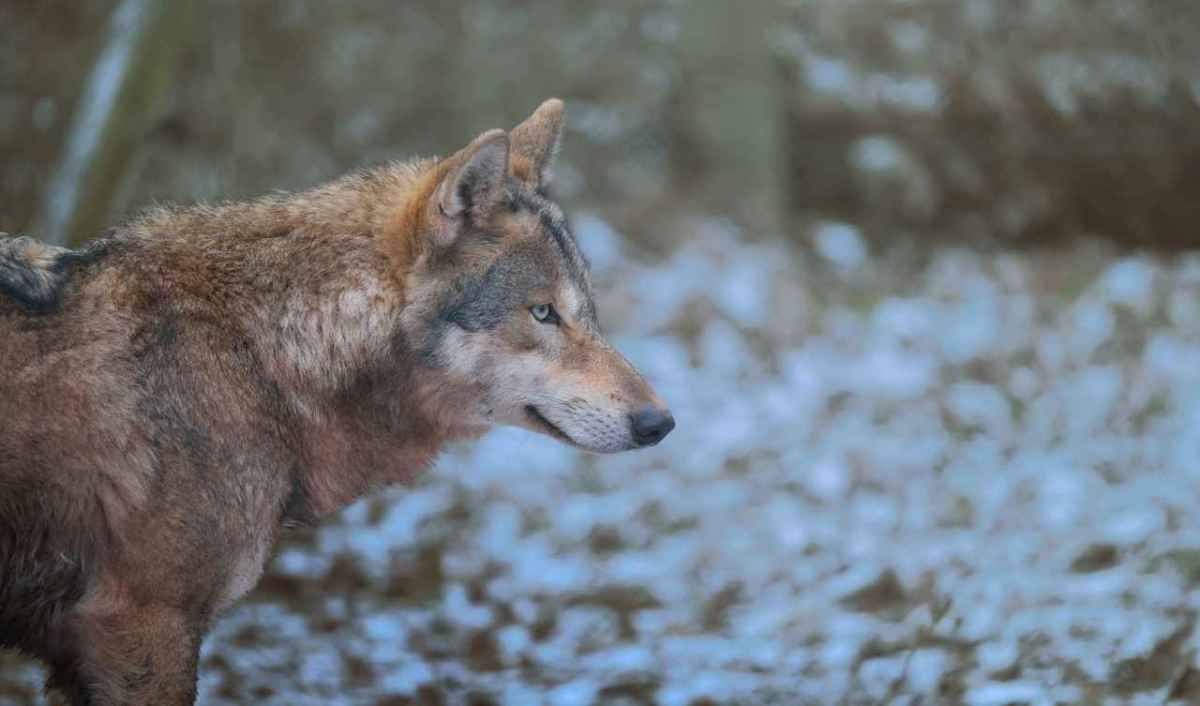
Stock image. Photo: Ma Ti / Unsplash
Four Pups
The she-wolf with the identifier WBZ-F023, which the South Tyrol Provincial Forestry Corps shot on 5 July 2026 on the Fojedöra alpine pasture in the municipality of Enneberg, had given birth to pups shortly before her death. This is revealed by the necropsy report that the association «Io non ho paura del lupo» obtained through a freedom-of-information request to the Autonomous Province of Bolzano. The she-wolf may have been suckling up to seven pups. What became of them is not known. The association has therefore turned to the Italian Ministry of the Environment, the national environmental agency ISPRA and the Province, as Greenreport and Nordest24 reported on 2 November.
Two she-wolves killed, the attacks continued
The Forestry Corps had justified the first kill by citing «numerous wolf attacks» on the pasture (STOL). A second she-wolf, WBZ-F058, followed on 31 August 2026. The Province is refusing to release the necropsy report on this animal to the association, which says it has not been given adequate grounds.
According to the files, the kill orders applied to the entire municipal territory of Enneberg, Prags and Olang, together around 300 square kilometres. The documents give no criteria as to where exactly shooting was permitted. Genetic analyses have not individually linked either of the two she-wolves to the livestock kills examined. Involvement of the animals killed was therefore never proven. The association concedes that the lack of a match does not rule out involvement. Nor does it demand that every animal be identified, but that kills take place in the immediate vicinity of the attack sites, as ISPRA recommends. This is precisely what orders covering an area of 300 square kilometres left open.
The attacks did not stop all the same: between 7 July and 27 August 2026, that is, after the first female wolf had been killed, eleven more animals were killed on the alpine pastures. New attacks also occurred after the second kill. “Two female wolves were killed, but livestock keepers have continued to suffer losses,” the association states.
What ISPRA says
The province relies on an ISPRA opinion that sets a maximum of three wolves for 2026 as a sustainable removal for South Tyrol. According to the association, ISPRA clarified on 19 October 2026 that this figure is not a licence to kill. Each individual kill must meet three conditions: serious damage or a threat to safety, no effective alternatives, and no threat to the population. ISPRA also requires a control plan submitted in advance or, if there is none, a specific assessment for each individual intervention. According to the association, the files show neither of these, only the general figure of three.
According to the association, ISPRA also states that the failure of a removal does not justify new kills and that every intervention must be accompanied by stronger prevention. “The possibility of killing up to three wolves does not mean that the province can decide on this arbitrarily,” the association writes. It demands a review of whether the decrees are compatible with Article 19 of the Italian hunting act 157/1992 and with EU law, and also calls into question the provincial law on so-called protected pastures.
Third kill halted by the court
In September, the province wanted a third wolf killed, this time in Ulten and Kastelbell-Tschars, across more than 260 square kilometres. Provincial governor Arno Kompatscher signed the decree on 11 September 2026. It refers to 22 sheep and four goats that were found dead or went missing between 15 June and 8 September (heidelberg24). WWF Italy called the province's strategy “unacceptable and ineffective”.
The kill did not take place. At the request of LNDC Animal Protection, the president of the Bolzano administrative court suspended the decree as early as 14 September. On 15 October, the court panel confirmed the suspension owing to deficiencies in the investigation and in the reasoning (“difetto di istruttoria e di motivazione”) and scheduled the main hearing for 27 January 2027 (ANSA, STOL). According to the order, the province had also exhausted its 2026 quota with its three decrees.
The pattern is familiar from Switzerland
The Marebbe case follows a pattern that Wild beim Wild also documents north of the border. In the canton of Schwyz, during the 2026 regulation, four pups of the Chöpfenberg pack were killed, but not the wolves proven to have caused the kills. The Wolf Counter 2026/27 shows how many wolves have been killed in Switzerland during the current regulation period. South Tyrol itself is no new case either: for an earlier kill, the province already spent around 50,000 euros on a single wolf.
In Italy, the pressure on the wolf is likely to keep rising. The so-called “Sparatutto” law, which the Senate has already passed and on which the Chamber of Deputies will deliberate on 27 November, would replace the 1992 hunting act and weaken the opinions of ISPRA.
Context
Under European law, a kill is meant to be the exception, preventing a specific harm. In Marebbe it struck an animal that nobody had identified as the culprit, and it did so in the weeks when pups depend heavily on the care of the adults. The kills did not stop afterwards. This shows how little killing achieves when the alpine pastures are not consistently secured with herd protection, shepherding and night pens. That the administrative court stopped the third kill because of inadequate investigation and justification confirms the criticism of the province's practice. When an authority then also keeps the necropsy of the second animal under wraps, the impression emerges that the kills are above all a political signal to alpine farming. The Province of Bolzano should open its files and explain what happened to the pups.
More on the subject of recreational hunting: In our dossiers on recreational hunting gather fact-checks, analyses and background reports. What the research says about this is shown by Hunting fact-checked: the state of research.
The position of IG Wild beim Wild: IG Wild beim Wild rejects recreational hunting. Our model is the canton of Geneva, which has managed without recreational hunting since 1974: without hunting seasons, without hunting dogs, without driven hunts, without high seats, without the animal cruelty and crime that go hand in hand with hunting season elsewhere. What has worked there for over fifty years disproves every position paper by JagdSchweiz. An association that bases its policy on claims it refutes in its own documents is not a professional organisation, but a factory for misinformation.
Wild animals need a voice
Once a week: research, petitions and background information on recreational hunting. Free of charge and can be unsubscribed from at any time.

All articles are written by IG Wild beim Wild as well as by external co-authors. Research, structuring and editorial processes may be supported by AI-assisted tools.
Support our work
With your donation you help protect animals and give their voice a hearing.
Donate now →