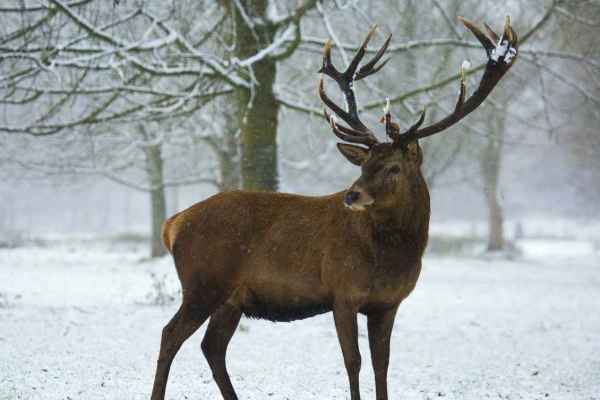
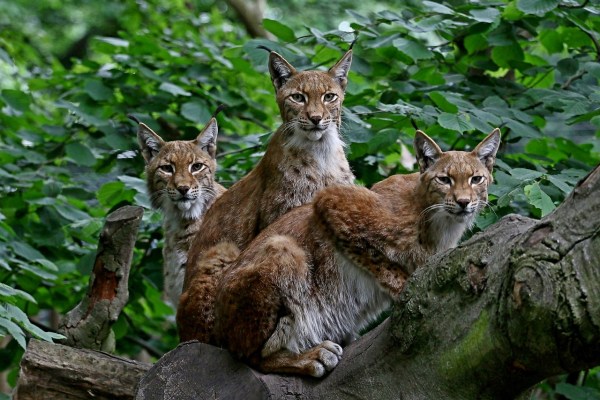
Forest-wildlife report for Central Grisons: problem areas almost tripled, share of wildlife quiet zones half the cantonal figure
Hunting measures were largely implemented, while the protection of undisturbed habitats was only partly achieved. The canton's own report shows that kills alone do not secure the protection forest between Davos, Bergün and Surses.
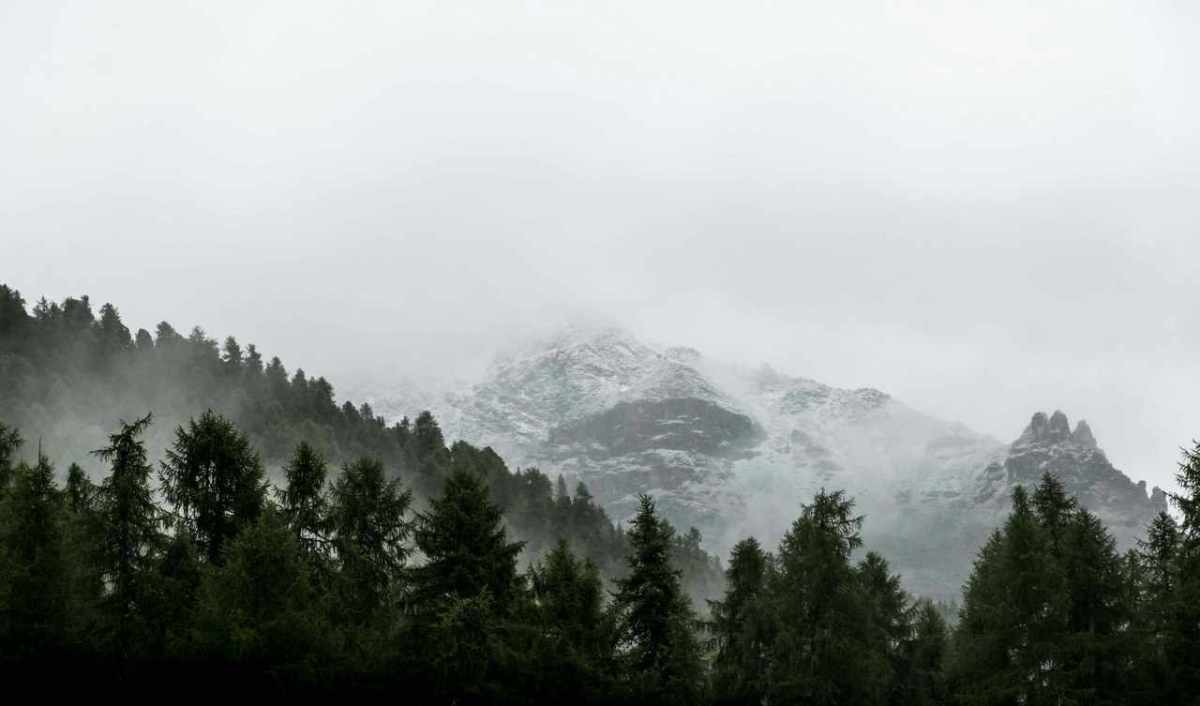
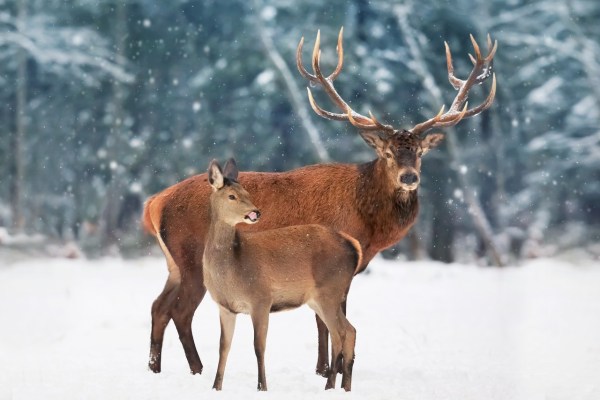
Photo: mike dennler / Unsplash
“What the Forest Calls”
On 18 November, the canton of Grisons presented the Davos-Albula-Surses forest-wildlife report in Bergün. On 52 per cent of the assessed forest area in Surses, the Albula valley and the Davos region, the specialist agencies rate the influence of red deer, roe deer and chamois on forest regeneration as considerable to very great. Affected species include silver fir, sycamore maple and rowan, particularly in the protection forests above settlements and transport routes between Bergün and the Schin Gorge. In its Press Release the canton points to reduced wildlife populations and at the same time states that forest-wildlife conflicts cannot be resolved by recreational hunting alone. On the decisive goal, natural forest regeneration, the synthesis report still gives an unsatisfactory verdict, and on the protection of undisturbed habitats it documents considerable gaps.
Wild beim Wild has already summarised the key data of the report and the role of the wolf packs in the Grisons ticker for the 2026/27 hunting season. This article follows up on the points that have barely featured in coverage so far: disturbance, wildlife quiet zones, costs, and the imbalance between implemented hunting measures and neglected habitat protection.
Since the 2009 report: significantly more designated problem areas
Even the previous report from 2009 relied on a "sufficiently high hunting pressure" on all ungulate species. The Office for Forests and Natural Hazards and the Office for Hunting and Fisheries now soberly record the result: the regeneration situation has "deteriorated markedly rather than improved". The designated problem and action areas grew from 4,102 to 11,818 hectares, from 14 to 44 per cent of the forest area. Only 20 to 25 per cent of the former problem areas no longer count as such today. Part of the increase stems from the new, area-wide assessment, which did not yet exist in 2009. According to the report, however, many of the newly designated areas already had a regeneration deficit back then that nobody had recorded.
The two percentages measure different things: the 52 per cent describes the forest area with considerable to very great wildlife influence according to the 2024 assessment. The 44 per cent are the problem and action areas derived from it, on which forest functions can no longer be fulfilled.
In the case of red deer, the population initially rose sharply after 2009, to an estimated 3,000 animals in 2017. With high kill figures and with the involvement of wolf packs, it fell by 23 per cent by 2024. The estimated spring population in 2024 was 2,310 deer, roughly back at the 2009 level. The reduction target of the "Lebensraum Wald-Wild 2021" strategy is considered met, and the stabilisation phase has been running since 2024. The report points out that lower populations only show up in regeneration after a delay of several years. The previous target of no more than 25 per cent problem areas is nevertheless "not achievable in the short to medium term". The aim now is to halve the areas from 11,818 to 5,909 hectares by 2032.
The report itself: kills alone do not solve the problem
The report is remarkably clear on what population reduction can achieve. It may bring an improvement, but "cannot solve the forest-wildlife problem on its own". Food supply, disturbance, climate, cover and the presence of predators mean that red deer, roe deer and chamois gather in protection forests even when populations are smaller.
Disturbance is the central issue. Wherever people are regularly out and about, non-human animals retreat to quiet, well-sheltered areas, and according to the report these are “often important protection forests”. They then visit open ground to feed only at night, or not at all. In winter, every disturbance raises energy consumption and, with it, the need to eat buds and shoots. Nature-based summer tourism has increased sharply, and since the Covid pandemic so have biking, hiking, ski touring and snowshoeing. The report expressly names forest roads used by leisure sports enthusiasts, recreational hunters, people gathering poles and mushrooms, and dogs running free. How heavily human noise burdens wild animals in general was shown most recently by a Science study on noise-related mortality.
Wildlife quiet zones: 6 instead of 12 per cent of the area
Around 6 per cent of the report area has been designated as a wildlife quiet zone with an entry ban, half the cantonal average of just over 12 per cent. Some of these zones also lie above the tree line and serve to protect grouse, mountain hares, chamois and ibex. The 2009 goal of securing undisturbed habitats has been implemented “only in part”. For the coming years, the authorities attribute “great importance” to additional wildlife quiet zones, above all in areas heavily used for tourism. The report names Davos, Savognin, Lenzerheide, Bergün and Bivio as winter sports resorts. The municipalities are primarily responsible, as forest owners and licensing authorities, including for driving bans on forest roads.
Wild beim Wild has described the same pattern for red deer in the canton of St. Gallen: those who drive deer out of the open country find them again in the forest. More on this: Red deer petition in the St. Gallen cantonal parliament: more shots, not a word on habitat.
Recreational hunting as part of the disturbance
Recreational hunting is itself part of the disturbance. According to the Wildlife sub-report the wildlife protection areas shield red deer in summer and rutting areas "from disturbance by hunting activity". For chamois, they are meant to protect alpine habitats that are easily disturbed by recreational hunting, which can push the animals into the forest. At the same time, 40 to 50 per cent of all kills fall within the first five days of the high hunt, and in 2024, 43 per cent of red deer were killed within or in the sphere of influence of wildlife protection areas. After the high red deer populations of 2019 and 2020, protection areas, including the federal hunting ban area Ela, were opened wholly or partly or given "soft boundaries". Most of these measures were later reversed because of their limited long-term success, and they brought no additional kills.
On top of this come the special hunt in November and December, priority hunting efforts, kills by the wildlife wardens in winter, suspended altitude limits for chamois hunting, and shooting lanes that are in future to be created "as a priority in areas of action and problem areas", in other words precisely in those protection forests that are at issue. On the chamois population, which has declined overall over the past 20 years, the report concedes that hunting too contributes to the decline, "intentionally or unintentionally". In the priority areas, the chamois hunt is nevertheless being extended until the end of the hunting season. The report does not examine how heavily the various forms of recreational hunting burden the protection forests concerned. How the ongoing special hunt is progressing is documented by the Grisons Ticker; the background can be found under Grisons sticks to controversial special hunt.
Millions for fences that only help in places
From 2012 to 2022, more than 2.6 million francs flowed into wildlife protection fences, individual protection measures and chemical agents in the region, paid for by the Confederation, the canton and forest owners. According to the report, this protected only a "minimal share" of the forest area, and ongoing maintenance is not included. For the case study examined, the Tinizong protection forest, the report puts the additional costs of preventing wildlife damage, assuming wildlife pressure remains unchanged, at around 7.1 million francs over 50 years, or 142,000 francs per year, for this one protection forest alone. One example from the Surselva: Sumvitg: CHF 1.5 million for a fence around 25 hectares of protection forest.
Wolf: a helper in the report, a kill target in practice
Four wolf packs have formed in the area in recent years: Muchetta, Calderas, Lenzerhorn and Jatzhorn. Since their formation, the distribution of red deer has been «markedly better», and large concentrations have become rarer. Around 60 per cent of the red deer killed by wolves and found since 2012 were calves, and a master's thesis at BOKU Vienna confirmed that population growth declines in regions with wolf packs. In the case of roe deer and chamois, predators could reduce populations to the point where recreational hunting has to intervene less heavily. At the same time, on 26 August 2026 the FOEN approved the removal of two thirds of the young animals in the Muchetta and Jatzhorn packs, as well as the removal of the entire Calderas pack (FOEN overview). The current situation is set out in the Wolf Kill Counter Switzerland 2026/27, and the ecological connections in the article How the wolf helps the forest.
Commentary: The forest needs more than kill quotas
The report itself acknowledges the imbalance: the hunting measures from 2009 were largely implemented, while the securing of suitable and undisturbed habitats was only partly achieved. A population reduction that has been achieved is not yet proof that the problem of forest and wildlife has been solved. Success has to be measured by forest regeneration and by whether undisturbed habitats are actually being secured.
Most of the levers needed are set out in the report itself: more wildlife quiet zones, at least to the cantonal level, the management of recreational activity, driving bans on forest roads, and quiet open land where red deer can feed during the day. This also includes wolf packs that are allowed to do their work rather than being decimated. As long as Grisons mainly turns the screw of the kill quota while hesitating on habitat protection, the federal government, the canton and the municipalities will keep paying for fences, and villages such as Bergün will keep waiting for a forest that protects them.
Do you have a tip, a source or a correction for this article? Write to us.
Seen something yourself?
A driven hunt next to a hiking trail, a shot fired near houses, a trap in the forest or an injured wild animal: report it to the Recreational Hunter Radar. We check every tip-off and treat your details confidentially.
More on the subject of recreational hunting: In our dossiers on the criticism of recreational hunting gather fact-checks, analyses and background reports. What the research says about this is shown by Hunting fact-checked: the state of research.
The position of IG Wild beim Wild: IG Wild beim Wild rejects recreational hunting. Our model is the canton of Geneva, which has managed without recreational hunting since 1974: without hunting seasons, without hunting dogs, without driven hunts, without high seats, without the animal cruelty and crime that go hand in hand with hunting season elsewhere. What has worked there for over fifty years disproves every position paper by JagdSchweiz. An association that bases its policy on claims it refutes in its own documents is not a professional organisation, but a factory for misinformation.
Wild animals need a voice
Investigations, petitions and background on recreational hunting. As a thank-you, you will immediately receive our free guide «Recreational hunting on your doorstep: what you can do».
Support our work
With your donation you help protect animals and give their voice a hearing.
Donate now →