Italy: Government approves circus draft, LAV criticises missing ban
According to LAV, the draft does not include the phase-out of animal acts required by a 2022 law. The organisation is appealing to President Mattarella.
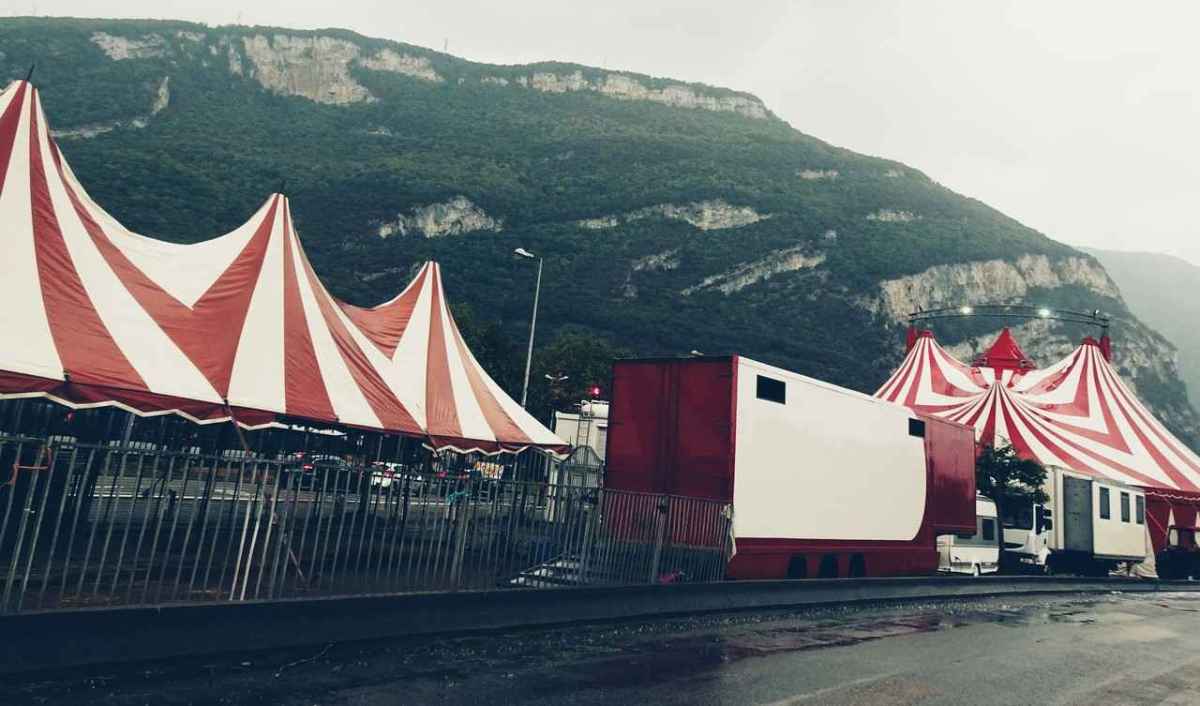
Symbolic image. Photo: Umanoide / Unsplash
On 18 November 2026, the Italian Council of Ministers provisionally approved the draft of the «Codice dello spettacolo». The reform reorganises the rules for the performing arts, from music and theatre to circuses and travelling fairground operators. It is also intended to implement the legally mandated gradual phase-out of animal acts in circuses. According to the animal rights organisation LAV, however, the draft contains no ban: state funding is merely to be withdrawn from 2031 for certain programmes involving wild animals.
What the 2022 law requires
The basis is Law 106/2022 («legge delega»), by which parliament instructed the government to reorganise the performing arts. It obliges the government to gradually end the use of non-human animals in circuses and travelling fairground operations. The law itself is not a directly applicable ban: it sets out the phase-out, which the government must implement by decree. The Ministry of Culture under Alessandro Giuli is responsible. The deadline for the implementing decree has been postponed several times, most recently to the end of 2026.
What the draft is said to contain
The government has not announced any details of the planned rules on animals. According to advance information from LAV, which the news agency DIRE also reports on, programmes featuring dangerous wild animal species, or species whose keeping is already prohibited, are to receive no more money from the state performing arts fund from 2031. According to this, the draft does not provide for a direct ban on animal acts.
The LAV points out that circuses keeping animals illegally should already not receive any public money. The theatre portal ateatro.it, by contrast, reads the draft as a ban from 2031. The accounts contradict each other. For a reliable legal assessment, the full wording of the draft is decisive; moreover, the provision may still be amended before it is finally adopted.
LAV appeals to President Mattarella
LAV president Gianluca Felicetti speaks of contempt for parliament and a breach of animal welfare, which Article 9 of the Italian Constitution has enshrined since 2022. The organisation appeals to President Sergio Mattarella to insist that the law be upheld. It points to its investigation of 19 Italian circuses in which, by its own account, more than 600 non-human animals are used. The LAV also cites more than 50 countries as models for a circus without animals, but does not break down the respective regulations in its statement.
Member of parliament Francesco Emilio Borrelli (AVS) also criticises the draft: he says it effectively overrides the 2022 law, and that Minister Giuli should withdraw it, as he told AgenziaCult.
What happens next
The draft has only been provisionally approved. Before final adoption, it must go through the required opinions of the parliamentary committees as well as the regions and municipalities. The provision can still be amended in this process. The LAV demands that the phase-out of animal acts provided for by law be implemented in a binding manner. The violence behind the circus ring was revealed by an LAV investigation this summer: Undercover in the circus: Four months of violence behind the ring.
Hungary as a counter-example
Hungary shows what a binding phase-out can look like. From 1 January 2027, the acquisition, breeding, training and circus performances of expressly listed wild animal species and their hybrids, among other things, will be prohibited there. Animals already held legally may remain with their current keepers under a transitional arrangement, but may neither be bred nor exhibited. Wild beim Wild has reported on the new regulation: Hungary bans wild animals in circuses from 2027.
IG Wild beim Wild campaigns for wild animals in freedom, against their exploitation in the circus ring just as against recreational hunting. It advocates wildlife management on the model of the the canton of Geneva, where recreational hunting has been banned since 1974.
Do you have a tip, a source or a correction for this article? Write to us.
Wild animals need a voice
Investigations, petitions and background on recreational hunting. As a thank-you, you will immediately receive our free guide «Recreational hunting on your doorstep: what you can do».
Support our work
With your donation you help protect animals and give their voice a hearing.
Donate now →