Hunting Victims in Italy: The AVC Dossier 2025/2026
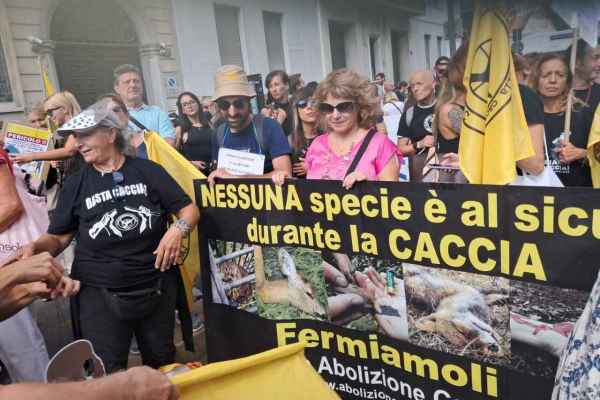
With the presentation of its new dossier 'Hunting Victims 2025/2026', the AVC – the Observatory for Hunting Victims in Italy – once again delivers a shocking assessment. It is the 19th annual dossier from an institution that has documented for years what recreational hunting actually means beyond the romantic myths: death, injury, violence, breaches of the law and a growing threat to people, animals and public spaces.

«What Begins at the High Seat»
The dossier makes clear that the 2025/2026 hunting season is no exception, but part of an unbroken chain of incidents.
Deaths, serious injuries, misuse of hunting weapons and criminal behaviour characterise the chronology again this year. Particularly alarming is that people with no connection whatsoever to recreational hunting are increasingly affected. Walkers, neighbours, family members or people who happen to be present become victims of an armed leisure activity that stubbornly refuses to adapt to social change.
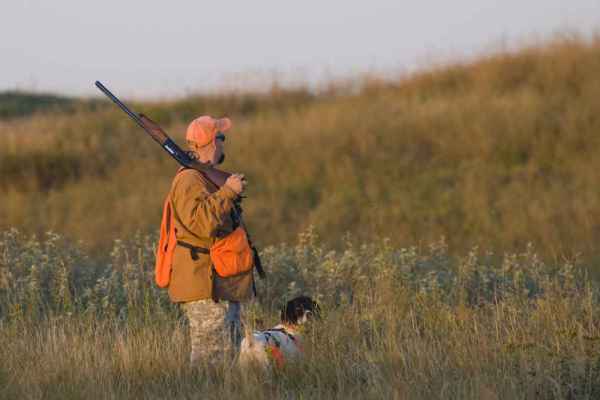
The AVC deliberately defines the term 'recreational hunter' broadly. It covers everyone who hunts, regardless of whether they hold a valid licence or act illegally. This perspective is crucial, because the cases documented in the dossier show that the dangers do not end at formal permits. The risks stem from the practice itself, from weapons in civilian spaces and from a culture that normalises violence against animals and people. More on the fundamental problem of recreational hunting as a societal risk can be found in the dossier section of IG Wild beim Wild.
Officially, according to the Interior Ministry, there are still around 588,000 valid hunting licences in Italy. This figure has been falling for years. In the 1980s and 1990s it stood at more than 1.5 million. Yet the decline in recreational hunters by no means means less harm. On the contrary: the dossier shows an inverse proportionality. Fewer recreational hunters, but a persistently high number of victims, in some cases even with a growing danger to bystanders. Illegal recreational hunting and poaching remain a massive unrecorded area that further distorts the official figures.
Particularly striking is the ratio between recreational hunter victims and non-hunter victims. For the 2025/2026 season, the dossier counts 33 recreational hunters as victims, 10 of whom died and 23 of whom were injured. At the same time, 13 people who had nothing to do with hunting activities were killed or injured: 2 dead and 11 injured. This figure is not a marginal phenomenon but a structural warning sign. Piedmont and Sicily (7 each) top the grim statistics, followed by Tuscany (6) and Sardinia (5). These are regions, in other words, where recreational hunting is deeply rooted in everyday culture and is accordingly questioned very little.
Despite these facts, no serious political debate is taking place. The media often report episodically and in isolation, without making the structural connection visible. Recreational hunting continues to be portrayed as tradition, as a necessary instrument or as a harmless hobby. It is precisely this trivialisation that we have been criticising for years at Wild beim Wild, for example in our analyses of the Psychology of recreational hunting and of the role of the legitimisation of violence in rural areas.
Political developments in Italy are making the situation even worse. Under the Meloni government, laws are being pushed through that further extend hunting interests and undermine fundamental rights. Particularly explosive is Bill 1552, with its planned amendment of Article 16 of Law 157/1992. It opens the door to recreational hunting on private land against the will of the owners and in favour of economic interests. This is not only an attack on property rights, but also on the public's sense of safety.
The AVC dossier is methodologically sound. It excludes cases that cannot be directly attributed to the use of hunting weapons, such as falls or heart attacks. Ordinary crime unrelated to hunting is also left out. All the more serious are the figures that remain. They show that recreational hunting is not an isolated conservation tool but a dangerous practice with real victims. Human victims, pets, synanthropic animals and wild animals are all equally affected. Further background on the ethical dimension can be found at:
In the end, this dossier forces a clear decision. Either an armed, anachronistic and increasingly socially unacceptable activity continues to be tolerated, or there is a change of direction towards an ethic of life. An ethic that places safety, animal welfare and social peace above vested interests. The figures from Italy are not a special case. They are a warning signal for Europe.
More on the subject of recreational hunting: In the dossier The Role and Criticism of Recreational Hunters we shed light on the training, power and self-image of recreational hunters. The scientific evidence is presented in the overview Studies on the Effects of Recreational Hunting.
The position of IG Wild beim Wild: IG Wild beim Wild rejects recreational hunting. Our model is the canton of Geneva, which has managed without recreational hunting since 1974: without hunting seasons, without hunting dogs, without driven hunts, without high seats, without the animal cruelty and crime that go hand in hand with hunting season elsewhere. What has worked there for over fifty years disproves every position paper by JagdSchweiz. An association that bases its policy on claims it refutes in its own documents is not a professional organisation, but a factory for misinformation.
Wild animals need a voice
Once a week: research, petitions and background information on recreational hunting. Free of charge and can be unsubscribed from at any time.

All articles are written by IG Wild beim Wild as well as by external co-authors. Research, structuring and editorial processes may be supported by AI-assisted tools.
Support our work
With your donation you help protect animals and give their voice a hearing.
Donate now →