Technology in the Fight Against Poaching in Italy
The reintroduction of the Northern Bald Ibis in Europe is a success story, yet poaching in Italy remains a major threat.

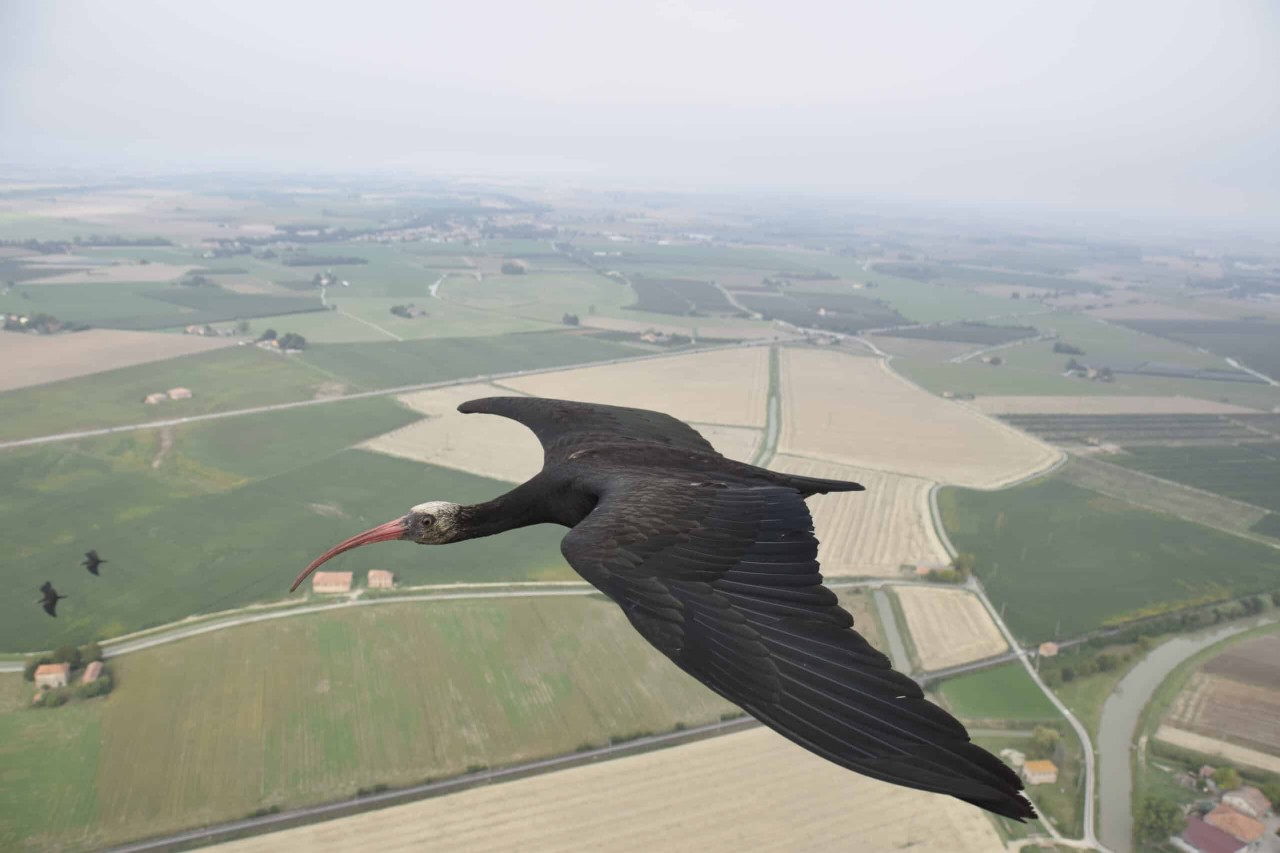
During the 2024 autumn migration alone, eight Northern Bald Ibises were poached in Italy.
One of them was the male Puck. The new GPS technology helped identify the perpetrator, a recreational hunter with a hunting licence. The LIFE project highlights the potential of technology in the fight against poaching and calls on hunting associations to take more effective action.
Northern Bald Ibis: Symbol of Hope and Victim of Poaching
Over the past two decades, an extraordinary conservation project has been carried out in Europe, with the aim of reintroducing the Northern Bald Ibis as a migratory bird in Europe, after it was driven to extinction — primarily through hunting — more than four centuries ago.
This project marks the world's first successful reintroduction of a migratory bird species. Each year, the Northern Bald Ibises of this established population migrate between their breeding grounds in the northern and southern Alpine foothills and their wintering grounds at the WWF Oasi Laguna di Orbetello in southern Tuscany.
The species has become a symbol of hope in the face of growing threats to biological biodiversity One of the birds, the male known as “Puck,” hatched in 2021 as a wild bird in Kuchl in the state of Salzburg and learned the migration route to Tuscany from its conspecifics.
GPS Technology Exposes Recreational Hunter
Tragically, Puck was shot in November 2024 during a stopover in the Apennines in Italy. Thanks to the remote monitoring of northern bald ibises using solar-powered GPS devices, an investigation was immediately initiated. The GPS device data enabled precise location determination, allowing the perpetrator to be quickly identified — he is a recreational hunter and member of an Italian hunting association.
Following a house search, the perpetrator had his weapon confiscated and his hunting licence revoked. Roberta Peroni, a member of the European LIFE project, commented: «The recreational hunter is charged with killing an individual of a protected species and causing significant harm to an endangered population. We hope for a verdict that reflects the severity of this crime. Furthermore, we will file a civil lawsuit and seek damages for the species conservation project.» Johannes Fritz, manager of the LIFE project, emphasised the importance of modern technologies in the fight against poaching and stated: «For over 20 years we have been fighting against the poaching of northern bald ibises in Italy. The Puck case shows how innovative technology can help identify poachers and bring them to justice.»
All identified poachers were licensed recreational hunters
Puck's death highlights a general problem: approximately one third of northern bald ibis losses in Italy are attributable to poaching. This environmental crime also endangers many other protected migratory bird species to a similar extent. The largest Italian hunting association, Federazione Italiana della Caccia (FIdC), recently presented itself in a press release as a committed partner in the protection of species such as the northern bald ibis, arguing that poaching has nothing to do with legal recreational hunting and that recreational hunters are among the groups most affected by poaching.
The observations of the LIFE project, however, contradict this narrative. In fact, the data show that illegal shootings in Italy occur predominantly during the legal hunting season and in hunting areas. All suspects identified to date were licensed recreational hunters and members of Italian hunting associations. This raises doubts about the statements made by the hunting association. A pattern that also refutes the hunting myths in this country.
Fritz welcomes the commitment of hunting associations to species conservation, but also calls for concrete measures. "Recreational hunters are not only victims of poaching; many of the poachers are among their own ranks. It is crucial that hunting associations enforce strict measures against criminal behavior within their membership."
The ongoing poaching represents a significant threat to the conservation of the northern bald ibis and other endangered species. This problem is compounded by the discrepancy between the public statements of hunting associations and their handling of the actual facts. This acute threat to biodiversity requires increased cooperation between species conservation organizations and hunting associations in order to protect biological diversity and combat poaching effectively.
Background Information
According to a report by BirdLife International, 5.6 million birds are killed illegally in Italy every year, corresponding to a rate of 19 birds per square kilometer.
In a recently conducted study, Serratosa et al. (2024) examined the causes of death among 45 migratory bird species in Eurasian and African regions. 22% of deaths are caused by illegal recreational hunting. The Northern Bald Ibis LIFE project (LIFE20 NAT/AT/000049; LIFE NBI) is being carried out with ten partners under the leadership of Tiergarten Schönbrunn.
This initiative brings together international research and species conservation organizations with the primary goal of establishing a self-sustaining northern bald ibis population in Europe .
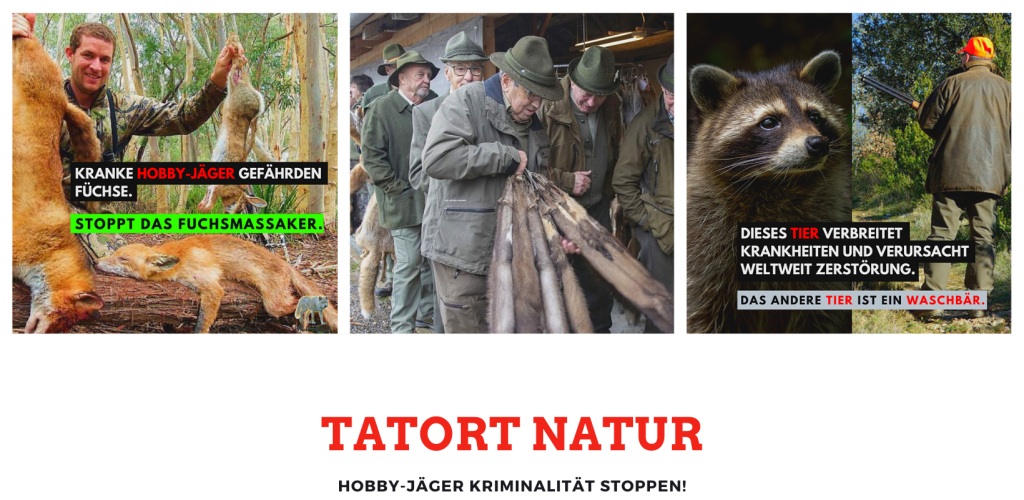
More on the subject of recreational hunting: In our dossiers on the criticism of recreational hunting gather fact-checks, analyses and background reports. What the research says about this is shown by Hunting fact-checked: the state of research.
The position of IG Wild beim Wild: IG Wild beim Wild rejects recreational hunting. Our model is the canton of Geneva, which has managed without recreational hunting since 1974: without hunting seasons, without hunting dogs, without driven hunts, without high seats, without the animal cruelty and crime that go hand in hand with hunting season elsewhere. What has worked there for over fifty years disproves every position paper by JagdSchweiz. An association that bases its policy on claims it refutes in its own documents is not a professional organisation, but a factory for misinformation.