Graubünden holds firm on controversial special hunt
A popular initiative to abolish the special hunt was narrowly rejected at the ballot box. But the next initiative is already in the pipeline.

The popular initiative to abolish the special hunt, launched by circles of recreational hunters and nature conservationists, was submitted with a record number of over 10’000 signatures.
At the ballot box, it nonetheless fell short of adoption: the proposal was rejected by 36’181 votes to 30’533, with a turnout of 49.28 percent.
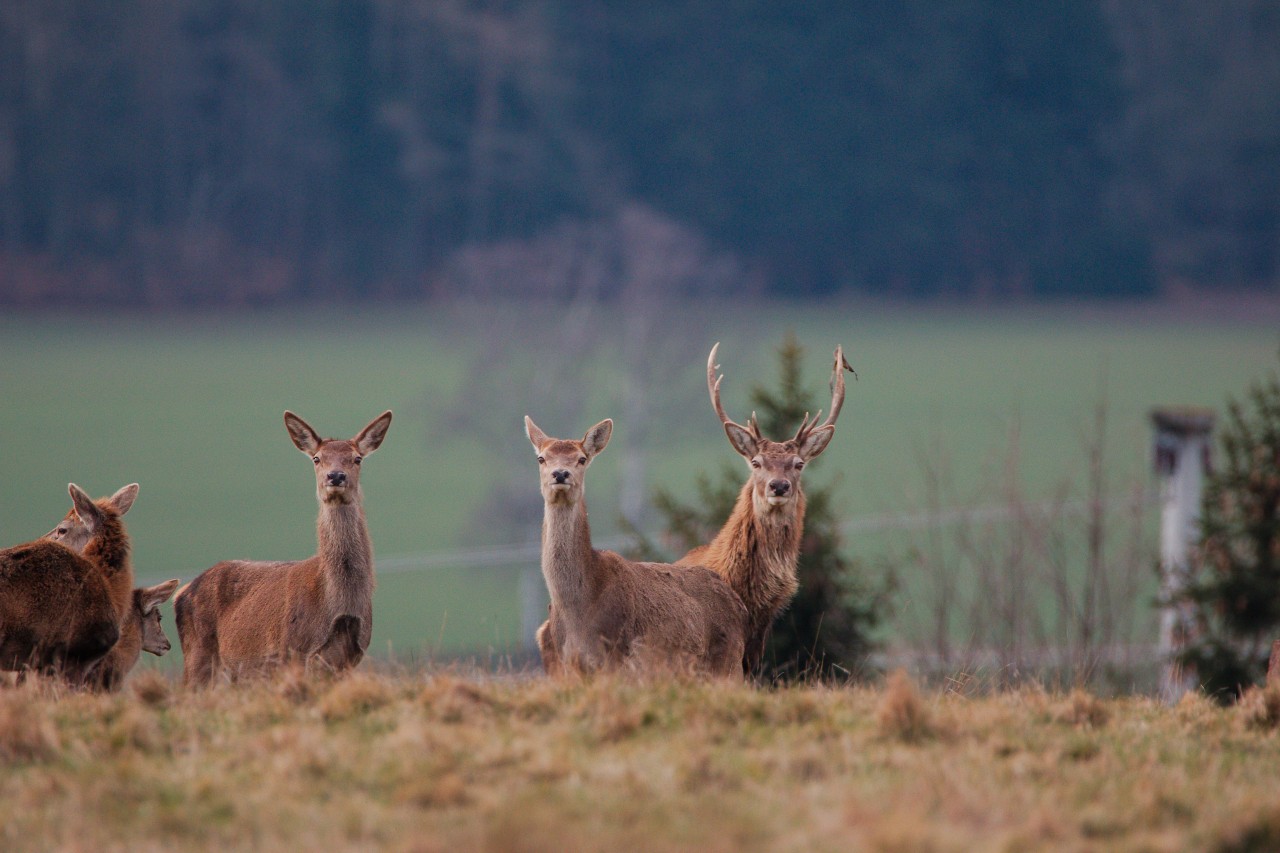
The initiators wanted to abolish the second part of the two-stage hunting concept: the special hunt. It takes place at the end of November and beginning of December when too few deer and/or roe deer have been shot during the regular hunt in September.
To reduce the red deer and sometimes also roe deer population, relaxed regulations apply during the special hunt. Practically everything that is illegal during the main hunt is permitted during the special hunt. Pregnant and nursing hinds, as well as roe does and their young — entire social structures — are often gunned down without mercy, respect, or hunting ethics, sometimes even in deep snow, as if in a blood frenzy. When pregnant hinds are shot, the unborn young (foetuses) suffocate in the womb. The initiators, who describe themselves as recreational hunters and animal lovers, therefore speak of scenes that are morally, ethically, and from a hunting standpoint utterly reprehensible.
The two-stage Graubünden hunt has been highly controversial since 1989. The Graubünden hunt is the most disreputable hunting event in Switzerland (around 1,000 fines and charges against recreational hunters every year).
The special hunt is proof that hunting ethics are a mirage.
IG Wild beim Wild
Hunting pretends to be something it is not. Recreational hunting as practised today is not a centuries-old craft, tradition, or culture.
Hunting is competitive shooting at moving, living targets in an environment of animal cruelty. Healthy animals are frequently not hit cleanly. A hunter hits a red deer calf in the abdomen. All wildlife in the area flinches at the noise, gripped by fear. The intestines begin to protrude. Tormented by pain and in mortal terror, the young animal flees. A three-quarter-hour chase with dogs ensues. The intestines protrude further, wrapping around the animal's legs. The animal tears out its own entrails entirely. The intestines rip into pieces. The pieces line its escape route. The dogs bite the animal all over its body. In the end, the hunter pats himself on the back for having released the animal from “its” suffering. These are the nature experiences, the passion, the enthusiasm of the recreational hunter.
2023 – ff : Publications
2022: The number of administrative fines issued and reports filed was within the usual range.
2021: The number of administrative fines issued and reports filed was within the usual range.
2020: 1241 Reports and Fines
2019: 1104 Reports and Fines
2018: 1114 Reports and Fines
2017: 1384 Reports and Fines
2016: 1201 Reports and Fines
2015: 1298 Reports and Fines
2014: 1102 Reports and Fines
2013: 1122 Reports and Fines
2012: 1089 Reports and Fines
“Fair chase” has absolutely nothing to do with animal welfare. The recreational hunters’ notion of “fair chase” is diametrically opposed to the Animal Welfare Act. “Fair chase” is about as far removed from the Animal Welfare Act as a cow is from riding a bicycle. Today’s recreational hunting is, at its core, simply criminal. It is just that our legal system has not yet advanced to the point of addressing this in criminal law.
Wildlife Protection Switzerland Initiative
In September 2013, the collection of signatures began for the popular initiative “For hunting that is compatible with nature and ethical,” which was published in the cantonal gazette on 12 September 2013.
The initiative calls, in the form of a general motion, for the cantonal hunting law to be amended in accordance with the following principles:
- Pregnant and nursing female deer, as well as female roe deer and their young, are to be protected at all times.
- Kill traps and the baiting of animals are to be prohibited.
- All birds not protected under federal law shall not be subject to hunting.
- General winter rest period for all wildlife from 1 November until the start of the main hunting season.
- Animal welfare advocates/hunters as well as non-hunters must be equally represented in the Office of Hunting and Fisheries, as well as on the Hunting Commission.
- When hunting, the blood alcohol limits set out in road traffic legislation apply.
- Hunting fitness and marksmanship must be reviewed periodically (analogous to driver fitness assessments in road traffic law). From 2016 onwards, only lead-free ammunition may be used.
- Children under the age of 12 may not be taken hunting and may not be motivated to take up hunting through school.
- In the event of any exceptional damage, the wildlife authority may only carry out population management measures if all other conceivable protective measures have proven ineffective.
On 26 August 2014, a representative of the initiative committee submitted the initiative with 3,265 signatures to the cantonal chancellery. In its decision of 9 September 2014, the government of the Canton of Graubünden determined that the initiative had been validly submitted with 3,250 valid signatures, and that it would be referred to the Department of Construction, Transport and Forestry for further processing.
By message dated 24 November 2015, the government submitted the popular initiative “For hunting that is compatible with nature and ethically sound” to the Grand Council of the Canton of Graubünden.
However, the government proposed that parts of the initiative be declared invalid.
The association Wildtierschutz Schweiz is now awaiting a ruling from the Federal Court and intends to bring its initiative to a public vote thereafter.
More on the subject of recreational hunting: In the dossier The Role and Criticism of Recreational Hunters we shed light on the training, power and self-image of recreational hunters. The scientific evidence is presented in the overview Studies on the Effects of Recreational Hunting.
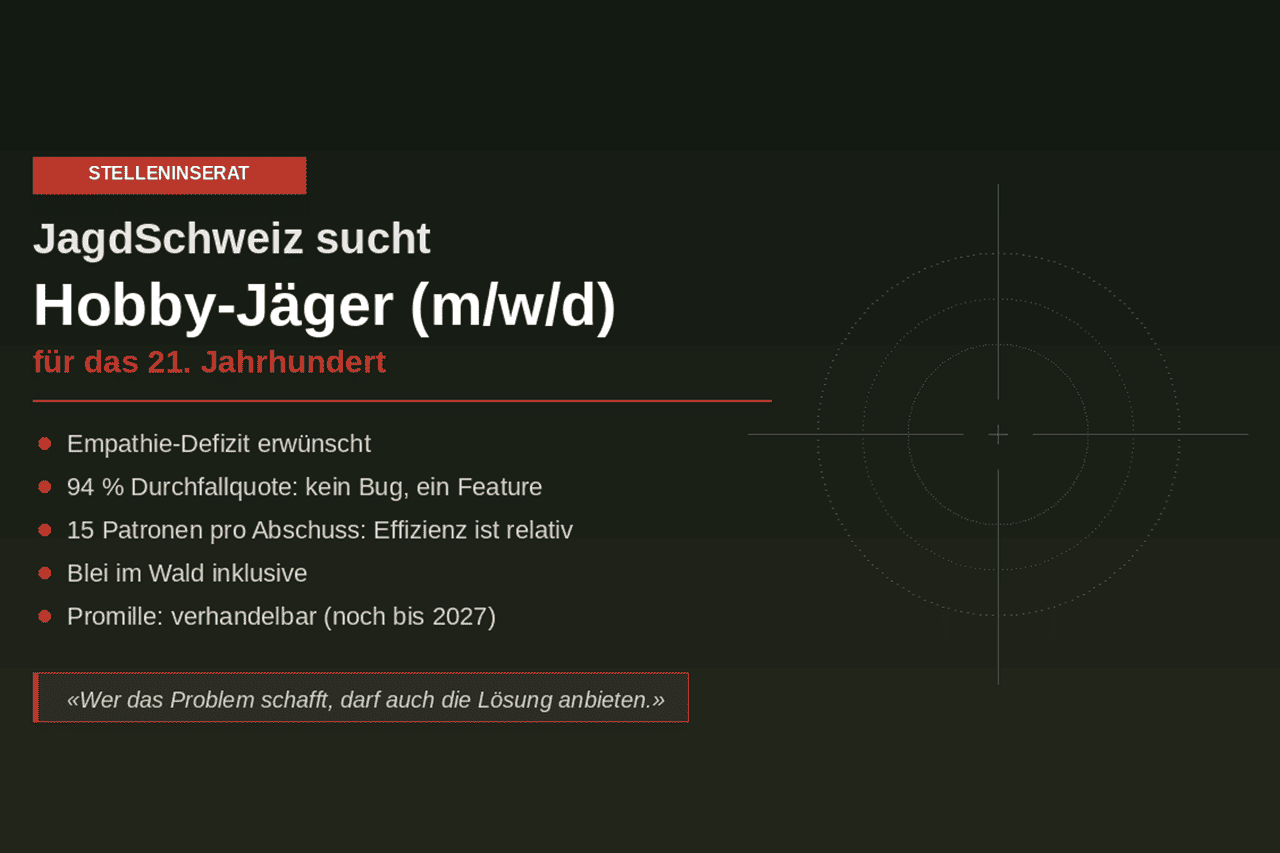
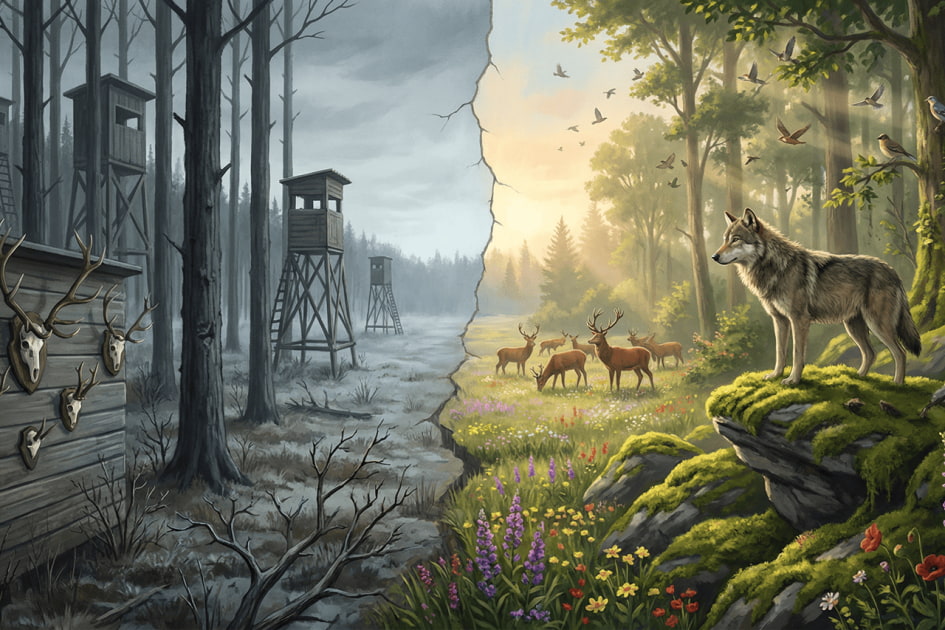
The position of IG Wild beim Wild: IG Wild beim Wild rejects recreational hunting. Our model is the canton of Geneva, which has managed without recreational hunting since 1974: without hunting seasons, without hunting dogs, without driven hunts, without high seats, without the animal cruelty and crime that go hand in hand with hunting season elsewhere. What has worked there for over fifty years disproves every position paper by JagdSchweiz. An association that bases its policy on claims it refutes in its own documents is not a professional organisation, but a factory for misinformation.