Uri: Two wolves shot, almost twice as many livestock animals killed
The annual balance sheet shows more losses despite the kills. The canton does not disclose when, where and under what protection the livestock animals were killed.
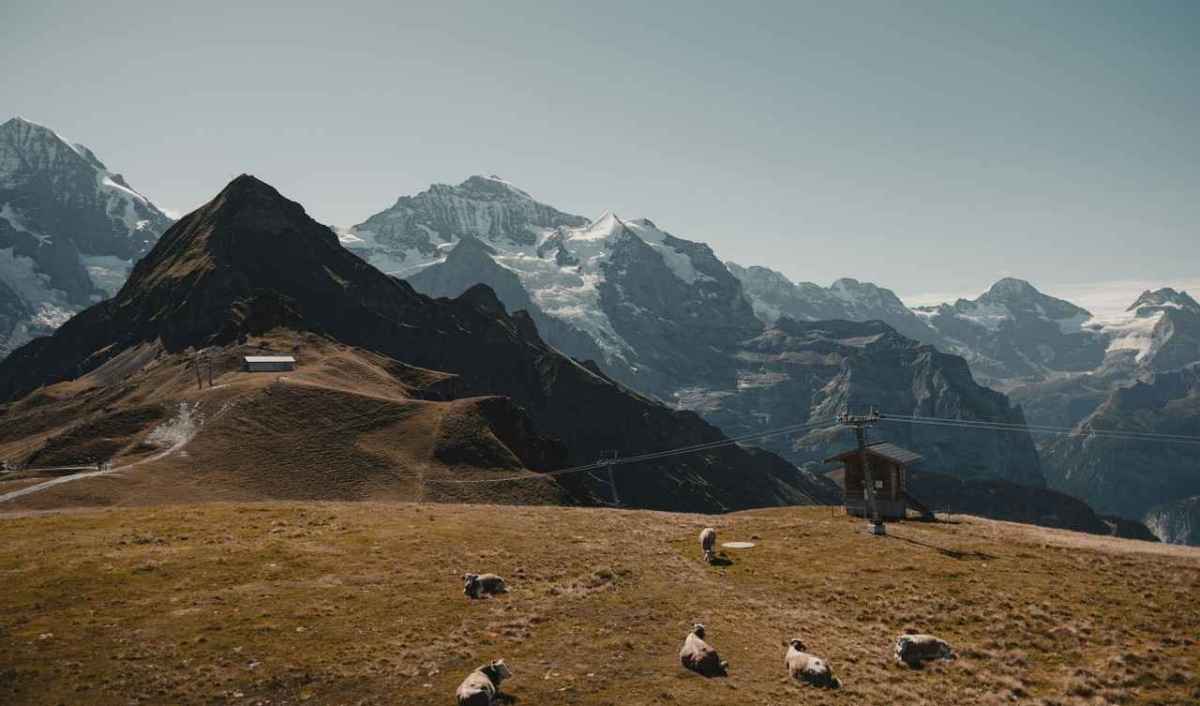
Stock image. Photo: Kevin Schmid / Unsplash
No Fence, No Shepherd
In the canton of Uri, 51 livestock animals were killed by wolves in 2026 up to mid-November, almost twice as many as in the whole of the previous year. This was reported by the «Bote der Urschweiz» on 14 November. The wildlife wardens shot two wolves in June and July. The published balance sheet does not show how the losses on the affected alpine pastures developed after the kills.
Three years compared
The Wolf Annual Report Uri 2025 from the Security Directorate allows a comparison with previous years:
| Year | Livestock animals killed | Kill orders | Wolves killed |
|---|---|---|---|
| 2024 | 137 (106 sheep, 31 goats) | 3 | 2 |
| 2025 | 28 sheep | 0 | 0 |
| 2026, as of: report of 14 November | 51 | 2 | 2 |
According to the annual report, in 2025 the canton did not have to authorise the killing of any wolf because the damage thresholds were not reached. Compensation payments fell from 59,700 francs in 2024 to 13,830 francs. This comparison is not proof of effectiveness for or against kills: kill orders follow losses, so a year with more damage will also tend to show more kills.
Two kills on alpine pastures that could not be 'reasonably protected'
On 9 June 2026, the Security Directorate authorised the killing of a wolf after six sheep had been killed on the 'Heimkuhweide Fürlauwi' alpine pasture in the Meiental valley (Wassen). The wildlife wardens shot the lone male on 12 June, and the canton reported the kill on 15 June. On 23 June, the second order followed for the 'Vorder Bristen' alpine pasture in the Maderanertal valley (Silenen). There, five sheep had been killed outright during the night of 22 June, and a sixth had to be put down. On 16 July, the wildlife wardens also shot a lone male there, as Keystone-SDA reported.
The Uri Office for Agriculture classes both alpine pastures as 'not reasonably protectable'. On such pastures, kills count towards the cull threshold if emergency measures were implemented after the first attack. The canton stated this in both press releases. For Vorder Bristen, the order cites a permanently fenced emergency pasture and counts all six sheep. What decides a cull on such pastures is therefore not a protection of the flock that was already in place, but a measure that comes only after the damage. Ticino wants to go even further: a motion demands culls after the very first attack on pastures that cannot be protected.
No pack in Uri, one pack in Obwalden
Up to the annual report of January 2026, no wolf pack had been observed in the canton of Uri. In 2025, the canton genetically identified two wolves, both from the Italian population and both recorded in Switzerland for the first time. In 2024 there were six different individuals.
Obwalden presents a different picture: a pack has been living there for almost a year, and according to the 'Bote der Urschweiz', significantly fewer livestock were killed in 2026. Whether the pack caused this decline cannot be read from the figures. Across Switzerland, kills fell in the 2026 alpine summer, as WBW showed in August: The credit belongs to herd protection, not to guns. Doubts about the effectiveness of the Swiss cull model are now also being voiced by the Italian press.
What the public is not told
When and on which pastures the 51 Uri livestock animals were killed, how many of them after the two culls, and which flocks were protected cannot be determined from the publicly available information. These are precisely the figures needed to assess the cull policy. How revealing protection status is can be seen from the Ticino balance sheet: Only 6 of 131 animals killed were protected. The comparison is made harder still because Identitas has frozen the animal statistics. All wolf kills of the 2026/27 season are listed in the WBW counter.
Comment: A kill is no substitute for herd protection
A kill is no substitute for herd protection. Whether the two Uri culls prevented further losses on the ground cannot be read from the annual balance sheet. What is certain is that both wolves were shot because of kills on pastures classed as not reasonably protectable. As long as these pastures remain without regular protection, the next wolf to pass through Uri will meet exactly the same situation.
Anyone who wants to assess the effect of the kills needs more than a cantonal total. The canton should disclose when and on which alpine pastures livestock were killed, which protective measures were actually in place there, and whether the damage on the affected pastures changed after the kills. The money belongs where protection works: in shepherding, fencing and livestock guardian dogs.
Seen something yourself?
A driven hunt next to a hiking trail, a shot fired near houses, a trap in the forest or an injured wild animal: report it to the Recreational Hunter Radar. We check every tip-off and treat your details confidentially.
More on the subject of recreational hunting: In our dossiers on recreational hunting gather fact-checks, analyses and background reports. The scientific evidence is presented in the overview Studies on the Effects of Recreational Hunting.
The position of IG Wild beim Wild: IG Wild beim Wild rejects recreational hunting. Our model is the canton of Geneva, which has managed without recreational hunting since 1974: without hunting seasons, without hunting dogs, without driven hunts, without high seats, without the animal cruelty and crime that go hand in hand with hunting season elsewhere. What has worked there for over fifty years disproves every position paper by JagdSchweiz. An association that bases its policy on claims it refutes in its own documents is not a professional organisation, but a factory for misinformation.
Wild animals need a voice
Investigations, petitions and background on recreational hunting. As a thank-you, you will immediately receive our free guide «Recreational hunting on your doorstep: what you can do».
Support our work
With your donation you help protect animals and give their voice a hearing.
Donate now →