Identitas freezes animal statistics: up-to-date comparative figures on wolf kills missing
Since the renewal of the animal movement database, only 20 selected analyses with data as of 19 October 2026 are available; those on goat deaths and agricultural zones are missing.
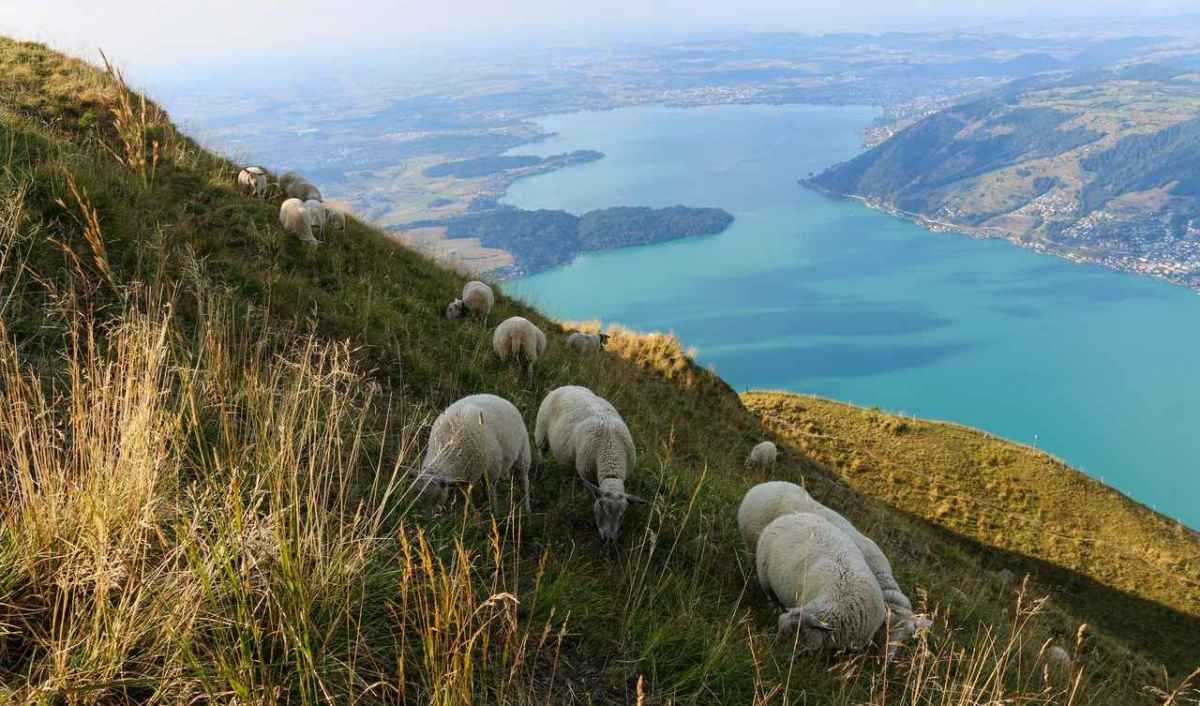
Photo: Victor Svistunov / Unsplash
No Fence, No Shepherd
Identitas AG, which operates the animal movement database (TVD) on behalf of the Confederation, is no longer updating its existing public animal statistics. Since the renewal of the TVD in October 2026, only 20 selected analyses with data as of 19 October 2026 have been temporarily available. According to Identitas, funding for a new solution is lacking. The platform WolfFacts Schweiz drew attention to this. For the wolf debate, this is a loss: until now, the TVD data made it possible to place kill figures continuously in the context of the overall losses in sheep farming.
What Identitas says
On its website Identitas AG writes: “Since the TVD renewal, the previous animal statistics can no longer be updated.” Until funding is found, 20 analyses with data as of 19 October 2026 are “temporarily” available. The former address of the open data portal now redirects to a product page. Identitas does not say when or by whom a new solution will be paid for.
Data collection itself continues. Anyone who keeps a sheep, goat or cattle must still report births, movements, slaughterings and deaths to the TVD. What is dropped is the ongoing updating of the public analyses.
Which figures are no longer available
The former portal offered dozens of datasets per animal species, ranging from the number of livestock holdings to holding sizes and distribution across agricultural zones. For sheep, only four analyses remain: births, breeds, population and the trend in reports, which also includes deaths. For goats, only the population figures remain; goat deaths can no longer be accessed publicly. The sheep data end in September 2026.
An analysis of our own shows how concrete the gap is: for the article published in October 2026, Sheep in wildlife habitat: the figures behind the wolf dispute the IG Wild beim Wild evaluated, on 28 September 2026, the TVD datasets on livestock holdings, holding sizes and agricultural zones that were available at the time, from which the sheep population in the summer pasture area could be derived. None of these datasets is among the 20 analyses that remain. If the current offering stays as it is, the analysis cannot be repeated for the 2027 alpine summer using the publicly available Identitas data.
Why the death figures matter in the wolf debate
According to the frozen Identitas analysis, 52,504 sheep deaths were reported in Switzerland and Liechtenstein in 2025, that is, deaths outside of slaughter. From January to September 2026 there were 33,013. By comparison: for the billing period November 2024 to October 2025, the cantons applied to the FOEN for wildlife damage compensation for 808 livestock animals of all species. This figure does not cover all wolf kills, because since 2025 the FOEN only compensates attacks in protected situations or those after which immediate measures were taken.
The two figures differ in time period, animal species and recording method, and the TVD does not break deaths down by cause. They therefore do not yield a reliable percentage share of wolf kills among all deaths. They do, however, show the order of magnitude of the total losses in sheep farming against which kills by predators must be measured. How large the remaining losses from disease, parasites, falls and weather are was set out by the IG Wild beim Wild in Sheep Deaths: The Real Culprits Are in the Barn and Acquitted: it wasn't the wolf. The kill figures continue to be published, while the comparison figure has no longer been updated since October 2026.
The ordinance requires public analyses
The publication is not a voluntary extra. The Ordinance on Identitas AG and the Animal Movement Database (IdTVD-V) states in Article 32: «Identitas AG shall publish anonymised analyses of the data collected.» Under Article 9 of the Ordinance, oversight of Identitas AG lies with the Federal Office for Agriculture (FOAG), which can also carry out unannounced inspections there. Whether 20 frozen tables satisfy this mandate, and why continuing the statistics was not part of the renewal of the animal movement database, is something the FOAG must answer.
WolfFacts Schweiz asks whether the gap suits Federal Councillor Albert Rösti and his wolf policy, but expressly states that there is no evidence for this. The authority responsible for the animal movement database is not Rösti's environment department but the FOAG, which sits within the Federal Department of Economic Affairs, Education and Research. Regardless of who is responsible, the connection remains: the regulation that Rösti pushed through with the relaxed hunting ordinance is justified by livestock losses, and the figures needed to put those losses into context are no longer being updated on an ongoing basis.
Commentary: Anyone who makes policy with livestock kills must disclose the comparison figures
Since 2023, well over 200 wolves have been shot in Switzerland, and the wolf counter of IG Wild beim Wild lists the kills of the current period individually. The protection of livestock is the central justification for this regulation. That the statistics which would allow the losses of sheep farming as a whole to be tracked are no longer being updated, of all times right now, is no technical detail. A database is being modernised, the reporting obligations for livestock keepers remain, but the public statistics are no longer updated and important analyses are missing. That is a question of priorities, and it comes at the expense of wolves and sheep alike. Without up-to-date mortality figures, there is no basis for following the development of livestock losses. What role diseases, falls, husbandry conditions or predators play in this could only be clarified with cause-specific data.
The FOAG must therefore disclose who has funded the animal statistics to date, why they were not included in the renewal of the AMD, how it intends to fulfil the mandate under Article 32 of the IdTVD-V until a new solution is in place, and by when the previous analyses, in particular mortality by animal species and the data on summer pasturing, will be continuously accessible again. Transparency about losses in livestock farming must not be a question of budget, as long as these losses are used to justify the killing of protected predators.
Sources: Identitas AG, Animal statistics: selected analyses, data as of 19 October 2026, accessed on 17 November 2026 (dataset 'Sheep: development of notifications'); Ordinance on Identitas AG and the Animal Movement Database (IdTVD-V), Art. 9 and Art. 32; FSVO, communication of 19 October 2026 on the new BVD status in the renewed AMD; FOEN, Report on wolf regulation 2025/2026 of 18 May 2026 (reimbursement of wildlife damage, compensation arrangements); WolfFacts Schweiz, 'When the figures disappear, the wolf debate will not become more objective', November 2026.
More articles: Dossier: Wolf in Switzerland · Sheep in wildlife habitat
Seen something yourself?
A driven hunt next to a hiking trail, a shot fired near houses, a trap in the forest or an injured wild animal: report it to the Recreational Hunter Radar. We check every tip-off and treat your details confidentially.
More on the subject of recreational hunting: In our dossiers on recreational hunting gather fact-checks, analyses and background reports. What the research says about this is shown by Hunting fact-checked: the state of research.
The position of IG Wild beim Wild: IG Wild beim Wild rejects recreational hunting. Our model is the canton of Geneva, which has managed without recreational hunting since 1974: without hunting seasons, without hunting dogs, without driven hunts, without high seats, without the animal cruelty and crime that go hand in hand with hunting season elsewhere. What has worked there for over fifty years disproves every position paper by JagdSchweiz. An association that bases its policy on claims it refutes in its own documents is not a professional organisation, but a factory for misinformation.
Wild animals need a voice
Once a week: investigations, petitions and background on recreational hunting. As a thank-you, you will immediately receive our free guide “Recreational hunting on your doorstep: what you can do”. Free of charge and you can unsubscribe at any time.
Support our work
With your donation you help protect animals and give their voice a hearing.
Donate now →